
计算机模拟研究阿奇霉素、氯喹和羟氯喹及其对 SARS-CoV-2 感染的潜在作用机制。
In silico study of azithromycin, chloroquine and hydroxychloroquine and their potential mechanisms of action against SARS-CoV-2 infection.
机构信息
Postgraduate Program in Morphological Science, Department of Morphology, School of Medicine, Federal University of Ceara, Delmiro de Farias St., 60.430-170, Fortaleza-CE, Brazil; Drug Research and Development Center, Federal University of Ceara, Coronel Nunes de Melo St., 1000, 60.430-275, Fortaleza-CE, Brazil.
Drug Research and Development Center, Federal University of Ceara, Coronel Nunes de Melo St., 1000, 60.430-275, Fortaleza-CE, Brazil; Department of Physiology and Pharmacology, School of Medicine, Federal University of Ceara, Coronel Nunes de Melo St., 1127, 60.430-275, Fortaleza-CE, Brazil.
出版信息
Int J Antimicrob Agents. 2020 Sep;56(3):106119. doi: 10.1016/j.ijantimicag.2020.106119. Epub 2020 Jul 30.
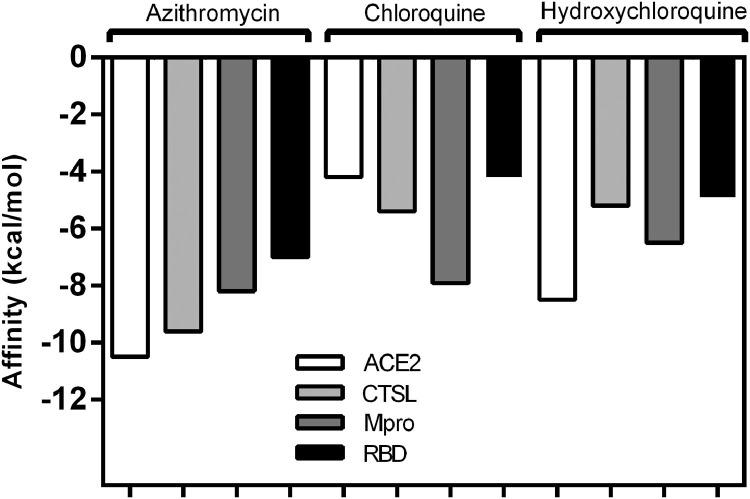
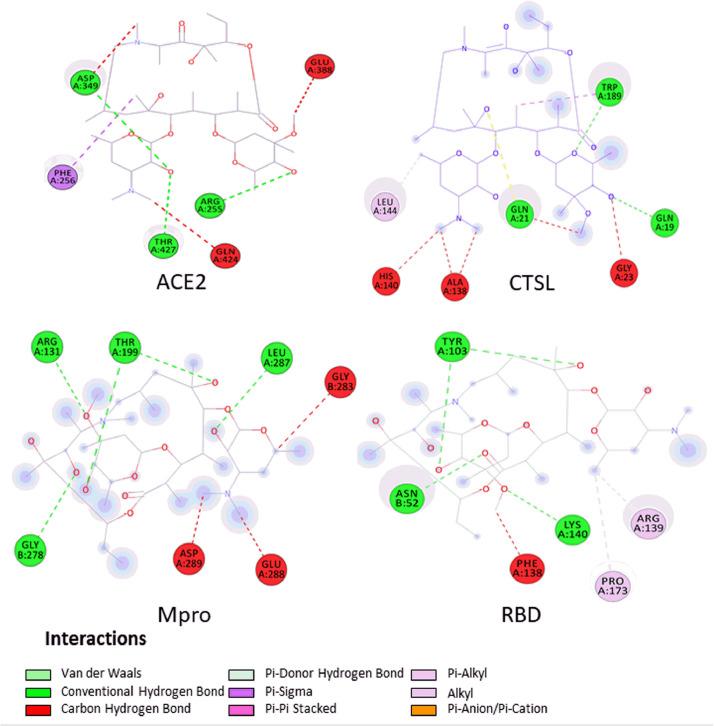
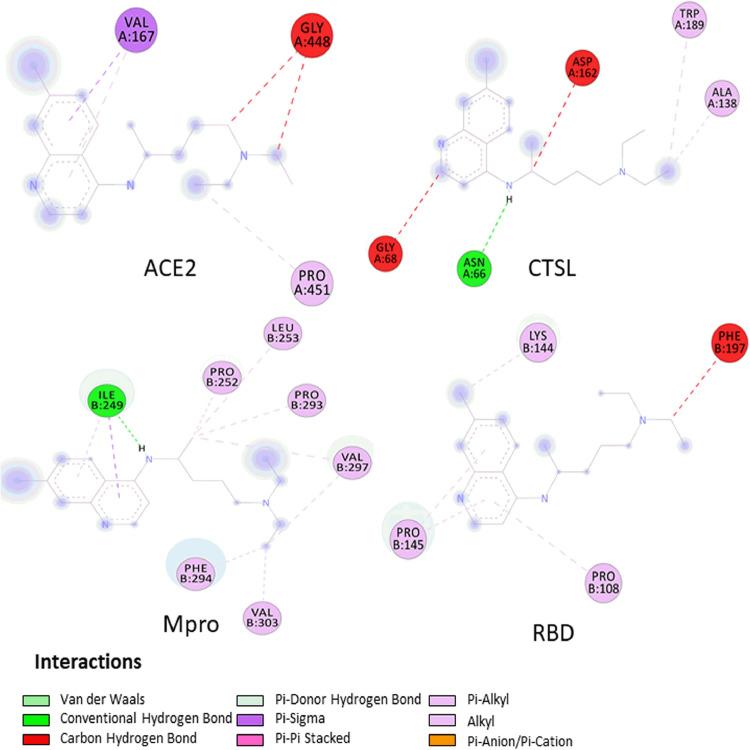
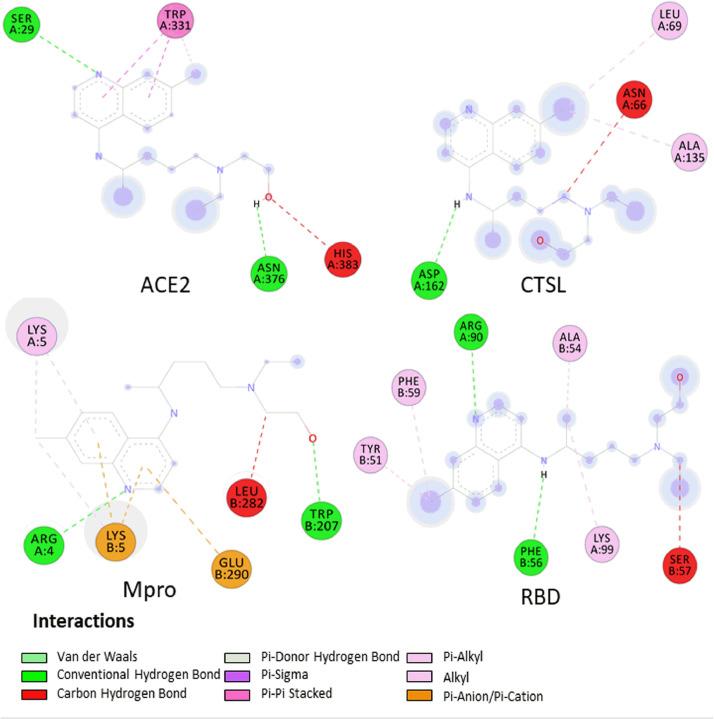
Coronavirus disease 2019 (COVID-19) is a highly transmissible viral infection caused by severe acute respiratory syndrome coronavirus 2 (SARS-CoV-2). Clinical trials have reported improved outcomes resulting from an effective reduction or absence of viral load when patients were treated with chloroquine (CQ) or hydroxychloroquine (HCQ). In addition, the effects of these drugs were improved by simultaneous administration of azithromycin (AZM). The receptor-binding domain (RBD) of the SARS-CoV-2 spike (S) protein binds to the cell surface angiotensin-converting enzyme 2 (ACE2) receptor, allowing virus entry and replication in host cells. The viral main protease (M) and host cathepsin L (CTSL) are among the proteolytic systems involved in SARS-CoV-2 S protein activation. Hence, molecular docking studies were performed to test the binding performance of these three drugs against four targets. The findings showed AZM affinity scores (ΔG) with strong interactions with ACE2, CTSL, M and RBD. CQ affinity scores showed three low-energy results (less negative) with ACE2, CTSL and RBD, and a firm bond score with M. For HCQ, two results (ACE2 and M) were firmly bound to the receptors, however CTSL and RBD showed low interaction energies. The differences in better interactions and affinity between HCQ and CQ with ACE2 and M were probably due to structural differences between the drugs. On other hand, AZM not only showed more negative (better) values in affinity, but also in the number of interactions in all targets. Nevertheless, further studies are needed to investigate the antiviral properties of these drugs against SARS-CoV-2.
新型冠状病毒病(COVID-19)是由严重急性呼吸系统综合征冠状病毒 2(SARS-CoV-2)引起的高度传染性病毒感染。临床试验报告称,当患者接受氯喹(CQ)或羟氯喹(HCQ)治疗时,病毒载量有效降低或消失,从而改善了治疗效果。此外,同时给予阿奇霉素(AZM)可增强这些药物的疗效。SARS-CoV-2 刺突(S)蛋白的受体结合结构域(RBD)与细胞表面血管紧张素转换酶 2(ACE2)受体结合,允许病毒进入和在宿主细胞中复制。病毒的主要蛋白酶(M)和宿主组织蛋白酶 L(CTSL)是参与 SARS-CoV-2 S 蛋白激活的蛋白水解系统之一。因此,进行了分子对接研究,以测试这三种药物针对四个靶标的结合性能。研究结果表明,AZM 与 ACE2、CTSL、M 和 RBD 的亲和力评分(ΔG)具有很强的相互作用。CQ 的亲和力评分显示与 ACE2、CTSL 和 RBD 有三个低能量结果(负性较小),与 M 有牢固的键合评分。对于 HCQ,两个结果(ACE2 和 M)与受体牢固结合,但 CTSL 和 RBD 显示出低相互作用能。HCQ 和 CQ 与 ACE2 和 M 的更好相互作用和亲和力差异可能是由于药物结构的差异。另一方面,AZM 不仅在亲和力方面表现出更负(更好)的值,而且在所有靶标中的相互作用数量也更多。然而,仍需要进一步的研究来探讨这些药物对 SARS-CoV-2 的抗病毒特性。

 Zotero 插件