
弥漫性大 B 细胞淋巴瘤患者接受 CD19 CAR T 细胞治疗后第 1 年的感染情况。
Infection during the first year in patients treated with CD19 CAR T cells for diffuse large B cell lymphoma.
机构信息
Adult Bone Marrow Transplant Service, Department of Medicine, Memorial Sloan Kettering Cancer Center, New York, NY, USA.
Division of Hematology and Research Unit in Translational Hematology, Department of Medicine, Chulalongkorn University, Bangkok, Thailand.
出版信息
Blood Cancer J. 2020 Aug 5;10(8):79. doi: 10.1038/s41408-020-00346-7.
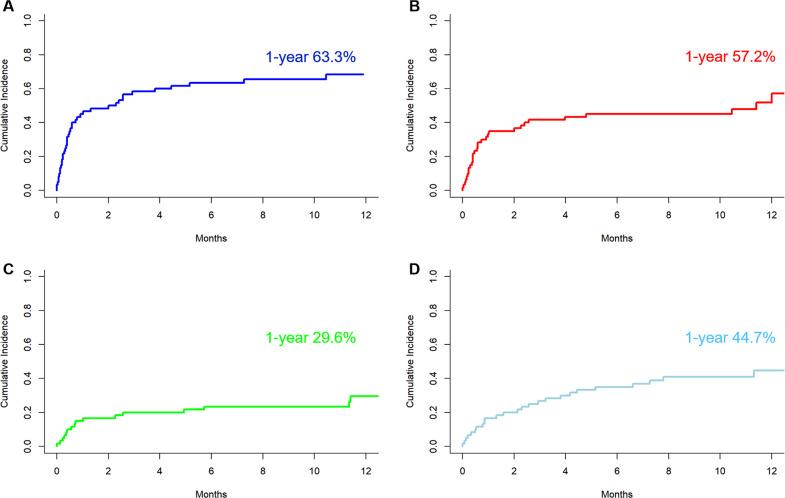
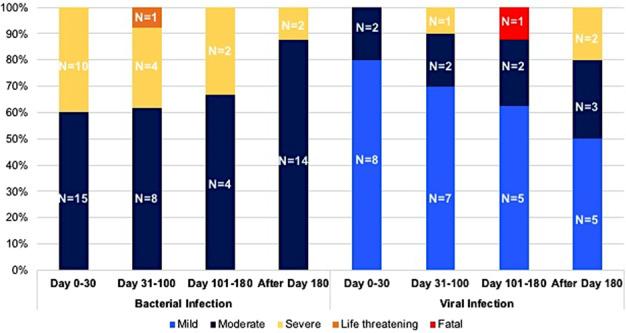
CD19-targeted chimeric antigen receptor (CAR) T cell therapy is an effective treatment for diffuse large B cell lymphoma (DLBCL). In addition to cytokine release syndrome (CRS) and immune effector cell-associated neurotoxicity (ICANS), B cell aplasia and hypogammaglobulinemia are common toxicities predisposing these patients to infections. We analyzed 60 patients with DLBCL treated with FDA-approved CD19 CAR T cells and report the incidence, risk factors, and management of infections during the first year after treatment. A total of 101 infectious events were observed, including 25 mild, 51 moderate, 23 severe, 1 life-threatening, and 1 fatal infection. Bacteria were the most common causative pathogens. The cumulative incidence of overall, bacterial, severe bacterial, viral, and fungal infection at 1 year were 63.3%, 57.2%, 29.6%, 44.7%, and 4%, respectively. In multivariate analyses, the use of systemic corticosteroids for the management of CRS or ICANS was associated with an increased risk of infections and prolonged admission. Impaired performance status and history of infections within 30 days before CAR T cell therapy was a risk factor for severe bacterial infection. In conclusion, infections were common within the first 60 days after CAR T cell therapy, however, they were not associated with an increased risk of death.
CD19 靶向嵌合抗原受体 (CAR) T 细胞疗法是治疗弥漫性大 B 细胞淋巴瘤 (DLBCL) 的有效方法。除细胞因子释放综合征 (CRS) 和免疫效应细胞相关神经毒性 (ICANS) 外,B 细胞发育不全和低丙种球蛋白血症是常见的毒性作用,使这些患者容易发生感染。我们分析了 60 例接受 FDA 批准的 CD19 CAR T 细胞治疗的 DLBCL 患者,并报告了治疗后第一年感染的发生率、危险因素和管理情况。共观察到 101 例感染事件,包括 25 例轻度、51 例中度、23 例重度、1 例危及生命和 1 例致死性感染。细菌是最常见的病原体。1 年时总感染、细菌感染、严重细菌感染、病毒感染和真菌感染的累积发生率分别为 63.3%、57.2%、29.6%、44.7%和 4%。多因素分析显示,使用全身皮质类固醇治疗 CRS 或 ICANS 与感染风险增加和住院时间延长相关。治疗前 30 天内体能状态受损和感染史是严重细菌感染的危险因素。总之,CAR T 细胞治疗后 60 天内感染很常见,但与死亡风险增加无关。
 Zotero 插件