
生命起源后细胞和代谢的共同进化。
The Coevolution of Cellularity and Metabolism Following the Origin of Life.
机构信息
Department of Biology, Oberlin College, Oberlin, OH, 44074, USA.
Computational and Systems Biology, Massachusetts Institute of Technology, Cambridge, MA, 02139, USA.
出版信息
J Mol Evol. 2020 Sep;88(7):598-617. doi: 10.1007/s00239-020-09961-1. Epub 2020 Aug 18.
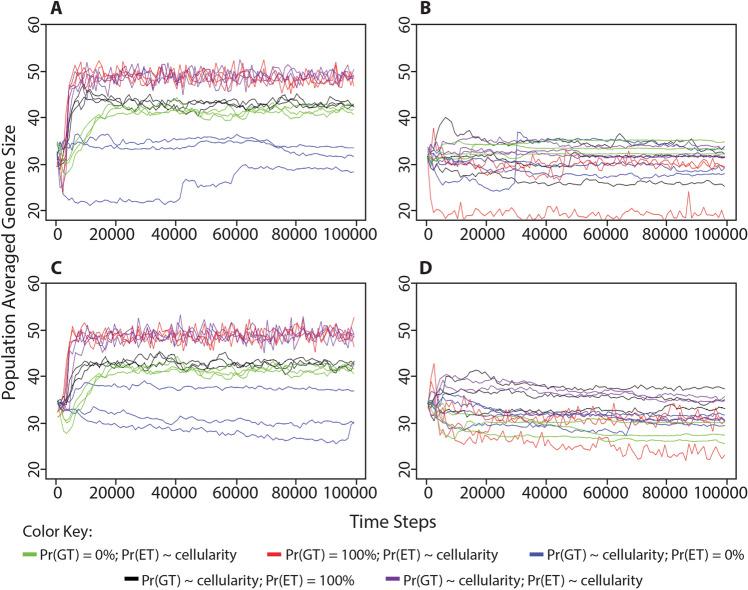
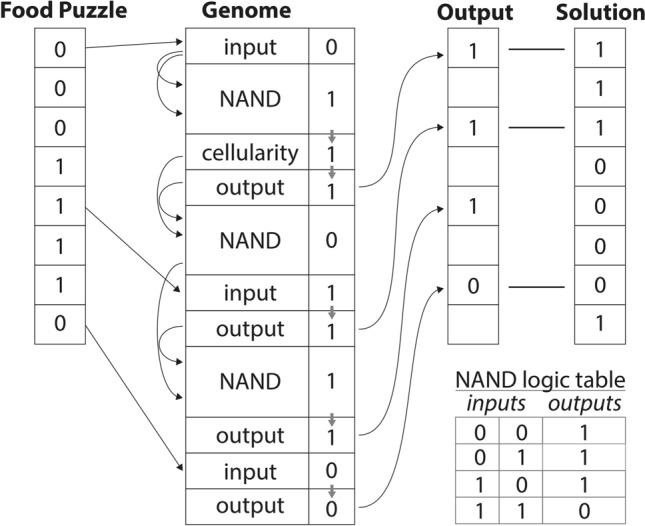
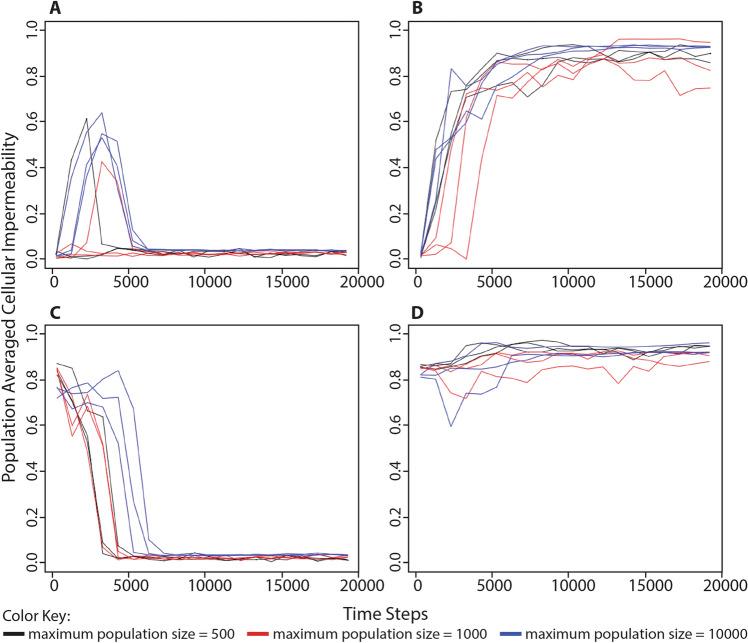
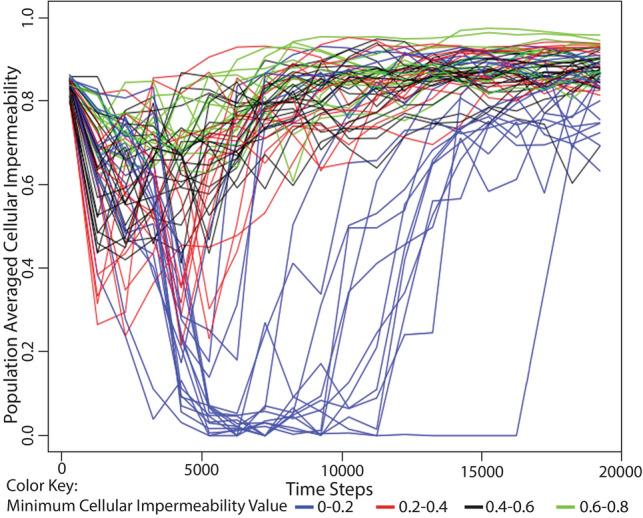
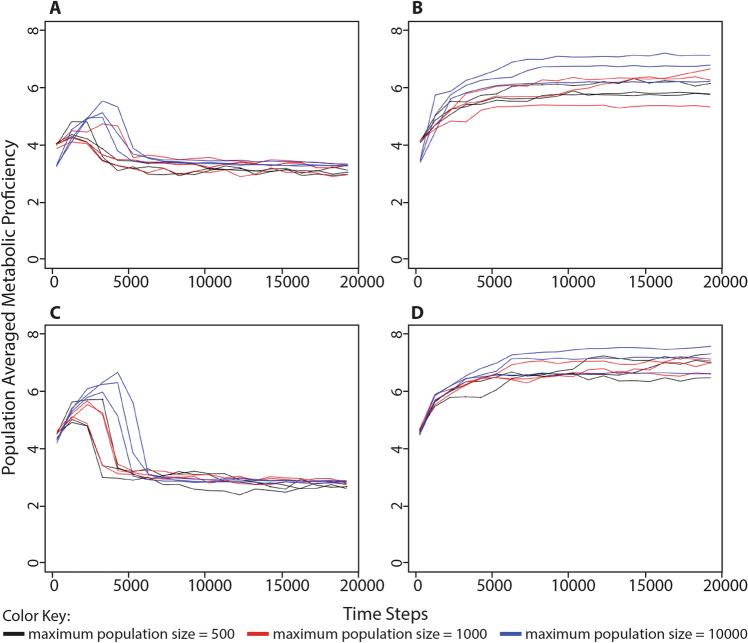
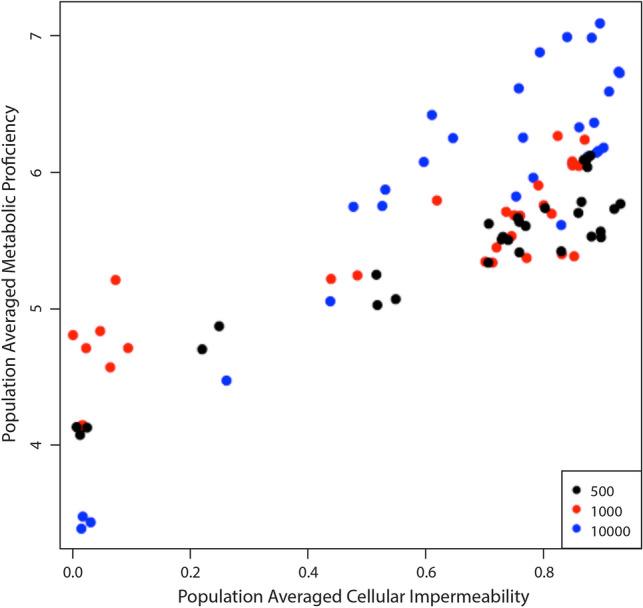
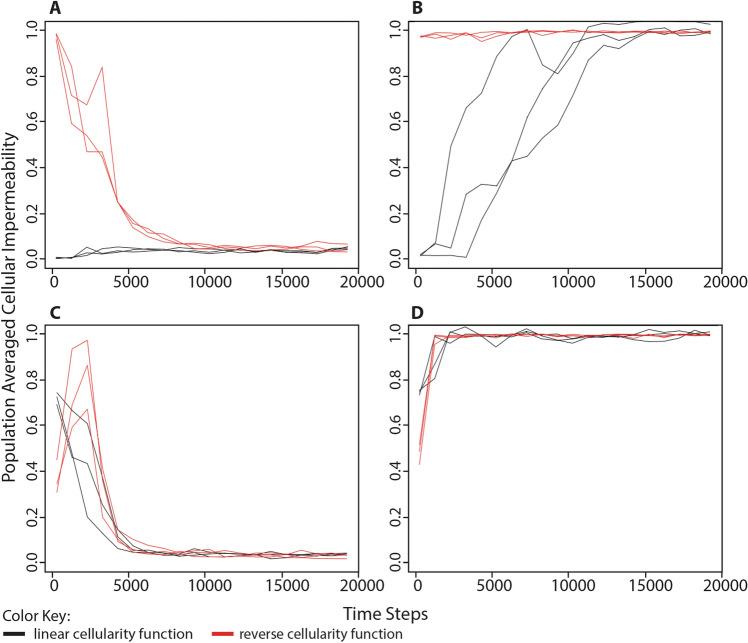
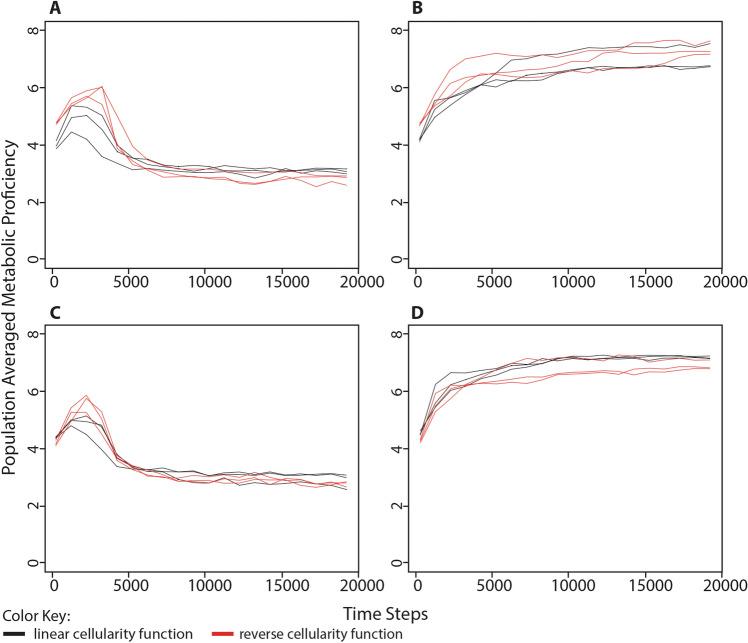
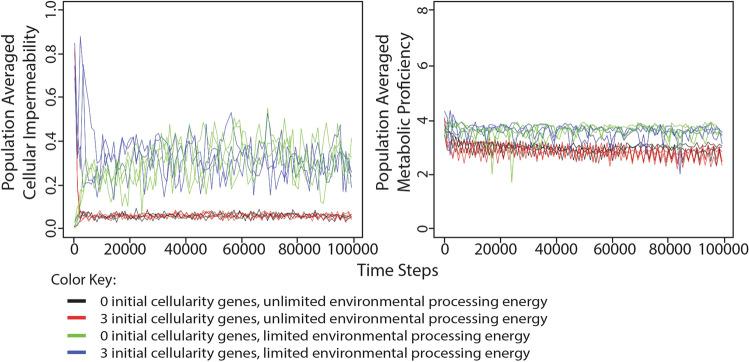
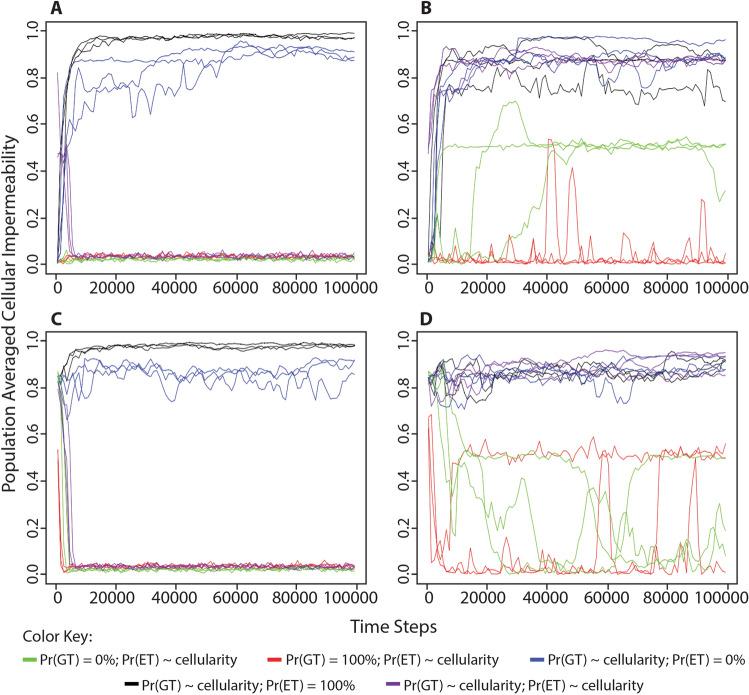
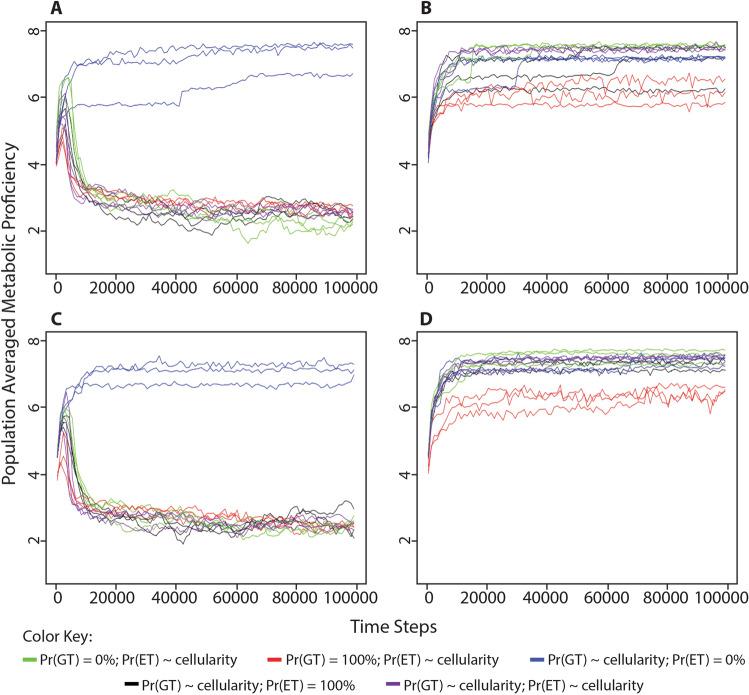
The emergence of cellular organisms occurred sometime between the origin of life and the evolution of the last universal common ancestor and represents one of the major transitions in evolutionary history. Here we describe a series of artificial life simulations that reveal a close relationship between the evolution of cellularity, the evolution of metabolism, and the richness of the environment. When environments are rich in processing energy, a resource that the digital organisms require to both process their genomes and replicate, populations evolve toward a state of non-cellularity. But when processing energy is not readily available in the environment and organisms must produce their own processing energy from food puzzles, populations always evolve both a proficient metabolism and a high level of cellular impermeability. Even between these two environmental extremes, the population-averaged values of cellular impermeability and metabolic proficiency exhibit a very strong correlation with one another. Further investigations show that non-cellularity is selectively advantageous when environmental processing energy is abundant because it allows organisms to access the available energy, while cellularity is selectively advantageous when environmental processing energy is scarce because it affords organisms the genetic fidelity required to incrementally evolve efficient metabolisms. The selection pressures favoring either non-cellularity or cellularity can be reversed when the environment transitions from one of abundant processing energy to one of scarce processing energy. These results have important implications for when and why cellular organisms evolved following the origin of life.
细胞生物的出现发生在生命起源和最后一个普遍共同祖先的进化之间的某个时间,代表了进化历史上的主要转折点之一。在这里,我们描述了一系列人工生命模拟,揭示了细胞形成、新陈代谢的进化以及环境的丰富性之间的密切关系。当环境富含处理能量时,数字生物需要处理其基因组和复制的资源,种群就会朝着非细胞状态进化。但是,当环境中没有可用的处理能量,并且生物必须从食物拼图中产生自己的处理能量时,种群总是会进化出高效的新陈代谢和高水平的细胞不透性。即使在这两个环境极端之间,细胞不透性和代谢效率的种群平均值也表现出很强的相关性。进一步的研究表明,当环境处理能量丰富时,非细胞状态具有选择性优势,因为它允许生物获取可用的能量,而当环境处理能量稀缺时,细胞状态具有选择性优势,因为它为生物提供了递增进化高效代谢所需的遗传保真度。当环境从富含处理能量的环境过渡到稀缺处理能量的环境时,有利于非细胞状态或细胞状态的选择压力可以相互逆转。这些结果对于生命起源后细胞生物何时以及为何进化具有重要意义。
 Zotero 插件