
从动物健康角度看对非典、中东呼吸综合征和新冠肺炎的易感性。
Susceptibility to SARS, MERS, and COVID-19 from animal health perspective.
作者信息
Gautam Aasish, Kaphle Krishna, Shrestha Birendra, Phuyal Samiksha
机构信息
Institute of Agriculture and Animal Science, Tribhuvan University, Rupandehi, Nepal.
Veterinary Teaching Hospital, Institute of Agriculture and Animal Science, Tribhuvan University, Rupandehi, Nepal.
出版信息
Open Vet J. 2020 Aug;10(2):164-177. doi: 10.4314/ovj.v10i2.6. Epub 2020 May 10.
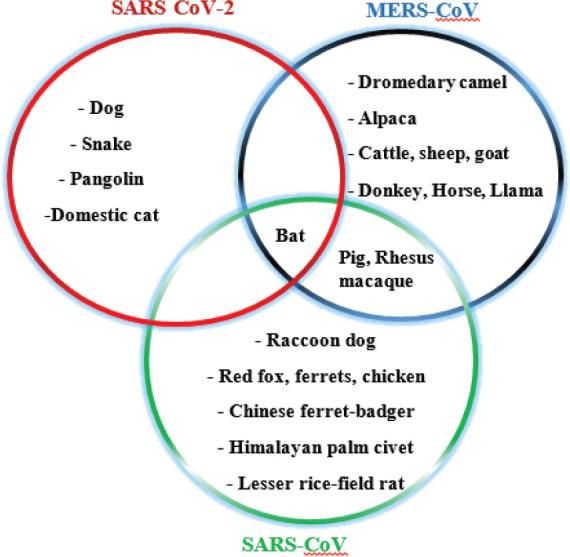
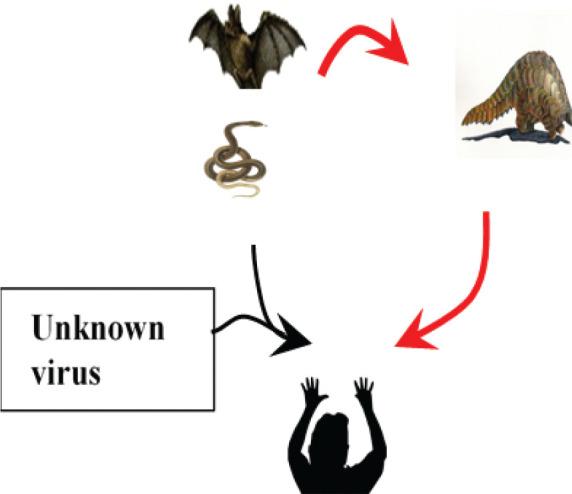
Viruses are having great time as they seem to have bogged humans down. Severe acute respiratory syndrome (SARS), Middle East respiratory syndrome (MERS), and novel coronavirus (COVID-19) are the three major coronaviruses of present-day global human and animal health concern. COVID-19 caused by SARS-CoV-2 is identified as the newest disease, presumably of bat origin. Different theories on the evolution of viruses are in circulation, yet there is no denying the fact that the animal source is the skeleton. The whole world is witnessing the terror of the COVID-19 pandemic that is following the same path of SARS and MERS, and seems to be more severe. In addition to humans, several species of animals are reported to have been infected with these life-threatening viruses. The possible routes of transmission and their zoonotic potentialities are the subjects of intense research. This review article aims to overview the link of all these three deadly coronaviruses among animals along with their phylogenic evolution and cross-species transmission. This is essential since animals as pets or food are said to pose some risk, and their better understanding is a must in order to prepare a possible plan for future havoc in both human and animal health. Although COVID-19 is causing a human health hazard globally, its reporting in animals are limited compared to SARS and MERS. Non-human primates and carnivores are most susceptible to SARS-coronavirus and SARS-CoV-2, respectively, whereas the dromedary camel is susceptible to MERS-coronavirus. Phylogenetically, the trio viruses are reported to have originated from bats and have special capacity to undergo mutation and genomic recombination in order to infect humans through its reservoir or replication host. However, it is difficult to analyze how the genomic pattern of coronaviruses occurs. Thus, increased possibility of new virus-variants infecting humans and animals in the upcoming days seems to be the biggest challenge for the future of the world. One health approach is portrayed as our best way ahead, and understanding the animal dimension will go a long way in formulating such preparedness plans.
病毒正肆虐横行,似乎已将人类拖入困境。严重急性呼吸综合征(SARS)、中东呼吸综合征(MERS)和新型冠状病毒(COVID-19)是当今全球人类和动物健康领域关注的三大主要冠状病毒。由严重急性呼吸综合征冠状病毒2(SARS-CoV-2)引起的COVID-19被认定为最新疾病,据推测起源于蝙蝠。关于病毒进化的不同理论流传甚广,但不可否认动物源是关键所在。全世界都在目睹COVID-19大流行的恐怖,它沿着与SARS和MERS相同的轨迹发展,而且似乎更为严重。除人类外,据报道还有几种动物感染了这些危及生命的病毒。可能的传播途径及其人畜共患病潜力是深入研究的课题。这篇综述文章旨在概述这三种致命冠状病毒在动物之间的联系、它们的系统发育进化以及跨物种传播。这至关重要,因为作为宠物或食物的动物据说存在一定风险,为了制定应对未来人类和动物健康灾难的可能计划,必须对它们有更好的了解。尽管COVID-19正在全球范围内对人类健康造成危害,但与SARS和MERS相比,其在动物中的报告数量有限。非人灵长类动物和食肉动物分别对SARS冠状病毒和SARS-CoV-2最为易感,而单峰骆驼对MERS冠状病毒易感。在系统发育方面,据报道这三种病毒均起源于蝙蝠,并且具有特殊能力进行突变和基因组重组,以便通过其储存宿主或复制宿主感染人类。然而,很难分析冠状病毒的基因组模式是如何形成的。因此,未来几天新病毒变种感染人类和动物的可能性增加似乎是世界未来面临的最大挑战。“同一健康”方法被视为我们前进的最佳途径,了解动物层面对于制定此类防范计划大有帮助。


 Zotero 插件