
癌症治疗中靶向端粒酶亚基的寡核苷酸和微小RNA
Oligonucleotides and microRNAs Targeting Telomerase Subunits in Cancer Therapy.
作者信息
Eckburg Adam, Dein Joshua, Berei Joseph, Schrank Zachary, Puri Neelu
机构信息
Department of Biomedical Sciences, University of Illinois College of Medicine at Rockford, Rockford, IL 61107, USA.
出版信息
Cancers (Basel). 2020 Aug 19;12(9):2337. doi: 10.3390/cancers12092337.
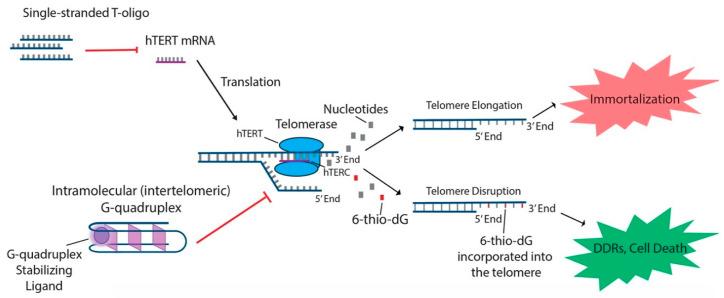
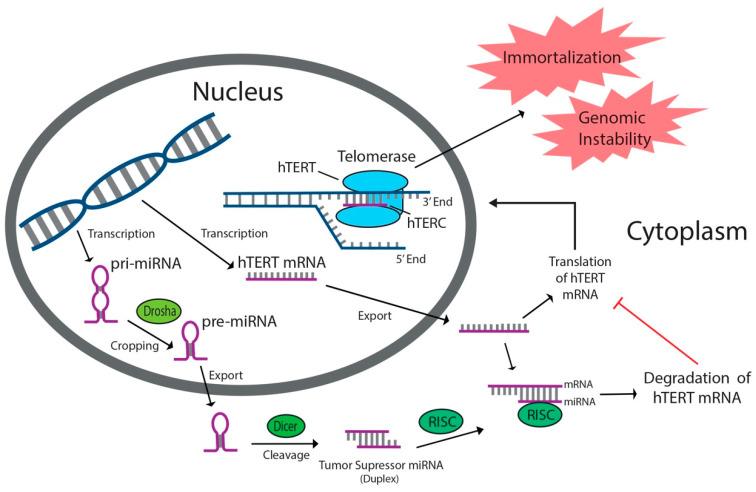
Telomerase provides cancer cells with replicative immortality, and its overexpression serves as a near-universal marker of cancer. Anti-cancer therapeutics targeting telomerase have garnered interest as possible alternatives to chemotherapy and radiotherapy. Oligonucleotide-based therapies that inhibit telomerase through direct or indirect modulation of its subunits, human telomerase reverse transcriptase (hTERT) and human telomerase RNA gene (hTERC), are a unique and diverse subclass of telomerase inhibitors which hold clinical promise. MicroRNAs that play a role in the upregulation or downregulation of hTERT and respective progression or attenuation of cancer development have been effectively targeted to reduce telomerase activity in various cancer types. Tumor suppressor miRNAs, such as miRNA-512-5p, miRNA-138, and miRNA-128, and oncogenic miRNAs, such as miRNA-19b, miRNA-346, and miRNA-21, have displayed preclinical promise as potential hTERT-based therapeutic targets. Antisense oligonucleotides like GRN163L and T-oligos have also been shown to uniquely target the telomerase subunits and have become popular in the design of novel cancer therapies. Finally, studies suggest that G-quadruplex stabilizers, such as Telomestatin, preserve telomeric oligonucleotide architecture, thus inhibiting hTERC binding to the telomere. This review aims to provide an adept understanding of the conceptual foundation and current state of therapeutics utilizing oligonucleotides to target the telomerase subunits, including the advantages and drawbacks of each of these approaches.
端粒酶赋予癌细胞复制永生的能力,其过表达几乎是癌症的普遍标志。靶向端粒酶的抗癌疗法作为化疗和放疗的可能替代方案已引起关注。通过直接或间接调节其亚基人端粒酶逆转录酶(hTERT)和人端粒酶RNA基因(hTERC)来抑制端粒酶的基于寡核苷酸的疗法,是一类独特且多样的端粒酶抑制剂亚类,具有临床应用前景。在hTERT的上调或下调以及癌症发展的相应进展或衰减中发挥作用的微小RNA已被有效靶向,以降低各种癌症类型中的端粒酶活性。肿瘤抑制性微小RNA,如miRNA - 512 - 5p、miRNA - 138和miRNA - 128,以及致癌性微小RNA,如miRNA - 19b、miRNA - 346和miRNA - 21,已显示出作为基于hTERT的潜在治疗靶点的临床前应用前景。像GRN163L和T - 寡核苷酸这样的反义寡核苷酸也已被证明能独特地靶向端粒酶亚基,并在新型癌症疗法的设计中受到欢迎。最后,研究表明,诸如端粒抑素等G - 四链体稳定剂可保持端粒寡核苷酸结构,从而抑制hTERC与端粒的结合。本综述旨在深入理解利用寡核苷酸靶向端粒酶亚基的治疗方法的概念基础和当前状况,包括每种方法的优缺点。
 Zotero 插件