
Bang® Keto 咖啡能量饮料对抗阻训练成年人代谢和运动表现的影响:一项随机、双盲、安慰剂对照、交叉研究。
Effects of Bang® Keto Coffee Energy Drink on Metabolism and Exercise Performance in Resistance-Trained Adults: A Randomized, Double-blind, Placebo-controlled, Crossover Study.
机构信息
Energy Balance & Body Composition Laboratory, Department of Kinesiology & Sport Management, Texas Tech University, Lubbock, TX, 79424, USA.
California State University, San Bernardino, California, USA.
出版信息
J Int Soc Sports Nutr. 2020 Aug 24;17(1):45. doi: 10.1186/s12970-020-00374-5.
BACKGROUND
Energy drinks are often consumed by the general population, as well as by active individuals seeking to enhance exercise performance and augment training adaptations. However, limited information is available regarding the efficacy of these products. Thus, the purpose of this study was to determine the effects of a commercially available caffeine- and protein-containing energy drink on metabolism and muscular performance.
METHODS
Sixteen resistance-trained males (n = 8; mean ± SD; age: 22.4 ± 4.9 years; body mass: 78.8 ± 14.0 kg; body fat: 15.3 ± 6.4%) and females (n = 8; age: 24.5 ± 4.8 years; body mass: 67.5 ± 11.9 kg; body fat: 26.6 ± 7.1%) participated in this randomized, double-blind, placebo-controlled, crossover study. Following a familiarization visit, participants completed two identical visits to the laboratory separated by 5-10 days, each of which consisted of indirect calorimetry energy expenditure (EE) assessments before and after consumption of the beverage (Bang® Keto Coffee; 130 kcal, 300 mg caffeine, 20 g protein) or placebo (30 kcal, 11 mg caffeine, 1 g protein) as well as after exercise testing. In addition, participants' subjective feelings of energy, fatigue, and focus as well as muscular performance (leg press one-repetition maximum and repetitions to fatigue, maximal isometric and isokinetic squat testing) were assessed. Multiple repeated measures ANOVAs with Tukey post-hoc tests were used to analyze data. Estimates of effect size were quantified via partial eta squared (η) and Hedge's g.
RESULTS
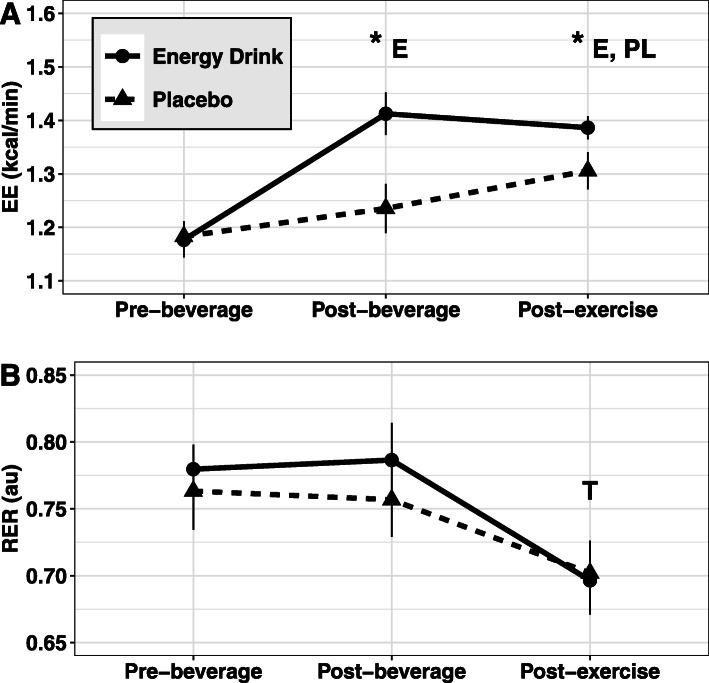
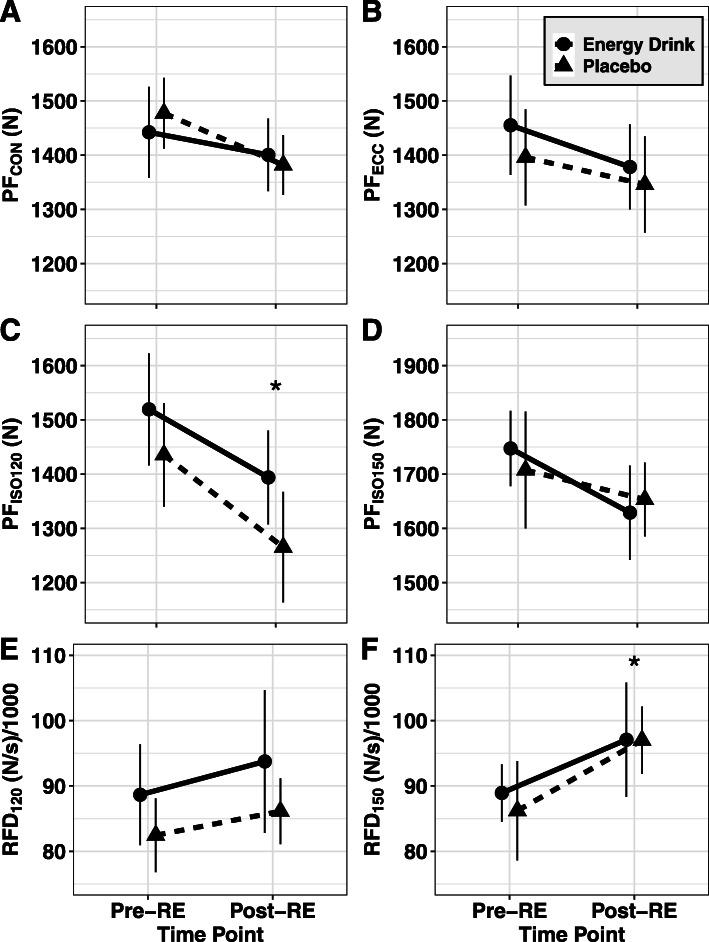
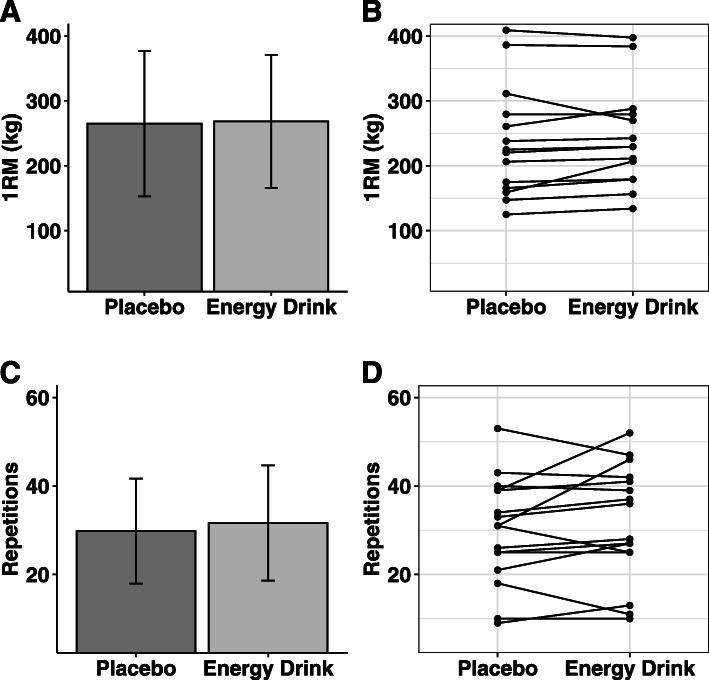
A significant interaction effect was identified for EE (p < 0.001, η = 0.52) but not respiratory exchange ratio (p = 0.17, η = 0.11). Following consumption of the beverage, EE was 0.18 [corrected] kcal·min greater than placebo at the post-beverage time point (p < 0.001) and 0.08 [corrected] kcal·min greater than placebo at the post-exercise time point (p = 0.011). However, no between-condition differences were detected for any subjective or muscular performance outcomes.
CONCLUSIONS
The results of this study suggest that consumption of the energy drink had minimal effects on lower-body muscular performance and subjective factors in the context of a laboratory setting. However, the beverage was found to significantly increase energy expenditure compared to placebo immediately following ingestion as well as during the recovery period after an exercise bout, suggesting that active individuals may improve acute metabolic outcomes via consumption of a caffeine- and protein-containing energy drink.
TRIAL REGISTRATION
This trial was prospectively registered at ClinicalTrials.gov (Identifier: NCT04180787 ; Registered 29 November 2019).
背景
能量饮料通常被一般人群以及寻求提高运动表现和增强训练适应能力的活跃个体所消费。然而,关于这些产品的功效的信息有限。因此,本研究的目的是确定市售含咖啡因和蛋白质的能量饮料对新陈代谢和肌肉表现的影响。
方法
16 名有抗阻训练经验的男性(n=8;平均±标准差;年龄:22.4±4.9 岁;体重:78.8±14.0 千克;体脂:15.3±6.4%)和女性(n=8;年龄:24.5±4.8 岁;体重:67.5±11.9 千克;体脂:26.6±7.1%)参加了这项随机、双盲、安慰剂对照、交叉研究。在熟悉访问之后,参与者在 5-10 天内完成了两次相同的实验室访问,每次访问都包括在饮用饮料(Bang® Keto Coffee;130 千卡,300 毫克咖啡因,20 克蛋白质)或安慰剂(30 千卡,11 毫克咖啡因,1 克蛋白质)前后进行间接热量测定能量消耗(EE)评估,以及运动测试后。此外,还评估了参与者的能量、疲劳和专注感以及肌肉表现(腿推一次重复最大和疲劳重复次数、最大等长和等速深蹲测试)。采用具有 Tukey 事后检验的多重重复测量方差分析来分析数据。通过偏 eta 平方(η)和 Hedge's g 来量化效应大小的估计值。
结果
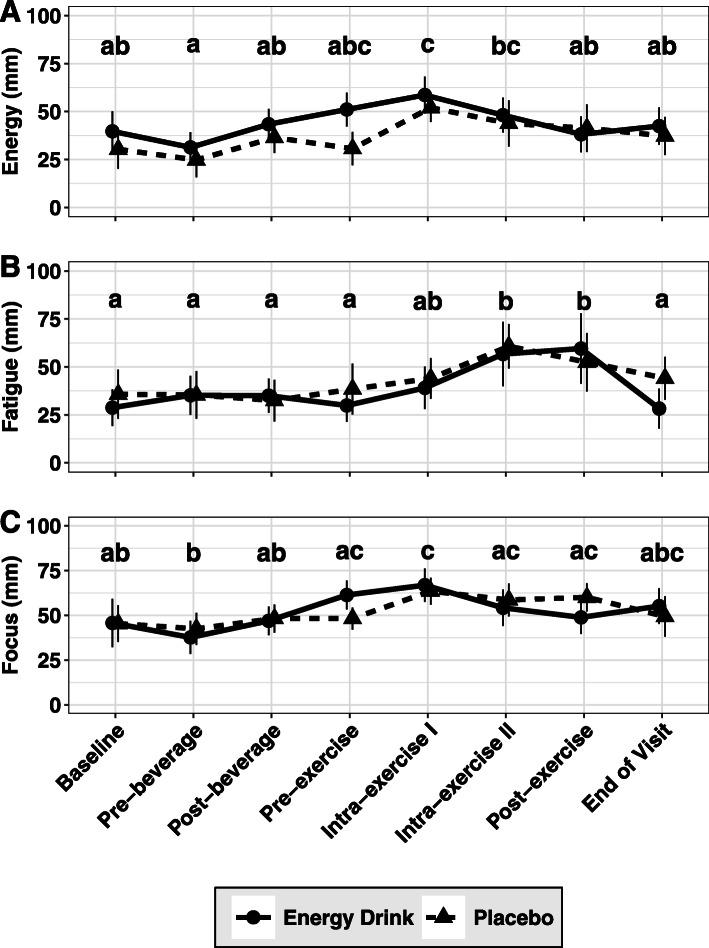
EE 存在显著的交互效应(p<0.001,η=0.52),但呼吸交换比没有(p=0.17,η=0.11)。在饮用饮料后,与安慰剂相比,饮料后的 EE 高 0.18[校正]千卡·分钟(p<0.001),运动后的 EE 高 0.08[校正]千卡·分钟(p=0.011)。然而,在任何主观或肌肉表现结果方面,都没有发现条件之间的差异。
结论
这项研究的结果表明,在实验室环境中,能量饮料的摄入对下肢肌肉表现和主观因素的影响很小。然而,与安慰剂相比,该饮料在摄入后即刻以及运动后恢复期均能显著增加能量消耗,这表明活跃个体可能通过摄入含咖啡因和蛋白质的能量饮料来改善急性代谢结果。
试验注册
本试验在 ClinicalTrials.gov 上进行了前瞻性注册(标识符:NCT04180787;注册日期:2019 年 11 月 29 日)。

 Zotero 插件