
新冠疫情期间消费者的食品储备行为及为食品储备支付费用的意愿
Consumer food stockpiling behavior and willingness to pay for food reserves in COVID-19.
作者信息
Wang Erpeng, An Ning, Gao Zhifeng, Kiprop Emmanuel, Geng Xianhui
机构信息
School of Economics and Management, Nanjing Tech University, Nanjing, 211816 China.
College of Economics and Management, Nanjing Agricultural University, Nanjing, 210095 China.
出版信息
Food Secur. 2020;12(4):739-747. doi: 10.1007/s12571-020-01092-1. Epub 2020 Aug 6.
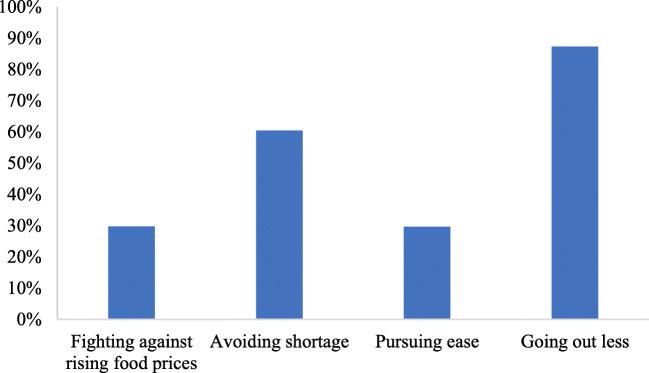
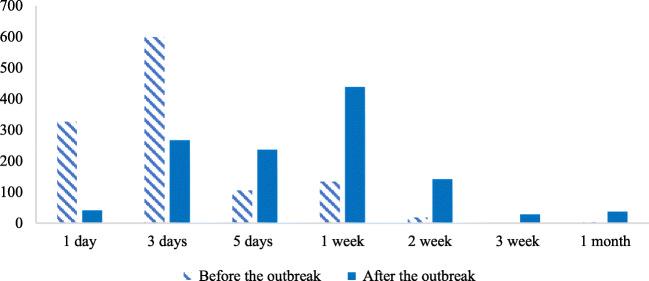
Consumer behavior changes differently in emergencies. Understanding consumer food stockpiling behavior during COVID-19 pandemic can provide critical information for governments and policymakers to adjust inventory and response strategies. This paper analyzed consumer food stockpiling behavior, including the change of food reserve scale and willingness to pay for fresh food reserves in COVID-19. Our paper shows that the scale of food reserve extends from 3.37 to 7.37 days after the outbreak of COVID-19; if available, consumers on average are willing to pay 18.14 yuan (60.47%) premium for fresh products reserves. The result shows that food stockpiling behavior is fueled by a set of multiple motivations and subjective risk perception. Female, high education level and high-income consumers were more likely to reserve larger scale food reserves, but consumers' willingness to pay for fresh food reserves is determined by income. This study was conducted when new infection cases continued to rise in the world. The story of food stockpiling during the COVID-19 pandemic in China is similar with the rest of world. Consumer stockpiling behavior in China can also be expanded to other countries to predict the change of food demand and understand more about consumer preferences in emergencies.
消费者行为在紧急情况下会有不同的变化。了解新冠疫情期间消费者的食品储备行为,可为政府和政策制定者调整库存及应对策略提供关键信息。本文分析了消费者的食品储备行为,包括新冠疫情期间食品储备规模的变化以及为新鲜食品储备支付溢价的意愿。我们的研究表明,新冠疫情爆发后,食品储备规模从3.37天延长至7.37天;如果有机会,消费者平均愿意为新鲜产品储备支付18.14元(60.47%)的溢价。结果表明,食品储备行为受到一系列多种动机和主观风险认知的推动。女性、高学历和高收入消费者更有可能储备更大规模的食品,但消费者为新鲜食品储备支付溢价的意愿取决于收入。本研究是在全球新感染病例持续上升时进行的。中国新冠疫情期间的食品储备情况与世界其他地区类似。中国消费者的储备行为也可推广到其他国家,以预测食品需求的变化,并更多地了解紧急情况下的消费者偏好。
 Zotero 插件