
SARS-CoV-2 木瓜蛋白酶样蛋白酶(PLpro)的作用机制及抑制作用。
Mechanism and inhibition of the papain-like protease, PLpro, of SARS-CoV-2.
机构信息
The Walter and Eliza Hall Institute of Medical Research and Department of Medical Biology, University of Melbourne, Melbourne, Vic., Australia.
Department of Biochemistry and Molecular Biology, Michael Smith Laboratories University of British Columbia, Vancouver, BC, Canada.
出版信息
EMBO J. 2020 Sep 15;39(18):e106275. doi: 10.15252/embj.2020106275. Epub 2020 Aug 26.
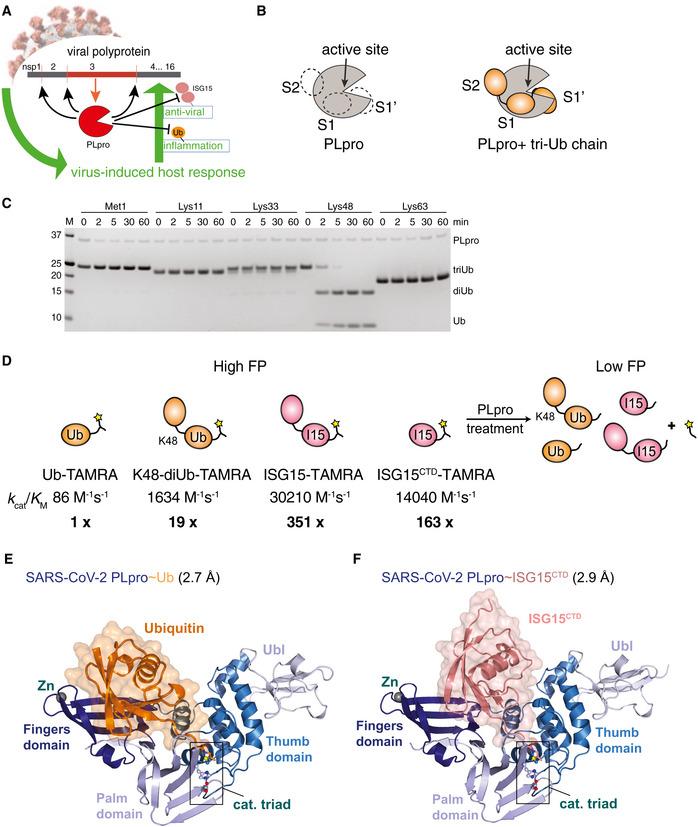
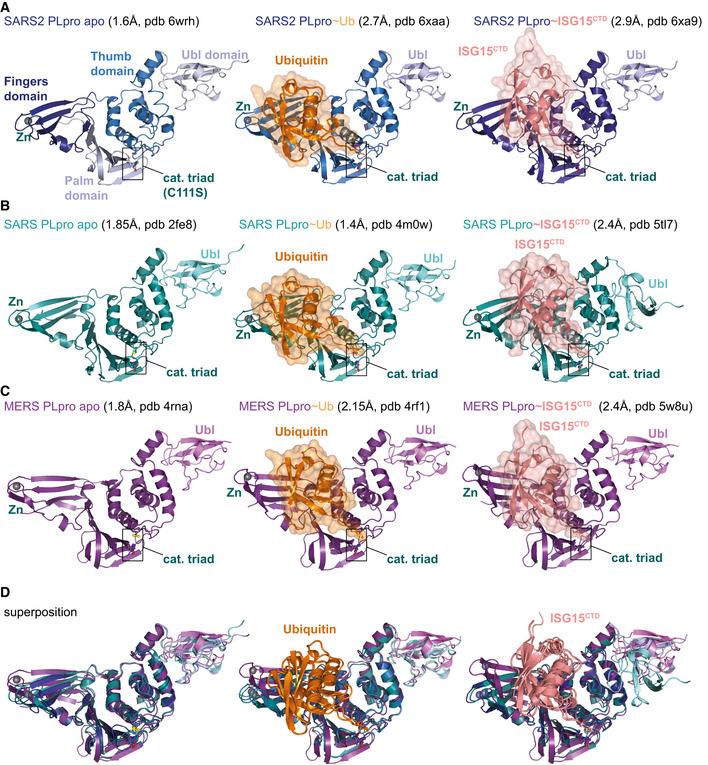
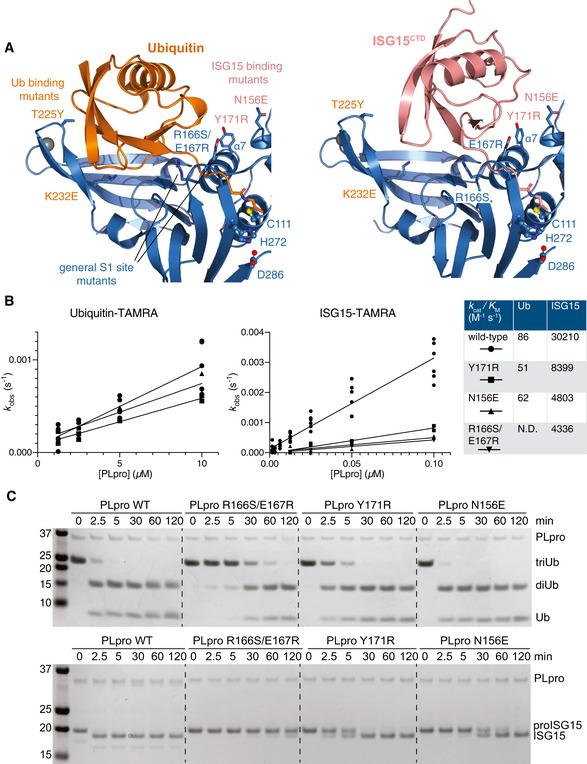
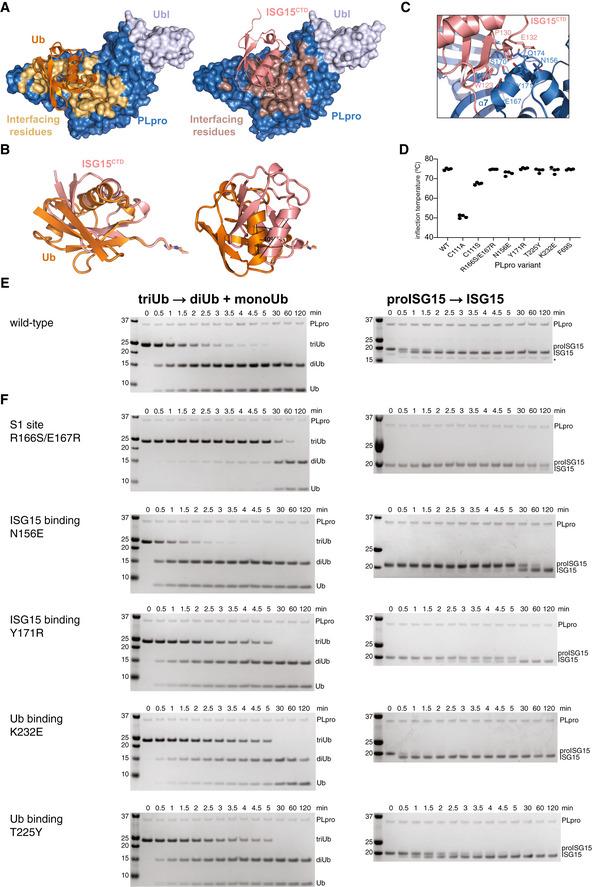
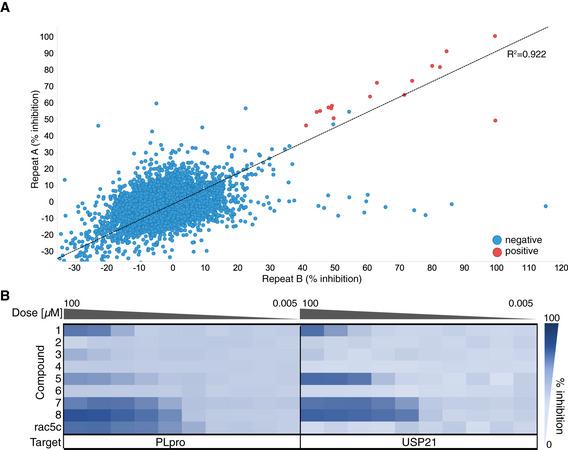
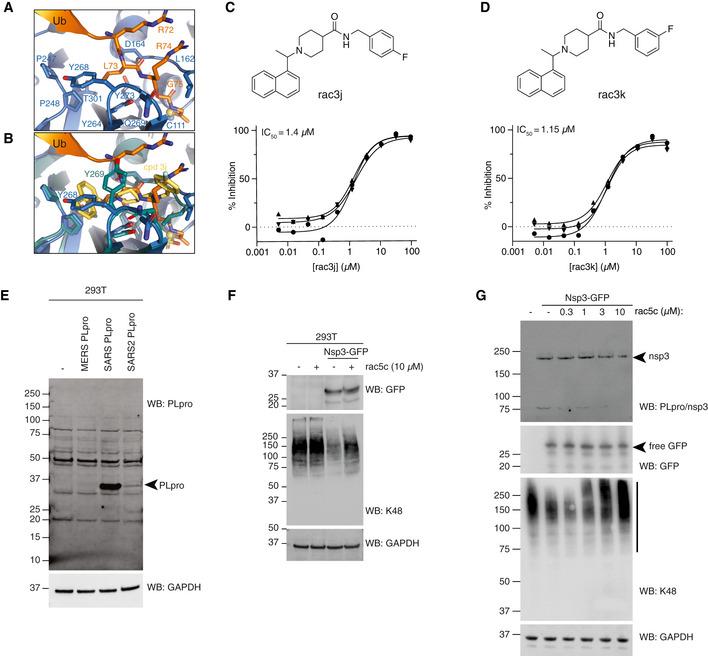
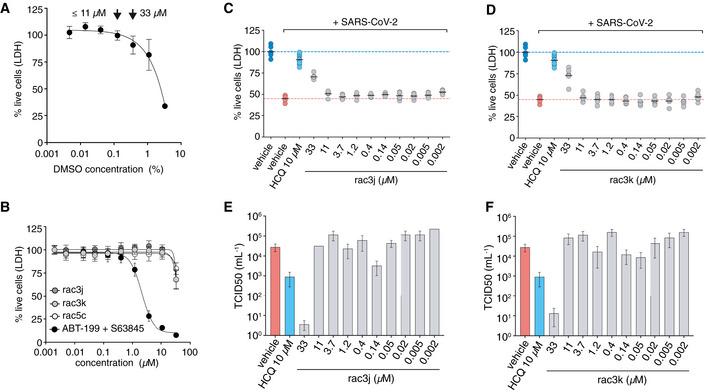
The SARS-CoV-2 coronavirus encodes an essential papain-like protease domain as part of its non-structural protein (nsp)-3, namely SARS2 PLpro, that cleaves the viral polyprotein, but also removes ubiquitin-like ISG15 protein modifications as well as, with lower activity, Lys48-linked polyubiquitin. Structures of PLpro bound to ubiquitin and ISG15 reveal that the S1 ubiquitin-binding site is responsible for high ISG15 activity, while the S2 binding site provides Lys48 chain specificity and cleavage efficiency. To identify PLpro inhibitors in a repurposing approach, screening of 3,727 unique approved drugs and clinical compounds against SARS2 PLpro identified no compounds that inhibited PLpro consistently or that could be validated in counterscreens. More promisingly, non-covalent small molecule SARS PLpro inhibitors also target SARS2 PLpro, prevent self-processing of nsp3 in cells and display high potency and excellent antiviral activity in a SARS-CoV-2 infection model.
SARS-CoV-2 冠状病毒在其非结构蛋白(nsp)-3 中编码一个必需的木瓜蛋白酶样蛋白酶结构域,即 SARS2 PLpro,它可以切割病毒多蛋白,但也可以去除泛素样 ISG15 蛋白修饰物,以及活性较低的 Lys48 连接的多泛素。PLpro 与泛素和 ISG15 结合的结构表明,S1 泛素结合位点负责高 ISG15 活性,而 S2 结合位点提供 Lys48 链特异性和切割效率。为了在重新利用的方法中鉴定 PLpro 抑制剂,对 3727 种独特的已批准药物和临床化合物对 SARS2 PLpro 的筛选没有发现一致抑制 PLpro 的化合物,也没有能够在对照筛选中验证的化合物。更有希望的是,非共价小分子 SARS PLpro 抑制剂也靶向 SARS2 PLpro,可防止 nsp3 在细胞中的自我加工,并在 SARS-CoV-2 感染模型中显示出高活性和优异的抗病毒活性。




 Zotero 插件