
转录组技术的进展让我们对人类白质病理学有了哪些认识?
What Have Advances in Transcriptomic Technologies Taught us About Human White Matter Pathologies?
作者信息
Jäkel Sarah, Williams Anna
机构信息
Centre for Regenerative Medicine, Institute for Regeneration and Repair, University of Edinburgh, Edinburgh, United Kingdom.
出版信息
Front Cell Neurosci. 2020 Aug 4;14:238. doi: 10.3389/fncel.2020.00238. eCollection 2020.
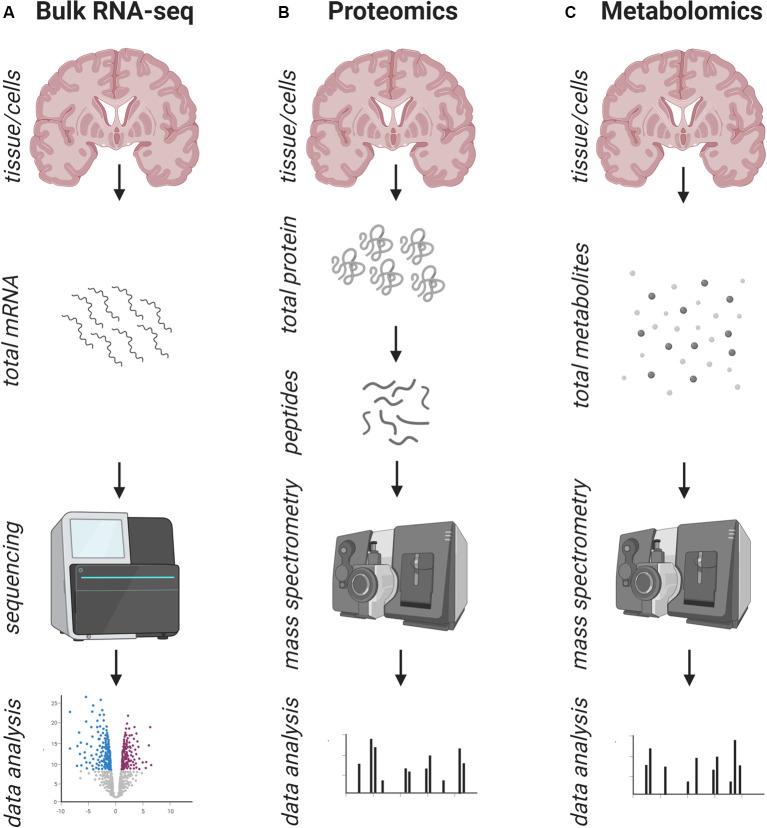
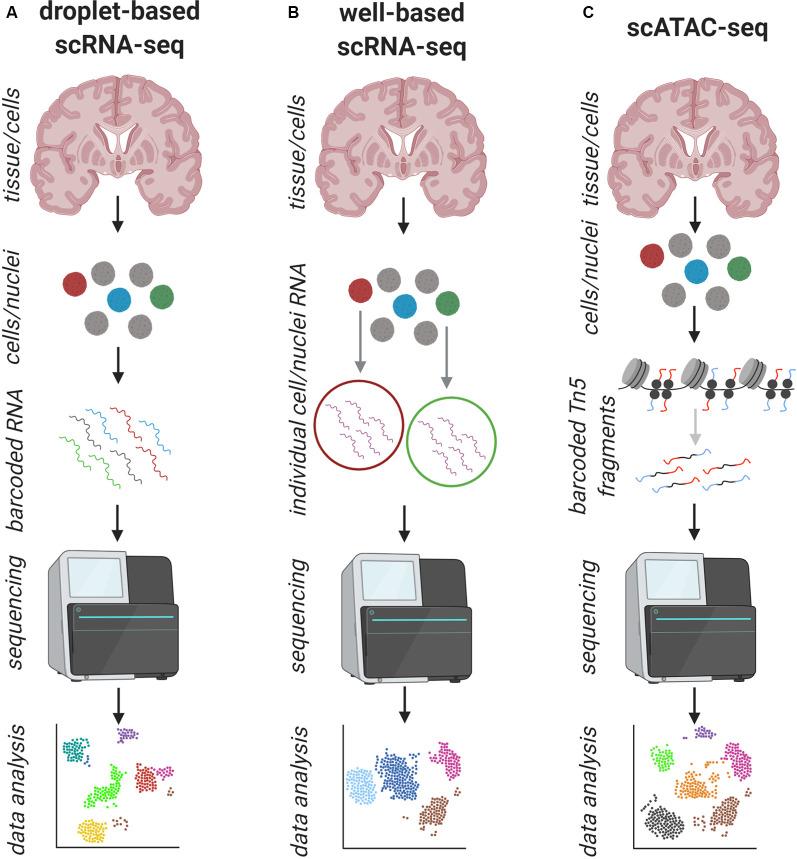
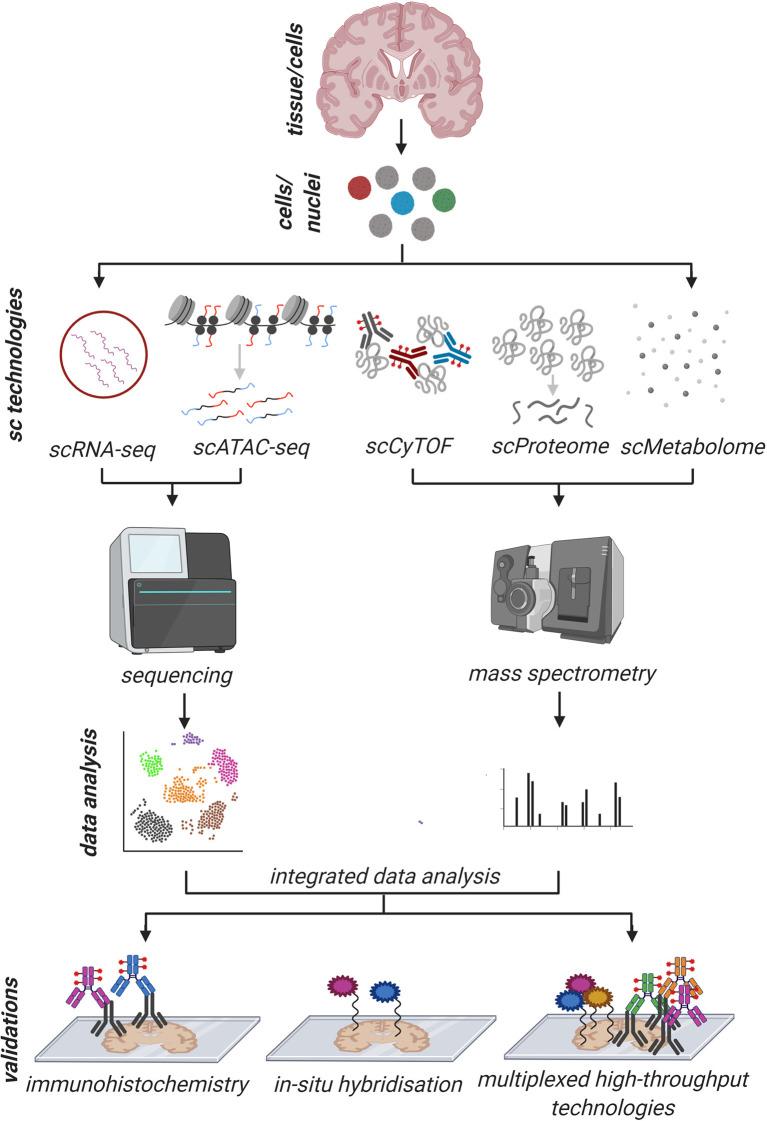
For a long time, post-mortem analysis of human brain pathologies has been purely descriptive, limiting insight into the pathological mechanisms. However, starting in the early 2000s, next-generation sequencing (NGS) and the routine application of bulk RNA-sequencing and microarray technologies have revolutionized the usefulness of post-mortem human brain tissue. This has allowed many studies to provide novel mechanistic insights into certain brain pathologies, albeit at a still unsatisfying resolution, with masking of lowly expressed genes and regulatory elements in different cell types. The recent rapid evolution of single-cell technologies has now allowed researchers to shed light on human pathologies at a previously unreached resolution revealing further insights into pathological mechanisms that will open the way for the development of new strategies for therapies. In this review article, we will give an overview of the incremental information that single-cell technologies have given us for human white matter (WM) pathologies, summarize which single-cell technologies are available, and speculate where these novel approaches may lead us for pathological assessment in the future.
长期以来,对人类脑部病理学的尸检分析一直纯粹是描述性的,限制了对病理机制的深入了解。然而,从21世纪初开始,新一代测序(NGS)以及批量RNA测序和微阵列技术的常规应用彻底改变了尸检人类脑组织的用途。这使得许多研究能够对某些脑部病理学提供新的机制性见解,尽管分辨率仍不尽人意,不同细胞类型中低表达基因和调控元件存在掩盖现象。单细胞技术最近的快速发展现在使研究人员能够以前所未有的分辨率揭示人类病理学,从而进一步深入了解病理机制,这将为新治疗策略的开发开辟道路。在这篇综述文章中,我们将概述单细胞技术为人类白质(WM)病理学提供的增量信息,总结可用的单细胞技术,并推测这些新方法未来可能在病理评估方面引领我们走向何方。

 Zotero 插件