
癌症对免疫疗法的耐药机制。
Mechanisms of Cancer Resistance to Immunotherapy.
作者信息
Bai Rilan, Chen Naifei, Li Lingyu, Du Nawen, Bai Ling, Lv Zheng, Tian Huimin, Cui Jiuwei
机构信息
Cancer Center, The First Hospital of Jilin University, Changchun, China.
出版信息
Front Oncol. 2020 Aug 6;10:1290. doi: 10.3389/fonc.2020.01290. eCollection 2020.
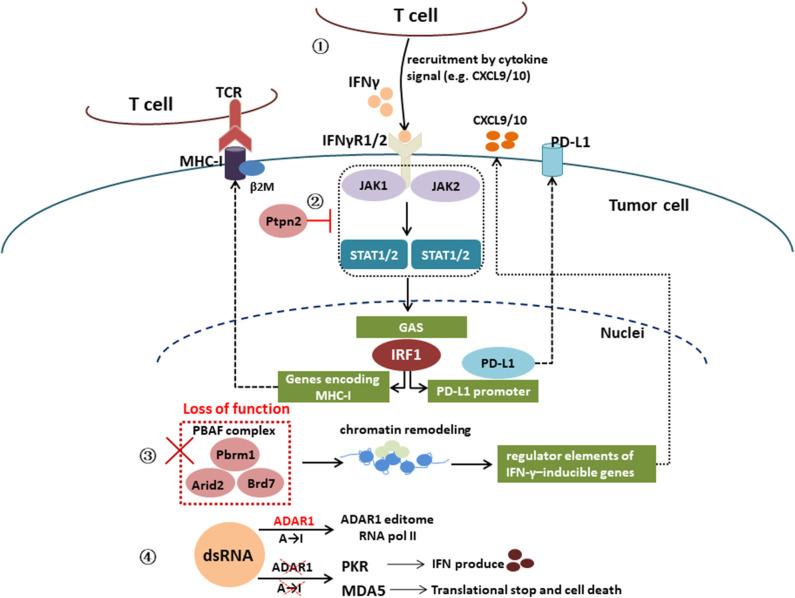
Over the last decade, based on the extensive development of preclinical animal studies and clinical trials, the efficacy, and mechanisms of immunotherapy have been fully explored. Significant and lasting clinical responses with immunotherapy provide a new breakthrough treatment for a variety of refractory cancer histologies, which gradually change the treatment pattern of tumors. However, although immune checkpoint inhibitor drugs are promising for achieving longer-term efficacy, their benefits in the overall population are still very low, such as low frequency of response in some common tumor types such as breast and prostate, and heterogeneity in the degree of response among different tumor lesions in the same patient, making immunotherapy with many limitations and challenges. Most patients do not respond to immunotherapy or inevitably develop resistance to treatment after a period of treatment, manifesting with primary resistance or acquired resistance who initially respond to treatment. The mechanisms of tumor immune resistance are very complex and involve multiple aspects such as genes, metabolism, inflammation, and abnormal neovascularization. Currently, many mechanisms of immunotherapy resistance have been characterized, and more continue to be uncovered. These efforts can improve the quality of medical care for cancer diagnosis and treatment, which improve the quality of life of patients, and finally lead to accurate individualized treatment. This review discusses mechanisms of cancer immunotherapy resistance including tumor-intrinsic factors and tumor-extrinsic factors.
在过去十年中,基于临床前动物研究和临床试验的广泛开展,免疫疗法的疗效和机制已得到充分探索。免疫疗法显著且持久的临床反应为多种难治性癌症组织学类型提供了一种新的突破性治疗方法,逐渐改变了肿瘤的治疗模式。然而,尽管免疫检查点抑制剂药物有望实现更长期的疗效,但它们在总体人群中的获益仍然很低,例如在乳腺癌和前列腺癌等一些常见肿瘤类型中的反应频率较低,以及同一患者不同肿瘤病灶之间反应程度的异质性,这使得免疫疗法存在诸多局限性和挑战。大多数患者对免疫疗法无反应,或在一段时间的治疗后不可避免地产生耐药性,表现为原发性耐药或对最初有反应的治疗产生获得性耐药。肿瘤免疫抵抗的机制非常复杂,涉及基因、代谢、炎症和异常新血管形成等多个方面。目前,许多免疫疗法耐药机制已被阐明,且更多机制仍在不断被发现。这些努力能够提高癌症诊疗的医疗质量,改善患者的生活质量,并最终实现精准的个体化治疗。本综述讨论了癌症免疫疗法耐药的机制,包括肿瘤内在因素和肿瘤外在因素。

 Zotero 插件