
尼泊尔减少发育迟缓的驱动因素:国家案例研究。
Drivers of stunting reduction in Nepal: a country case study.
机构信息
Centre for Global Child Health, Hospital for Sick Children, Toronto, Canada.
Dalla Lana School of Public Health, University of Toronto, Toronto, Canada.
出版信息
Am J Clin Nutr. 2020 Sep 14;112(Suppl 2):844S-859S. doi: 10.1093/ajcn/nqaa218.
BACKGROUND
Chronic child malnutrition represents a serious global health concern. Over the last several decades, Nepal has seen a significant decline in linear growth stunting - a physical manifestation of chronic malnutrition - despite only modest economic growth and significant political instability.
OBJECTIVE
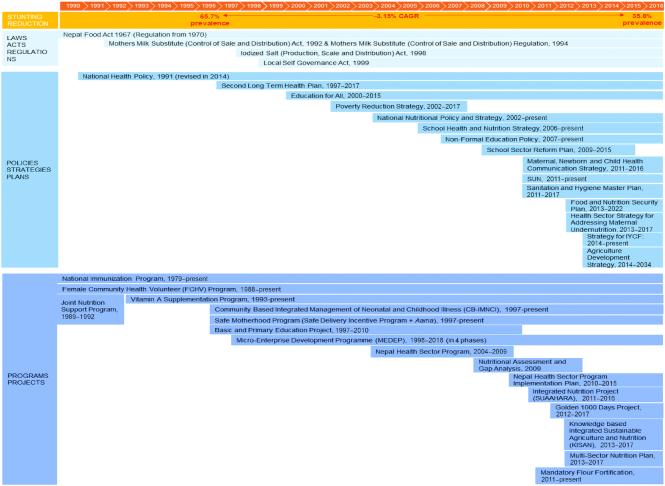
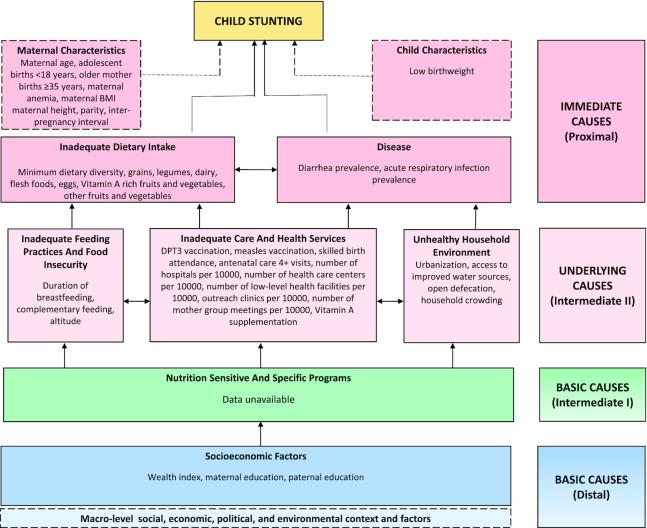
This study aimed to conduct an in-depth assessment of the determinants of stunting reduction in Nepal from 1996 to 2016, with specific attention paid to national-, community-, household-, and individual-level factors, as well as relevant nutrition-specific and -sensitive initiatives rolled out within the country.
METHODS
Using a mixed-methods approach, 4 types of inquiry were employed: 1) a systematic review of published peer-reviewed and gray literature; 2) retrospective quantitative data analyses using Demographic and Health Surveys from 1996 to 2016; 3) a review of key nutrition-specific and -sensitive policies and programs; and 4) retrospective qualitative data collection and analyses.
RESULTS
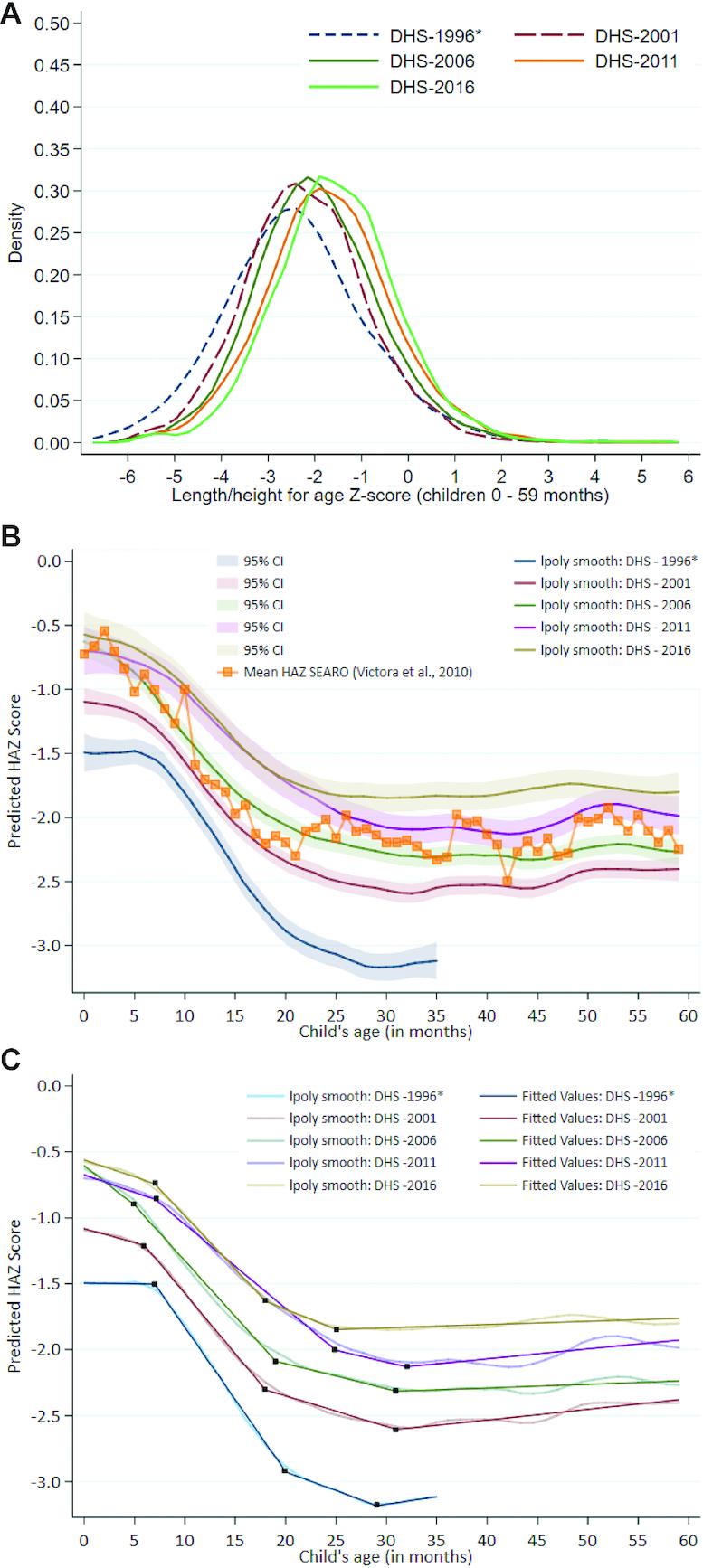
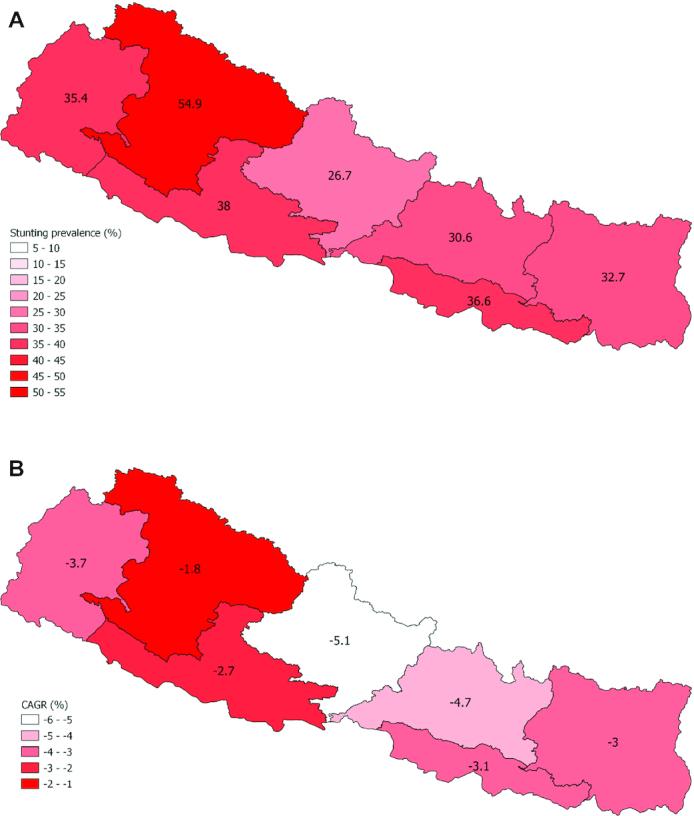
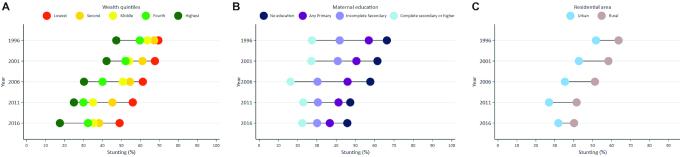
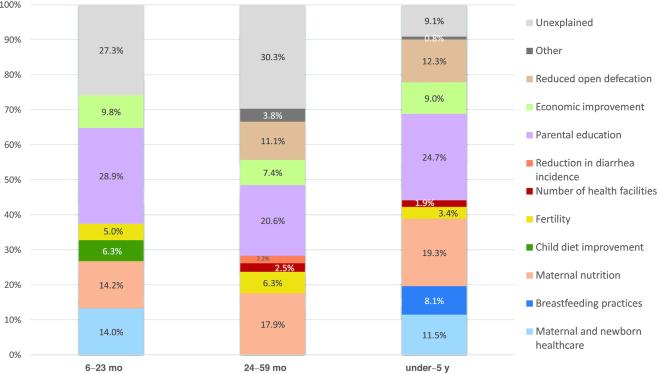
Mean height-for-age z-scores (HAZ) improved by 0.94 SDs from 1996 to 2016. Subnational variation and socioeconomic inequalities in stunting outcomes persisted, with the latter widening over time. Decomposition analysis for children aged under 5 y explained 90.9% of the predicted change in HAZ, with key factors including parental education (24.7%), maternal nutrition (19.3%), reduced open defecation (12.3%), maternal and newborn health care (11.5%), and economic improvement (9.0%). Key initiatives focused on decentralizing the health system and mobilizing community health workers to increase accessibility; long-standing nationwide provision of basic health interventions; targeted efforts to improve maternal and child health; and the prioritization of nutrition-sensitive initiatives by both government and donors. National and community stakeholders and mothers at village level highlighted a mixture of poverty reduction, access to health services, improved education, and increased access to water, sanitation, and hygiene as drivers of stunting reduction.
CONCLUSIONS
Improvements in both nutrition-specific and nutrition-sensitive sectors have been critical to Nepal's stunting decline, particularly in the areas of poverty reduction, health, education, and sanitation.
背景
慢性儿童营养不良是一个严重的全球健康问题。尽管尼泊尔的经济增长缓慢,政治局势不稳定,但在过去几十年中,其儿童生长迟缓率(慢性营养不良的一种身体表现)显著下降。
目的
本研究旨在深入评估 1996 年至 2016 年期间尼泊尔儿童生长迟缓率降低的决定因素,特别关注国家、社区、家庭和个人层面的因素,以及在尼泊尔实施的营养特定和敏感倡议。
方法
采用混合方法,进行了 4 种类型的研究:1)系统综述已发表的同行评议和灰色文献;2)利用 1996 年至 2016 年的人口与健康调查进行回顾性定量数据分析;3)审查营养特定和敏感政策和方案;4)回顾性定性数据收集和分析。
结果
1996 年至 2016 年期间,平均身高年龄 Z 评分(HAZ)提高了 0.94 个标准差。儿童生长迟缓结果存在次国家差异和社会经济不平等,且后者随时间扩大。对 5 岁以下儿童的分解分析解释了 HAZ 预测变化的 90.9%,主要因素包括父母教育(24.7%)、孕产妇营养(19.3%)、减少露天排便(12.3%)、孕产妇和新生儿保健(11.5%)以及经济改善(9.0%)。主要倡议侧重于使卫生系统权力下放和动员社区卫生工作者以提高可及性;长期以来,全国提供基本卫生干预措施;有针对性地努力改善母婴健康;政府和捐助者都将营养敏感倡议作为优先事项。国家和社区利益攸关方以及村级的母亲强调,减贫、获得卫生服务、改善教育和增加获得水、环境卫生和个人卫生机会是减少儿童生长迟缓的驱动因素。
结论
营养特定和营养敏感部门的改善对于尼泊尔儿童生长迟缓率的下降至关重要,特别是在减贫、卫生、教育和环境卫生领域。

 Zotero 插件