
COVID-19大流行期间某单一护理中心远程医疗在慢性肝病中的应用:前瞻性观察研究
Use of Telemedicine for Chronic Liver Disease at a Single Care Center During the COVID-19 Pandemic: Prospective Observational Study.
作者信息
Guarino Maria, Cossiga Valentina, Fiorentino Andrea, Pontillo Giuseppina, Morisco Filomena
机构信息
Gastroenterology Unit, Department of Clinical Medicine and Surgery, University of Naples Federico II, Naples, Italy.
出版信息
J Med Internet Res. 2020 Sep 21;22(9):e20874. doi: 10.2196/20874.
BACKGROUND
The COVID-19 outbreak has overwhelmed and altered health care systems worldwide, with a substantial impact on patients with chronic diseases. The response strategy has involved implementing measures like social distancing, and care delivery modalities like telemedicine have been promoted to reduce the risk of transmission.
OBJECTIVE
The aim of this study was to analyze the benefits of using telemedicine services for patients with chronic liver disease (CLD) at a tertiary care center in Italy during the COVID-19-mandated lockdown.
METHODS
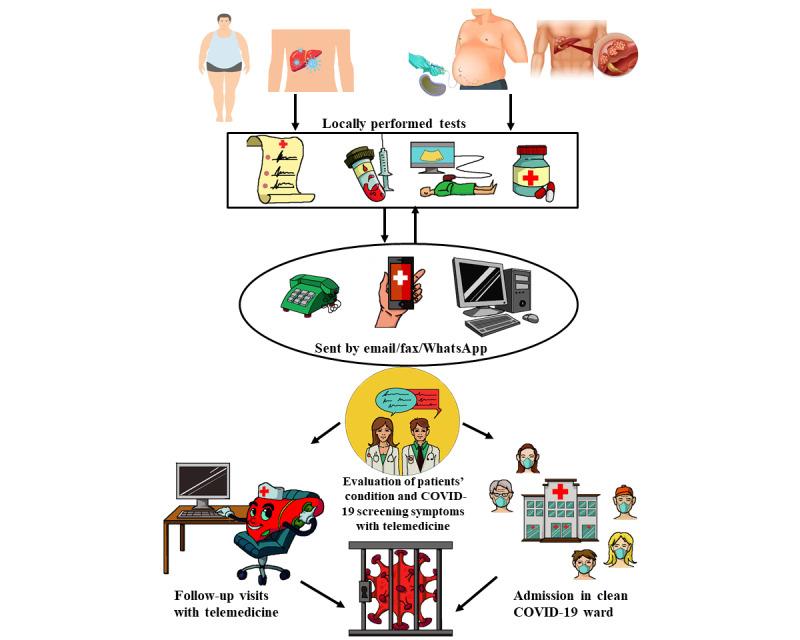
From March 9 to May 3, 2020, a prospective observational study was conducted in the Liver Unit of the University Hospital of Naples Federico II to evaluate the impact of (1) a fully implemented telemedicine program, partially restructured in response to COVID-19 to include video consultations; (2) extended hours of operation for helpline services; and (3) smart-working from home to facilitate follow-up visits for patients with CLD while adhering to social distancing regulations.
RESULTS
During the lockdown in Italy, almost 400 visits were conducted using telemedicine; only patients requiring urgent care were admitted to a non-COVID-19 ward of our hospital. Telemedicine services were implemented not only for follow-up visits but also to screen patients prior to hospital admission and to provide urgent evaluations during complications. Of the nearly 1700 patients with CLD who attended a follow-up visit at our Liver Unit, none contracted COVID-19, and there was no need to alter treatment schedules.
CONCLUSIONS
Telemedicine was a useful tool for following up patients with CLD and for reducing the impact of the COVID-19 pandemic. This system of health care delivery was appreciated by patients since it gave them the opportunity to be in contact with physicians while respecting social distancing rules.
背景
新冠疫情使全球医疗系统不堪重负并发生改变,对慢性病患者产生了重大影响。应对策略包括实施社交 distancing 等措施,同时推广了远程医疗等护理提供模式以降低传播风险。
目的
本研究旨在分析在意大利新冠疫情封锁期间,在一家三级医疗中心为慢性肝病(CLD)患者使用远程医疗服务的益处。
方法
2020年3月9日至5月3日,在那不勒斯费德里科二世大学医院肝病科进行了一项前瞻性观察研究,以评估以下措施的影响:(1)全面实施的远程医疗计划,该计划因应新冠疫情进行了部分重组,包括视频会诊;(2)延长热线服务运营时间;(3)居家灵活办公,以便在遵守社交 distancing 规定的同时为CLD患者提供随访。
结果
在意大利封锁期间,通过远程医疗进行了近400次就诊;只有需要紧急护理的患者被收治到我院非新冠病房。远程医疗服务不仅用于随访,还用于入院前筛查患者以及在出现并发症时提供紧急评估。在我院肝病科进行随访的近1700名CLD患者中,无一感染新冠病毒,也无需更改治疗计划。
结论
远程医疗是随访CLD患者和降低新冠疫情影响的有用工具。这种医疗服务体系受到患者的赞赏,因为它使患者有机会在遵守社交 distancing 规则的同时与医生保持联系。
 Zotero 插件