
意大利米兰 COVID-19 急性呼吸窘迫综合征有创通气患者的特征、治疗、结局和死亡原因。
Characteristics, treatment, outcomes and cause of death of invasively ventilated patients with COVID-19 ARDS in Milan, Italy.
机构信息
Department of Anesthesia and Intensive Care, IRCCS San Raffaele Scientific Institute, Milan, Italy.
Vita-Salute San Raffaele University, Milan, Italy.
出版信息
Crit Care Resusc. 2020 Sep;22(3):200-211. doi: 10.1016/S1441-2772(23)00387-3.
OBJECTIVE
Describe characteristics, daily care and outcomes of patients with coronavirus disease 2019 (COVID-19) acute respiratory distress syndrome (ARDS).
DESIGN
Case series of 73 patients.
SETTING
Large tertiary hospital in Milan.
PARTICIPANTS
Mechanically ventilated patients with confirmed COVID-19 admitted to the intensive care unit (ICU) between 20 February and 2 April 2020.
MAIN OUTCOME MEASURES
Demographic and daily clinical data were collected to identify predictors of early mortality.
RESULTS
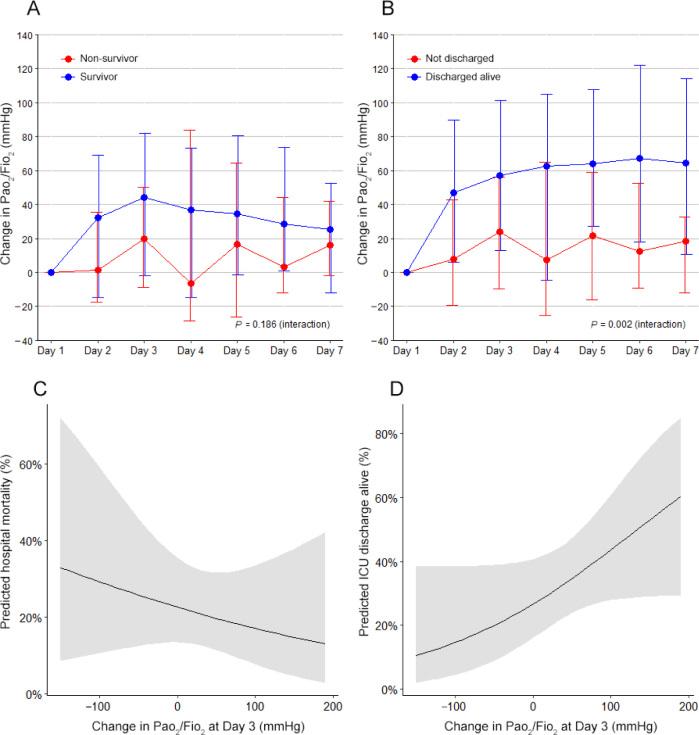
Of the 73 patients included in the study, most were male (83.6%), the median age was 61 years (interquartile range [IQR], 54-69 years), and hypertension affected 52.9% of patients. Lymphocytopenia (median, 0.77 x 10 per mm; IQR, 0.58-1.00 x 10 per mm), hyperinflammation with C-reactive protein (median, 184.5 mg/dL; IQR, 108.2-269.1 mg/dL) and pro-coagulant status with D-dimer (median, 10.1 μg/m; IQR, 5.0-23.8 μg/m) were present. Median tidal volume was 6.7 mL/kg (IQR, 6.0-7.5 mL/kg), and median positive end-expiratory pressure was 12 cmHO (IQR, 10-14 cmHO). In the first 3 days, prone positioning (12-16 h) was used in 63.8% of patients and extracorporeal membrane oxygenation in five patients (6.8%). After a median follow-up of 19.0 days (IQR, 15.0-27.0 days), 17 patients (23.3%) had died, 23 (31.5%) had been discharged from the ICU, and 33 (45.2%) were receiving invasive mechanical ventilation in the ICU. Older age (odds ratio [OR], 1.12; 95% CI, 1.04-1.22; = 0.004) and hypertension (OR, 6.15; 95% CI, 1.75-29.11; = 0.009) were associated with mortality, while early improvement in arterial partial pressure of oxygen (PaO) to fraction of inspired oxygen (FiO) ratio was associated with being discharged alive from the ICU ( = 0.002 for interaction).
CONCLUSIONS
Despite multiple advanced critical care interventions, COVID-19 ARDS was associated with prolonged ventilation and high short term mortality. Older age and pre-admission hypertension were key mortality risk factors.
TRIAL REGISTRATION
ClinicalTrials.gov identifier: NCT04318366.
目的
描述 2019 年冠状病毒病(COVID-19)急性呼吸窘迫综合征(ARDS)患者的特征、日常护理和结局。
设计
73 例患者的病例系列。
地点
米兰的一家大型三级医院。
参与者
2020 年 2 月 20 日至 4 月 2 日期间确诊为 COVID-19 并入住重症监护病房(ICU)的机械通气患者。
主要观察指标
收集人口统计学和每日临床数据,以确定早期死亡率的预测因素。
结果
在纳入研究的 73 例患者中,大多数为男性(83.6%),中位年龄为 61 岁(四分位距[IQR],54-69 岁),52.9%的患者患有高血压。淋巴细胞减少症(中位数,0.77 x 10 个/mm;IQR,0.58-1.00 x 10 个/mm)、C 反应蛋白升高(中位数,184.5 mg/dL;IQR,108.2-269.1 mg/dL)和 D-二聚体升高(中位数,10.1 μg/m;IQR,5.0-23.8 μg/m)。潮气量中位数为 6.7 mL/kg(IQR,6.0-7.5 mL/kg),呼气末正压中位数为 12 cmHO(IQR,10-14 cmHO)。在最初的 3 天中,63.8%的患者采用了俯卧位(12-16 小时),5 例患者(6.8%)采用了体外膜氧合。中位随访 19.0 天(IQR,15.0-27.0 天)后,17 例(23.3%)患者死亡,23 例(31.5%)患者从 ICU 出院,33 例(45.2%)患者仍在 ICU 接受有创机械通气。年龄较大(比值比[OR],1.12;95%CI,1.04-1.22; = 0.004)和高血压(OR,6.15;95%CI,1.75-29.11; = 0.009)与死亡率相关,而动脉血氧分压(PaO)与吸入氧分数(FiO)比值的早期改善与 ICU 存活出院相关(交互作用的 = 0.002)。
结论
尽管进行了多种先进的重症监护干预措施,但 COVID-19 ARDS 仍与长时间通气和短期高死亡率相关。年龄较大和入院前高血压是关键的死亡风险因素。
试验注册
ClinicalTrials.gov 标识符:NCT04318366。

 Zotero 插件