
某些药用植物对脑肿瘤细胞系增殖和侵袭的作用
Activities of Some Medicinal Plants on the Proliferation and Invasion of Brain Tumor Cell Lines.
作者信息
Ngulde Saidu I, Sandabe Umar K, Abounader Roger, Zhang Ying, Hussaini Isa M
机构信息
Department of Veterinary Pharmacology and Toxicology, Faculty of Veterinary, University of Maiduguri, PMB 1069, Maiduguri, Borno, Nigeria.
Department of Veterinary Physiology and Biochemistry, Faculty of Veterinary, University of Maiduguri, PMB 1069, Maiduguri, Borno, Nigeria.
出版信息
Adv Pharmacol Pharm Sci. 2020 Aug 27;2020:3626879. doi: 10.1155/2020/3626879. eCollection 2020.
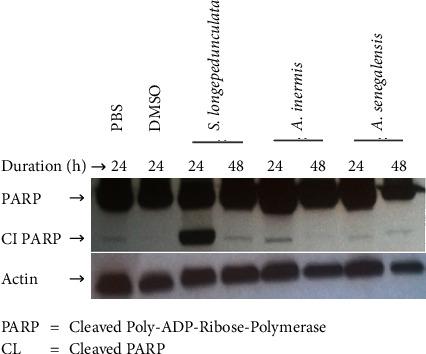
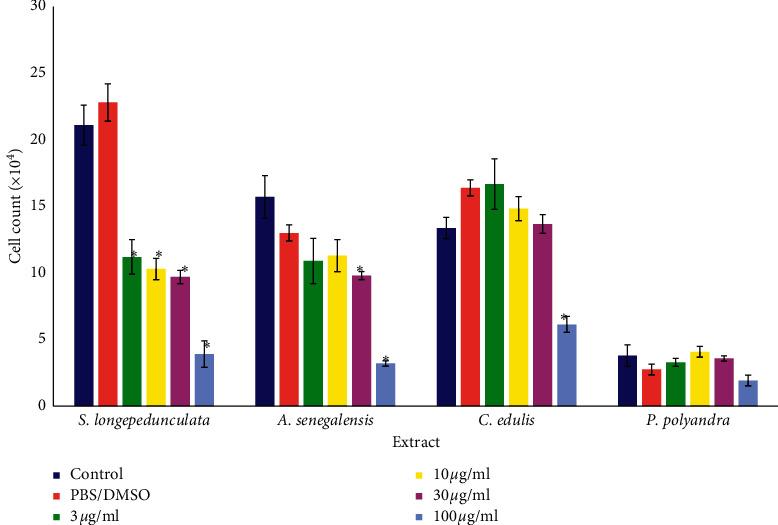
Cancer is a debilitating disease that is on the increase in both developed and developing countries. Anticancer drugs are often expensive, have narrow spectrum of activities, and are associated with toxicities and side effects such as myelosuppression, immunosuppression, gastrointestinal disturbance, alopecia, skin toxicity, and hepatotoxicity. Plants have been the major source of anticancer drugs both in orthodox and traditional medicine. Many of the plants claimed by the traditional medicine practitioners (TMPs) to be effective in the treatment of cancer are yet to be evaluated scientifically. In this work, five medicinal plants used by TMPs in Borno State, Nigeria, were tested against two brain tumor cell lines. Ethanol extracts of , subsp. , , , and were used. U87 and U231 brain tumor cell lines were used for proliferation assay, U251 cell line was used for the invasion assay in collagen V coated inserts, and U87 cell line was used for the western blot detection of cleaved Poly-ADP-Ribose-Polymerase (PARP). The result revealed that all tested extracts significantly ( < 0.05) inhibited the proliferation of U87 and U231 cell lines with the respective IC values ranging between 8 and 20 g/ml for and 100 and 90 g/ml for . The five extracts significantly ( < 0.05) inhibited the invasion of U251 cell line at the concentration of 10 g/ml (), 20 g/ml (), 50 g/ml (), 50 g/ml (), and 50 g/ml (). extract induced the cleavage of PARP. It was concluded that these medicinal plants have antiproliferative and anti-invasive activities and possess good prospects as source of anticancer agents especially which induced apoptosis in U87 cell line.
癌症是一种使人衰弱的疾病,在发达国家和发展中国家都呈上升趋势。抗癌药物通常价格昂贵,活性谱窄,并且与骨髓抑制、免疫抑制、胃肠道紊乱、脱发、皮肤毒性和肝毒性等毒性和副作用相关。在正统医学和传统医学中,植物一直是抗癌药物的主要来源。许多被传统医学从业者声称对癌症治疗有效的植物尚未经过科学评估。在这项研究中,对尼日利亚博尔诺州传统医学从业者使用的五种药用植物针对两种脑肿瘤细胞系进行了测试。使用了亚种、、、和的乙醇提取物。U87和U231脑肿瘤细胞系用于增殖测定,U251细胞系用于在包被有胶原蛋白V的小室中进行侵袭测定,U87细胞系用于蛋白质免疫印迹检测裂解的聚ADP核糖聚合酶(PARP)。结果显示,所有测试提取物均显著(<0.05)抑制U87和U231细胞系的增殖,对于,各自的IC值在8至20μg/ml之间,对于,IC值在100至90μg/ml之间。这五种提取物在10μg/ml()、20μg/ml()、50μg/ml()、50μg/ml()和50μg/ml()的浓度下显著(<0.05)抑制U251细胞系的侵袭。提取物诱导了PARP的裂解。得出的结论是,这些药用植物具有抗增殖和抗侵袭活性,作为抗癌剂来源具有良好的前景,尤其是在U87细胞系中诱导凋亡的。


 Zotero 插件