
对现代澳大利亚拉布拉多犬种的遗传分析显示,其拥有过多的贵宾犬基因组。
Genetic analysis of the modern Australian labradoodle dog breed reveals an excess of the poodle genome.
机构信息
Cancer Genetics and Comparative Genomics Branch, National Human Genome Research Institute, National Institutes of Health, Bethesda MD, United States of America.
National Institute for Biotechnology and Genetic Engineering (NIBGE), Jhang Road Faisalabad, Punjab, Pakistan.
出版信息
PLoS Genet. 2020 Sep 10;16(9):e1008956. doi: 10.1371/journal.pgen.1008956. eCollection 2020 Sep.
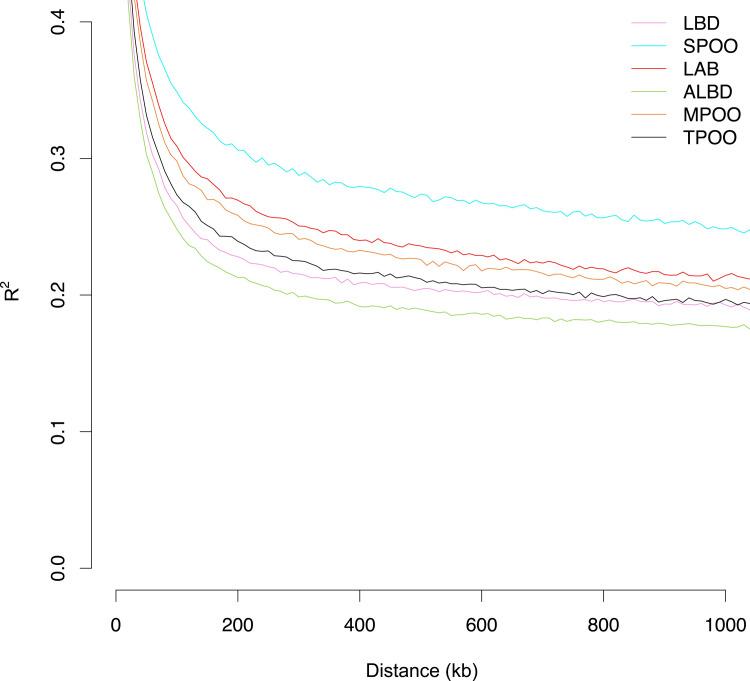
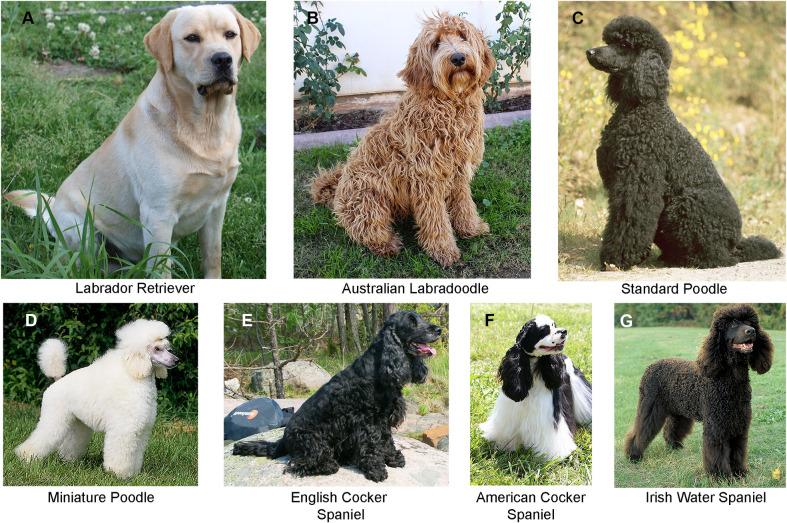
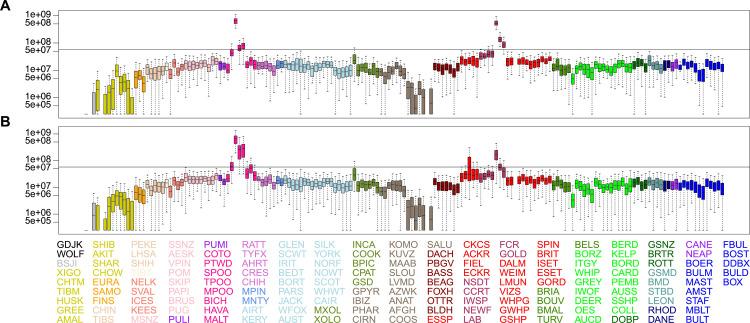
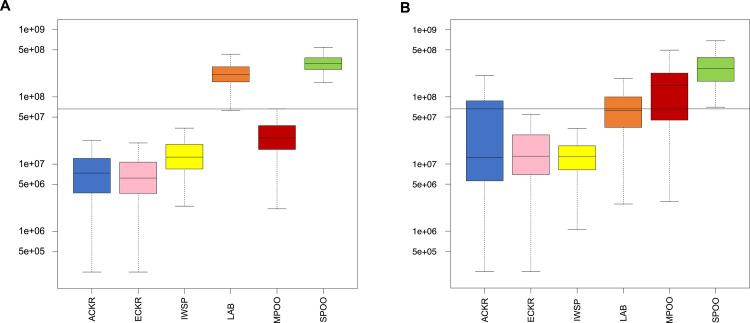
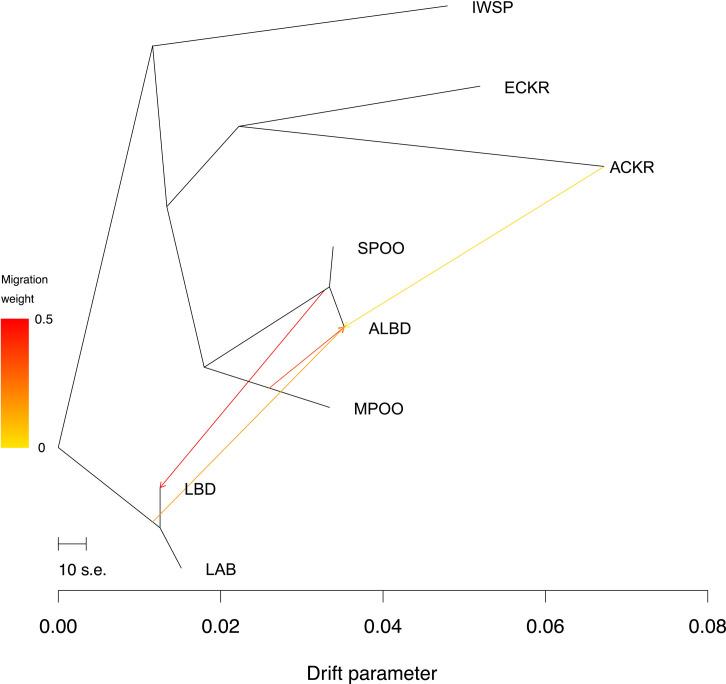
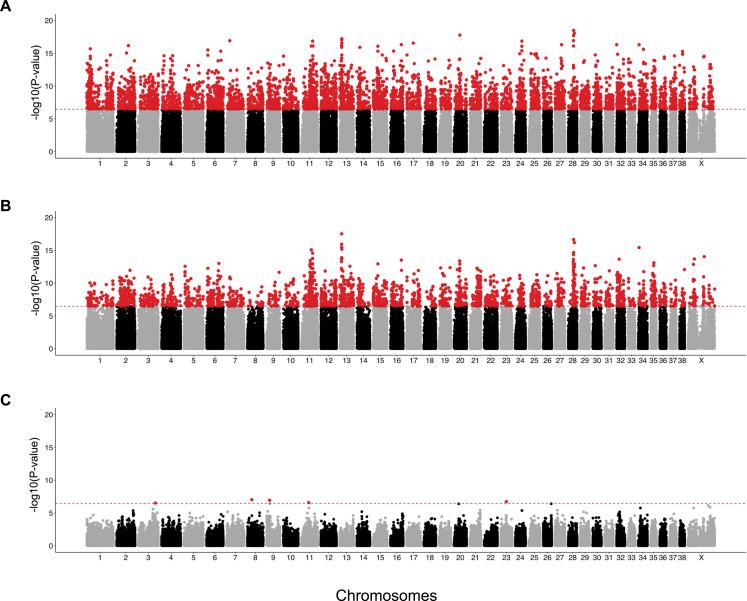
The genomic diversity of the domestic dog is an invaluable resource for advancing understanding of mammalian biology, evolutionary biology, morphologic variation, and behavior. There are approximately 350 recognized breeds in the world today, many established through hybridization and selection followed by intense breeding programs aimed at retaining or enhancing specific traits. As a result, many breeds suffer from an excess of particular diseases, one of many factors leading to the recent trend of "designer breed" development, i.e. crossing purebred dogs from existing breeds in the hope that offspring will be enriched for desired traits and characteristics of the parental breeds. We used a dense panel of 150,106 SNPs to analyze the population structure of the Australian labradoodle (ALBD), to understand how such breeds are developed. Haplotype and admixture analyses show that breeds other than the poodle (POOD) and Labrador retriever (LAB) contributed to ALBD formation, but that the breed is, at the genetic level, predominantly POOD, with all small and large varieties contributing to its construction. Allele frequency analysis reveals that the breed is enhanced for variants associated with a poodle-like coat, which is perceived by breeders to have an association with hypoallergenicity. We observed little enhancement for LAB-specific alleles. This study provides a blueprint for understanding how dog breeds are formed, highlighting the limited scope of desired traits in defining new breeds.
家犬的基因组多样性是推进哺乳动物生物学、进化生物学、形态变异和行为理解的宝贵资源。如今,世界上大约有 350 种公认的犬种,其中许多是通过杂交和选择建立的,然后进行密集的繁殖计划,旨在保留或增强特定的特征。因此,许多犬种患有过多特定的疾病,这是导致最近“设计犬”发展趋势的众多因素之一,即交叉纯种犬,希望后代能丰富父母品种的所需特征和特性。我们使用了 150106 个 SNP 的密集面板来分析澳大利亚金毛寻回猎犬(ALBD)的种群结构,以了解这种犬种是如何发展的。单倍型和混合分析表明,除了贵宾犬(POOD)和拉布拉多猎犬(LAB)之外的其他品种对 ALBD 的形成有贡献,但从遗传水平上看,该品种主要是 POOD,所有小品种和大品种都为其构建做出了贡献。等位基因频率分析表明,该品种增强了与贵宾犬类似的毛色相关的变体,这被饲养员认为与低过敏性有关。我们观察到 LAB 特定等位基因的增强很小。这项研究为理解犬种是如何形成的提供了蓝图,突出了在定义新犬种时,期望特征的范围有限。

 Zotero 插件