
真菌培养蚂蚁与其病原体之间的化学战。
Chemical warfare between fungus-growing ants and their pathogens.
机构信息
Department of Molecular Microbiology, John Innes Centre, Norwich, NR4 7UH, United Kingdom.
Department of Molecular Microbiology, John Innes Centre, Norwich, NR4 7UH, United Kingdom; School of Biological Sciences, University of East Anglia, Norwich, NR4 7TU, United Kingdom.
出版信息
Curr Opin Chem Biol. 2020 Dec;59:172-181. doi: 10.1016/j.cbpa.2020.08.001. Epub 2020 Sep 17.
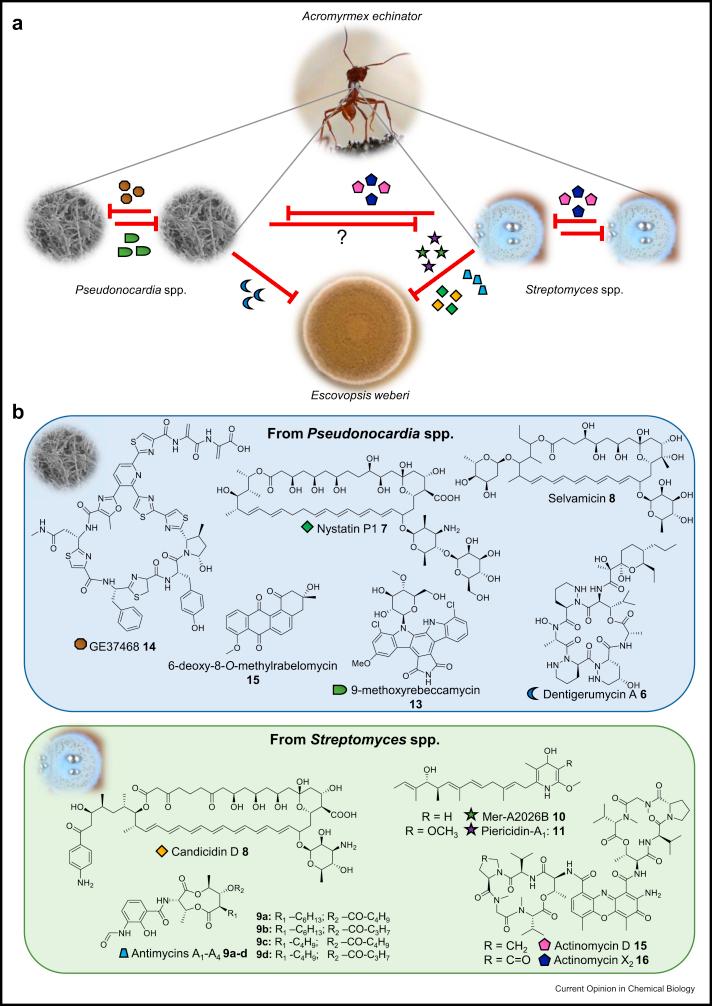
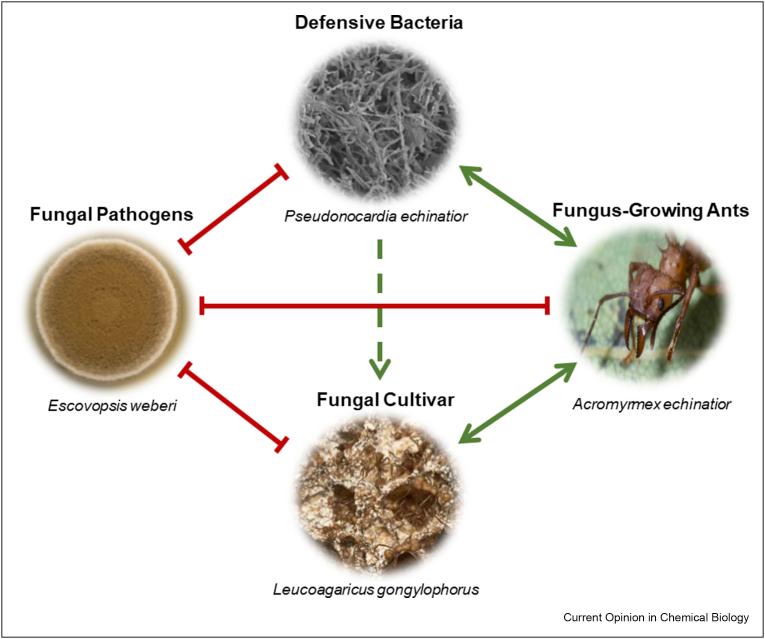
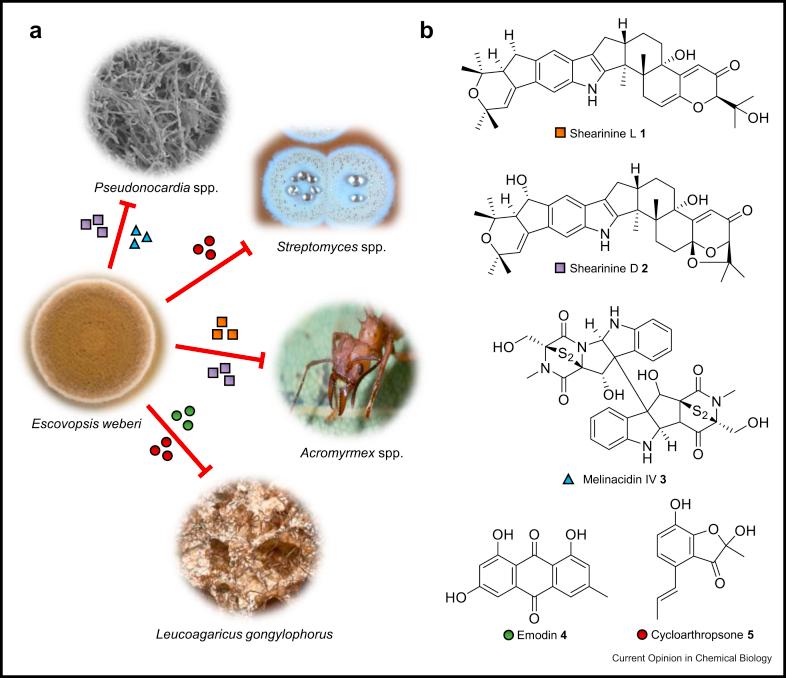
Fungus-growing attine ants are under constant threat from fungal pathogens such as the specialized mycoparasite Escovopsis, which uses combined physical and chemical attack strategies to prey on the fungal gardens of the ants. In defence, some species assemble protective microbiomes on their exoskeletons that contain antimicrobial-producing Actinobacteria. Underlying this network of mutualistic and antagonistic interactions are an array of chemical signals. Escovopsis weberi produces the shearinine terpene-indole alkaloids, which affect ant behaviour, diketopiperazines to combat defensive bacteria, and other small molecules that inhibit the fungal cultivar. Pseudonocardia and Streptomyces mutualist bacteria produce depsipeptide and polyene macrolide antifungals active against Escovopsis spp. The ant nest metabolome is further complicated by competition between defensive bacteria, which produce antibacterials active against even closely related species.
菌生共生蚁类一直受到真菌病原体的威胁,如专门的菌寄生菌 Escovopsis,它利用物理和化学联合攻击策略来捕食蚂蚁的真菌园。在防御方面,一些物种在它们的外骨骼上组装保护性微生物组,其中包含产生抗菌物质的放线菌。在这个互利共生和拮抗相互作用的网络之下是一系列的化学信号。Escovopsis weberi 产生了 shearinine 萜类吲哚生物碱,影响蚂蚁的行为,二酮哌嗪来对抗防御细菌,以及其他抑制真菌培养物的小分子。假诺卡氏菌和链霉菌共生细菌产生具有抗 Escovopsis spp.活性的 depsipeptide 和多烯大环内酯类抗真菌物质。蚂蚁巢代谢组进一步受到防御细菌之间竞争的复杂化,这些细菌产生的抗菌物质甚至对密切相关的物种都具有活性。
 Zotero 插件