
口罩和面部遮盖物在控制呼气活动向外排放气溶胶颗粒中的效果。
Efficacy of masks and face coverings in controlling outward aerosol particle emission from expiratory activities.
机构信息
Department of Chemical Engineering, University of California Davis, 1 Shields Ave, Davis, CA, 95616, USA.
Department of Civil and Environmental Engineering, University of California Davis, 1 Shields Ave, Davis, CA, 95616, USA.
出版信息
Sci Rep. 2020 Sep 24;10(1):15665. doi: 10.1038/s41598-020-72798-7.
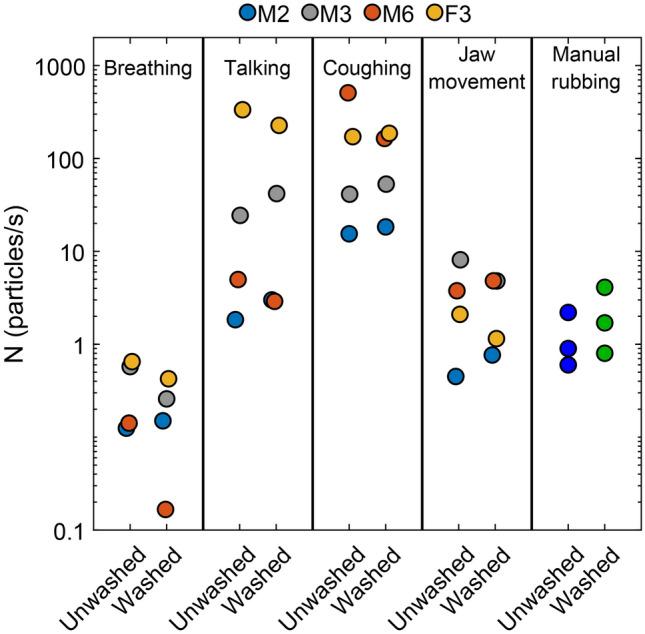
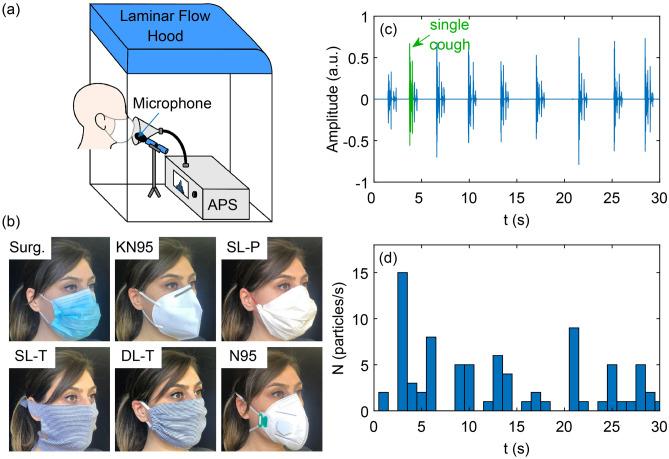
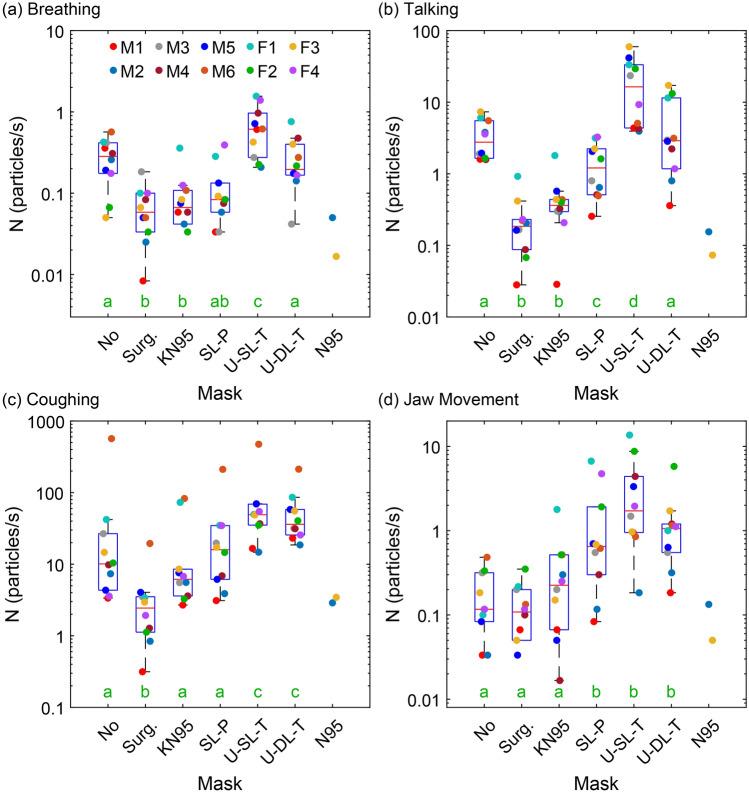
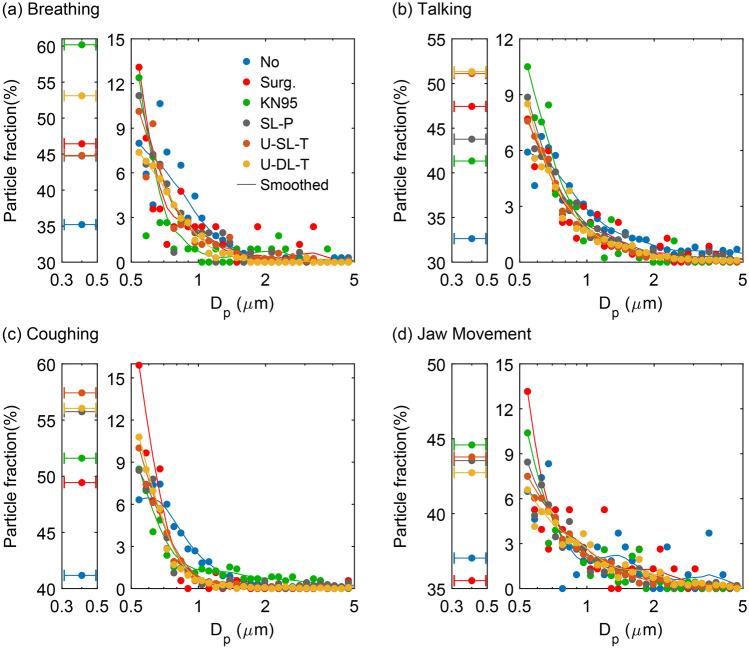
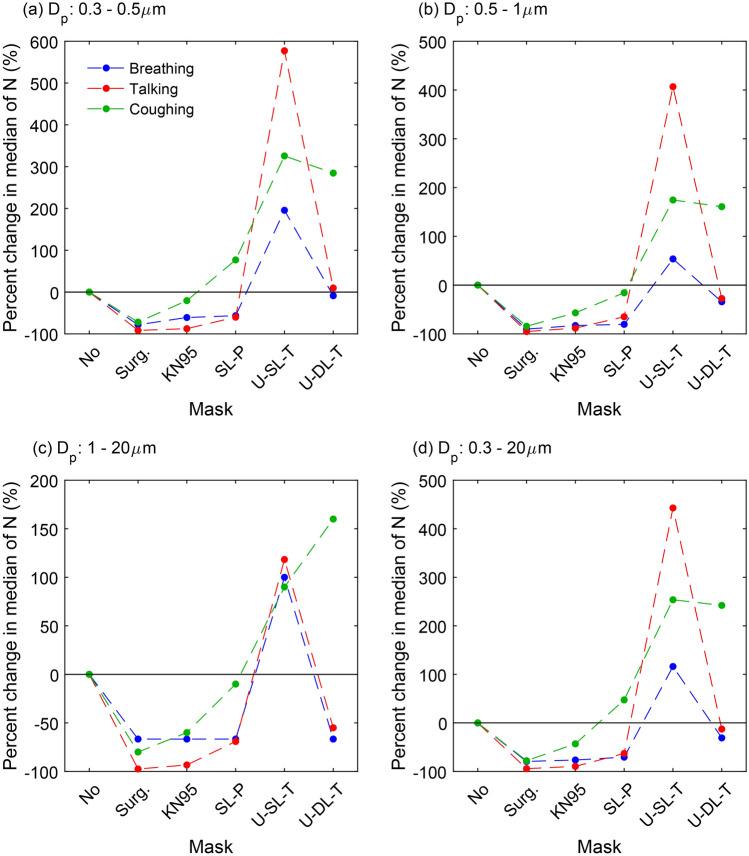
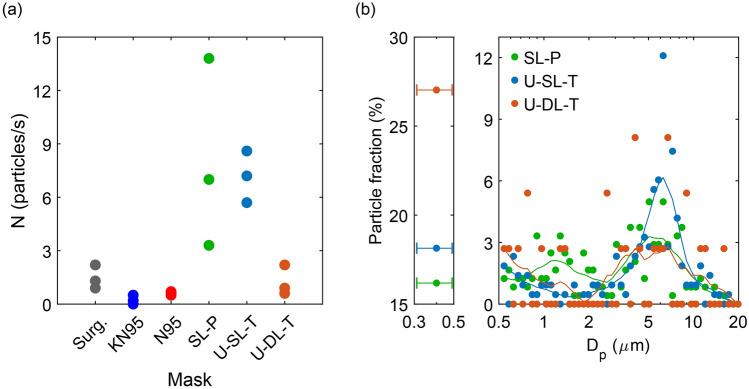
The COVID-19 pandemic triggered a surge in demand for facemasks to protect against disease transmission. In response to shortages, many public health authorities have recommended homemade masks as acceptable alternatives to surgical masks and N95 respirators. Although mask wearing is intended, in part, to protect others from exhaled, virus-containing particles, few studies have examined particle emission by mask-wearers into the surrounding air. Here, we measured outward emissions of micron-scale aerosol particles by healthy humans performing various expiratory activities while wearing different types of medical-grade or homemade masks. Both surgical masks and unvented KN95 respirators, even without fit-testing, reduce the outward particle emission rates by 90% and 74% on average during speaking and coughing, respectively, compared to wearing no mask, corroborating their effectiveness at reducing outward emission. These masks similarly decreased the outward particle emission of a coughing superemitter, who for unclear reasons emitted up to two orders of magnitude more expiratory particles via coughing than average. In contrast, shedding of non-expiratory micron-scale particulates from friable cellulosic fibers in homemade cotton-fabric masks confounded explicit determination of their efficacy at reducing expiratory particle emission. Audio analysis of the speech and coughing intensity confirmed that people speak more loudly, but do not cough more loudly, when wearing a mask. Further work is needed to establish the efficacy of cloth masks at blocking expiratory particles for speech and coughing at varied intensity and to assess whether virus-contaminated fabrics can generate aerosolized fomites, but the results strongly corroborate the efficacy of medical-grade masks and highlight the importance of regular washing of homemade masks.
新冠疫情大流行导致对口罩的需求激增,以防止疾病传播。为应对短缺,许多公共卫生当局建议使用自制口罩作为外科口罩和 N95 呼吸器的可接受替代品。尽管戴口罩部分是为了保护他人免受呼出的含病毒颗粒的侵害,但很少有研究检查戴口罩者向周围空气中排放颗粒。在这里,我们测量了健康人在佩戴不同类型的医用级或自制口罩时进行各种呼气活动时向外排放的微米级气溶胶颗粒。与不戴口罩相比,外科口罩和无通风 KN95 呼吸器即使未经适配性测试,在说话和咳嗽时也分别将向外排放的颗粒速率平均降低了 90%和 74%,证实了它们在减少向外排放方面的有效性。这些口罩还同样降低了咳嗽超级排放者的向外颗粒排放,由于不清楚的原因,与平均水平相比,该超级排放者通过咳嗽排放的呼气颗粒多了两个数量级。相比之下,在自制棉质织物口罩中易碎的纤维素纤维脱落的非呼气性微米级颗粒,使明确确定其减少呼气性颗粒排放的效果变得复杂。对说话和咳嗽强度的音频分析证实,人们戴口罩时说话声音更大,但咳嗽声音不会更大。需要进一步研究来确定布制口罩在不同强度的说话和咳嗽时阻挡呼气性颗粒的效果,并评估受病毒污染的织物是否会产生气溶胶化的病媒,但结果强烈证实了医用级口罩的有效性,并强调了定期清洗自制口罩的重要性。
 Zotero 插件