
下肢肌肉骨骼肿瘤切除术后肿瘤假体周围感染的危险因素
Risk Factors of Periprosthetic Infection in Patients with Tumor Prostheses Following Resection for Musculoskeletal Tumor of the Lower Limb.
作者信息
Fujiwara Toshifumi, Ebihara Toshihiro, Kitade Kazuki, Setsu Nokitaka, Endo Makoto, Iida Keiichiro, Matsumoto Yoshihiro, Matsunobu Tomoya, Oda Yoshinao, Iwamoto Yukihide, Nakashima Yasuharu
机构信息
Department of Orthopaedic Surgery, Graduate School of Medical Sciences, Kyushu University, 3-1-1, Maidashi, Higashi-ku, Fukuoka-shi, Fukuoka 812-8582, Japan.
Department of Orthopaedic Surgery, Kyushu Rosai Hospital, Fukuoka 800-0296, Japan.
出版信息
J Clin Med. 2020 Sep 28;9(10):3133. doi: 10.3390/jcm9103133.
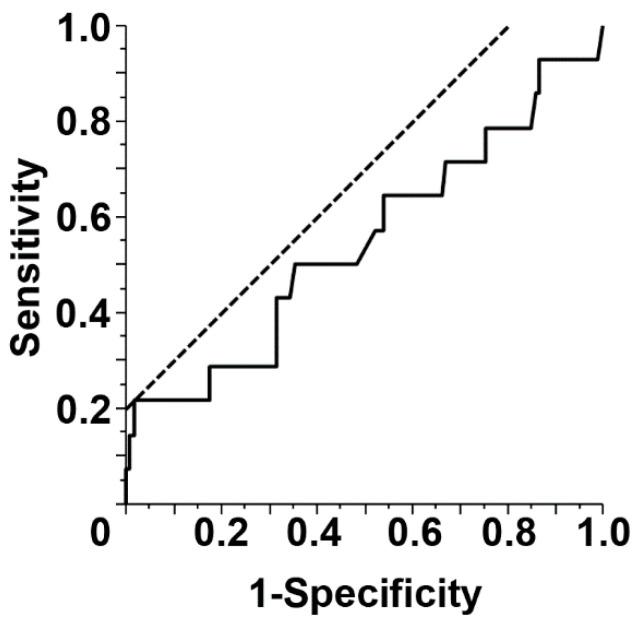
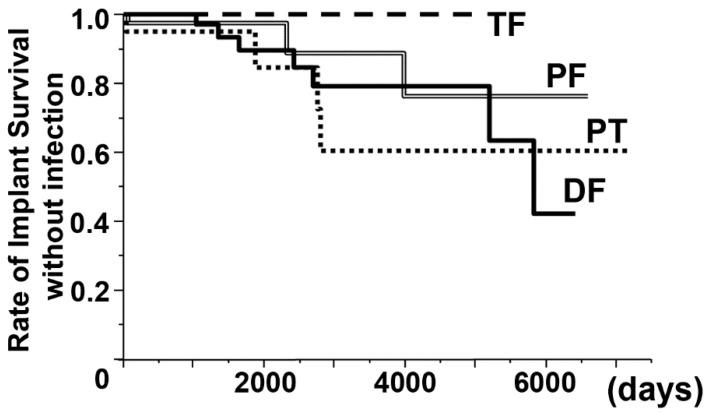
Tumor prostheses for the lower limb following resection of musculoskeletal tumors is useful limb salvage management; however, as compared with routine total joint replacement, an increased incidence of deep periprosthetic infection of tumor prosthesis has been observed. The risk factors for periprosthetic infection of tumor prosthesis remain unclear. This study examines the risk factors and outcomes of periprosthetic infection. This was a retrospective observational study including 121 patients (67 males and 54 females) who underwent tumor prosthesis of the lower limb after resection of musculoskeletal tumors between 1 January 2000 and 30 November 2018. Among a total of 121 tumor prostheses, 7 were total femurs, 47 were proximal femurs, 47 were distal femurs, and 20 were proximal tibias. The incidence of postoperative infection and its risk factors were analyzed. Forty-five patients (37%) had osteosarcoma, 36 patients (30%) had bone metastasis, and 10 patients (8%) had soft-tissue tumors invading the bone. The mean operating time was 229 min, and the mean follow-up duration was 5.9 years. Deep periprosthetic infection was noted in 14 patients (12%). In the multivariate analysis, the risk factors for postoperative infection were identified as being male (hazard ratio [HR], 11.2316; = 0.0100), soft-tissue tumor (HR, 52.2443; = 0.0003), long operation (HR, 1.0056; = 0.0184), and radiotherapy (HR, 6.5683; = 0.0476). The incidence of periprosthetic infection in our institution was similar to that of previous reports. Patients undergoing tumor prosthesis of the lower limb who were male, had a soft-tissue tumor, were predicted to have a long operation, and who underwent radiation, had an increased possibility of postoperative infection.
肌肉骨骼肿瘤切除术后下肢肿瘤假体是一种有效的肢体挽救治疗方法;然而,与常规全关节置换相比,已观察到肿瘤假体周围深部感染的发生率增加。肿瘤假体周围感染的危险因素仍不清楚。本研究探讨了假体周围感染的危险因素及结局。这是一项回顾性观察研究,纳入了2000年1月1日至2018年11月30日期间因肌肉骨骼肿瘤切除后接受下肢肿瘤假体植入的121例患者(67例男性和54例女性)。在总共121个肿瘤假体中,7个是全股骨,47个是股骨近端,47个是股骨远端,20个是胫骨近端。分析了术后感染的发生率及其危险因素。45例患者(37%)患有骨肉瘤,36例患者(30%)有骨转移,10例患者(8%)有软组织肿瘤侵犯骨骼。平均手术时间为229分钟,平均随访时间为5.9年。14例患者(12%)发生了假体周围深部感染。在多变量分析中,术后感染的危险因素被确定为男性(风险比[HR],11.2316;P = 0.0100)、软组织肿瘤(HR,52.2443;P = 0.0003)、手术时间长(HR,1.0056;P = 0.0184)和放疗(HR,6.5683;P = 0.0476)。我们机构假体周围感染的发生率与既往报告相似。接受下肢肿瘤假体植入的男性患者、患有软组织肿瘤的患者、预计手术时间长的患者以及接受放疗的患者术后感染的可能性增加。

 Zotero 插件