
心率变异性与超长寿命
Heart Rate Variability and Exceptional Longevity.
作者信息
Hernández-Vicente Adrián, Hernando David, Santos-Lozano Alejandro, Rodríguez-Romo Gabriel, Vicente-Rodríguez Germán, Pueyo Esther, Bailón Raquel, Garatachea Nuria
机构信息
GENUD (Growth, Exercise, NUtrition and Development) Research Group, University of Zaragoza, Zaragoza, Spain.
Department of Physiatry and Nursing, Faculty of Health and Sport Sciences (FCSD), University of Zaragoza, Huesca, Spain.
出版信息
Front Physiol. 2020 Sep 17;11:566399. doi: 10.3389/fphys.2020.566399. eCollection 2020.
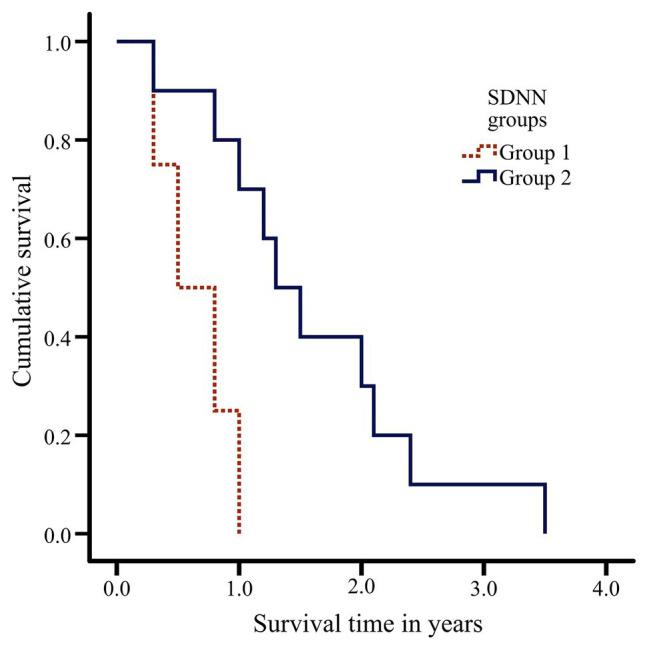
Centenarians are the paradigm of human extreme longevity and healthy aging, because they have postponed, if not avoided, mayor age-related diseases. The purpose of this study was to investigate potential differences in resting heart rate variability (HRV) between young adults, octogenarians, and centenarians and assess whether HRV variables are predictors of all-cause mortality in centenarians. To this end, three groups of participants: young adults ( = 20; 20.6 ± 2.3 years), octogenarians ( = 18; 84.1 ± 2.6 years), and centenarians ( = 17; 101.9 ± 1.9 years) were monitored for 15 min at rest (seated, without moving or talking) to measure RR intervals, from which HRV was evaluated. Our results showed a clear decrease with age in the main parasympathetic HRV variables, as well as in the standard deviation (SD) of the RR series [SD of normal-to-normal interval (SDNN)] and in low frequency (LF) heart rate (HR) oscillations, although differences between octogenarians and centenarians did not reach statistical significance. In 14 centenarians followed until death, only SDNN showed significant correlation ( = 0.536; = 0.048) with survival prognosis. Additionally, SDNN <19 ms was associated with early mortality (≤1 year) in centenarians (Hazard Ratio = 5.72). In conclusion, HRV indices reflecting parasympathetic outflow as well as SDNN and LF all present an age-related reduction, which could be representative of a natural exhaustion of allostatic systems related to age. Moreover, low SDNN values (<19 ms) could be associated with early mortality in centenarians. HRV seems to play a role in exceptional longevity, which could be accounted for by centenarians' exposome.
百岁老人是人类极端长寿和健康衰老的典范,因为他们即便没有避免,也推迟了大多数与年龄相关的疾病。本研究的目的是调查年轻人、八旬老人和百岁老人静息心率变异性(HRV)的潜在差异,并评估HRV变量是否是百岁老人全因死亡率的预测指标。为此,对三组参与者进行了研究:年轻人(n = 20;20.6±2.3岁)、八旬老人(n = 18;84.1±2.6岁)和百岁老人(n = 17;101.9±1.9岁),让他们在静息状态下(坐着,不移动或交谈)监测15分钟,以测量RR间期,据此评估HRV。我们的结果显示,随着年龄增长,主要副交感神经HRV变量以及RR序列的标准差(SD)[正常到正常间期的标准差(SDNN)]和低频(LF)心率(HR)振荡明显下降,尽管八旬老人和百岁老人之间的差异未达到统计学显著性。在随访至死亡的14名百岁老人中,只有SDNN与生存预后显示出显著相关性(r = 0.536;P = 0.048)。此外,SDNN<19 ms与百岁老人的早期死亡(≤1年)相关(风险比= 5.72)。总之,反映副交感神经输出的HRV指标以及SDNN和LF均呈现与年龄相关的下降,这可能代表了与年龄相关的应激稳态系统的自然耗竭。此外,低SDNN值(<19 ms)可能与百岁老人的早期死亡有关。HRV似乎在超长寿命中发挥作用,这可能由百岁老人的暴露组来解释。

 Zotero 插件