
利用三种花卉提取物进行银纳米颗粒的植物合成及其对青枯病菌株YY06的抗菌活性
Phytofabrication of Silver Nanoparticles Using Three Flower Extracts and Their Antibacterial Activities Against Pathogen Strain YY06 of Bacterial Wilt.
作者信息
Cheng Hai-Jun, Wang Hui, Zhang Jing-Ze
机构信息
Institute of Biotechnology, College of Agriculture and Biotechnology, Zhejiang University, Hangzhou, China.
出版信息
Front Microbiol. 2020 Sep 15;11:2110. doi: 10.3389/fmicb.2020.02110. eCollection 2020.
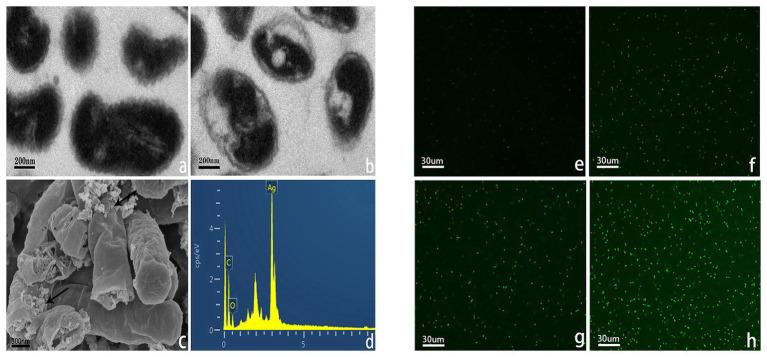
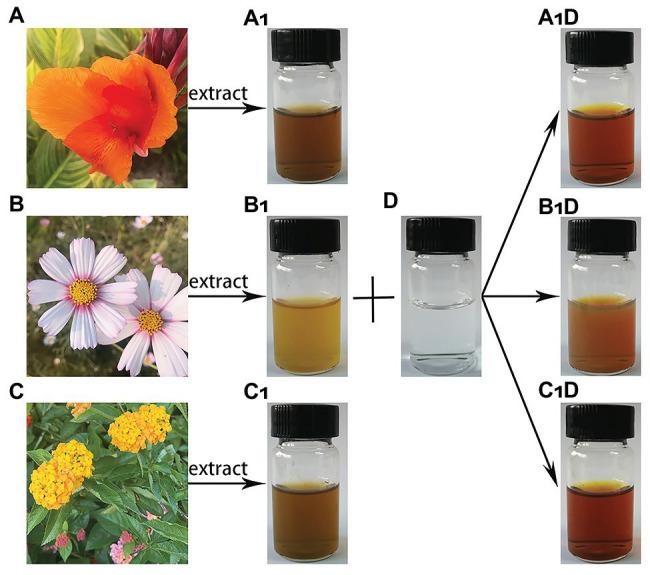
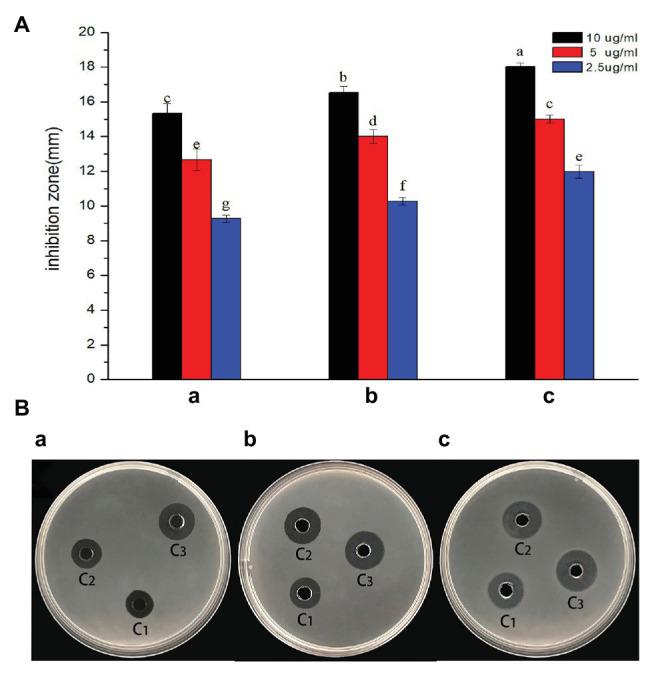
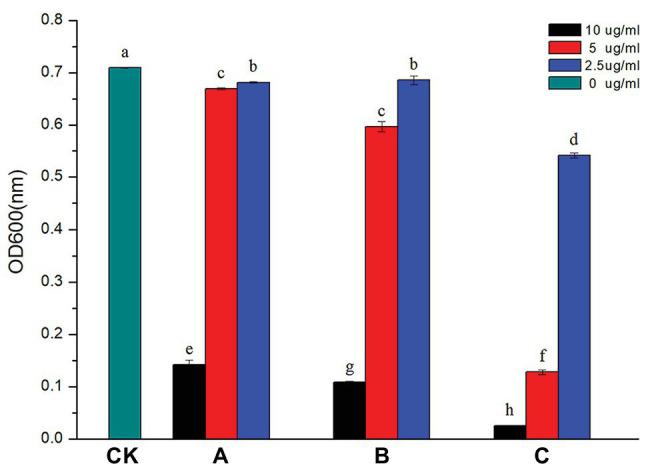
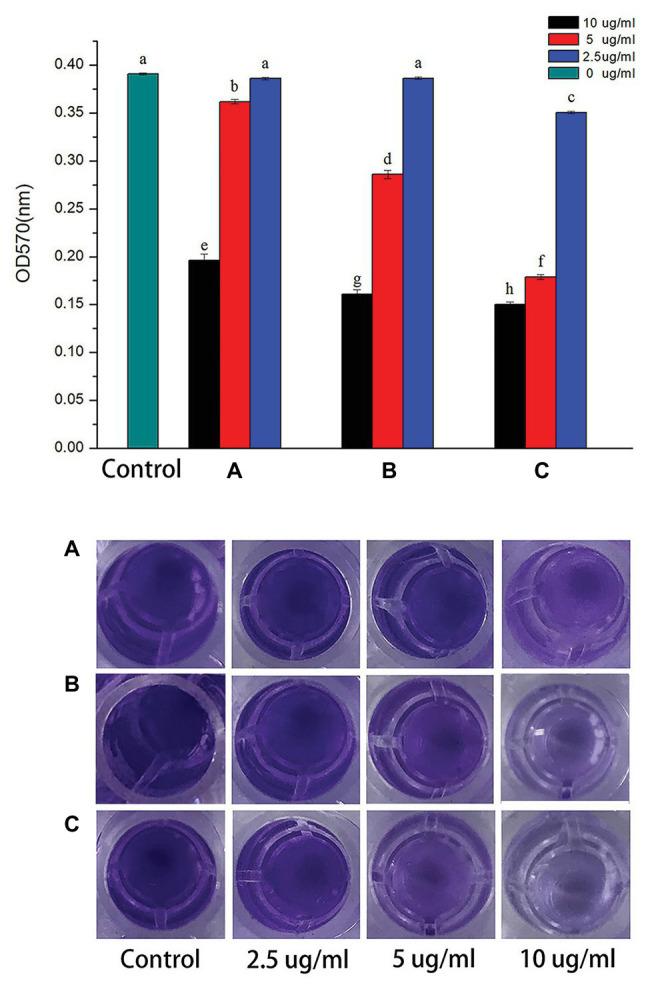
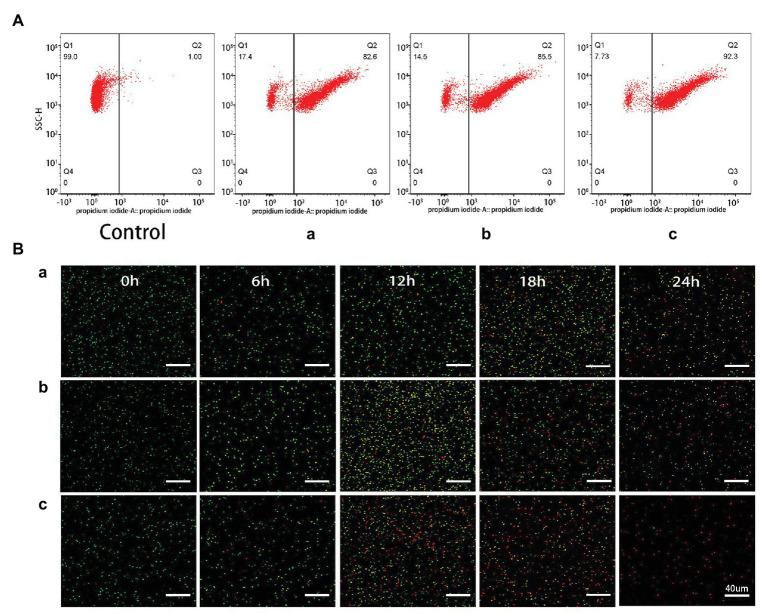
Bacterial wilt caused by the phytopathogen () is a devastating plant disease worldwide. The use of bactericides and antibiotics for controlling bacterial wilt has shown low efficiency and posed environmental risks. This study was to phytofabricate silver nanoparticles (AgNPs) mediated by canna lily flower ( L.), Cosmos flower ( Cav.), and Lantana flower ( L.). The biosynthesized AgNPs were confirmed and characterized by UV-visible spectroscopy, Fourier transform infrared spectroscopy (FTIR), X-ray diffraction (XRD), transmission electron microscope (TEM), and scanning electron microscopy (SEM). UV-visible spectra showed absorption peak bands at 448, 440, and 428 nm of AgNPs synthesized by L., Cav., and L. flowers, respectively. FTIR spectra confirmed that biofunctional groups of flower extract were involved in the synthesis of AgNPs as capping and stabilizing agents. The spherical AgNPs synthesized by L., Cav., and L. flowers had average diameters of 43.1, 36.1, and 24.5 nm, respectively. The AgNPs (10.0 μg/ml) synthesized by L. flower had a maximum suppression zone of 18 mm against strain YY06 compared with AgNPs synthesized by L. and Cav. flowers. Bacterial growth, biofilm formation, swimming motility, efflux of nucleic acid, cell death, cell membrane damage, and reactive oxygen species (ROS) generation of were also negatively affected by AgNPs with high concentration and small size. In summary, the biosynthesized AgNPs can be used as an efficient and environmentally friendly antibacterial agent to reasonably inhibit .
由植物病原体()引起的青枯病是一种在全球范围内具有毁灭性的植物病害。使用杀菌剂和抗生素来控制青枯病已显示出效率低下并带来了环境风险。本研究旨在通过美人蕉花()、大波斯菊花()和马缨丹花()介导植物合成银纳米颗粒(AgNPs)。通过紫外可见光谱、傅里叶变换红外光谱(FTIR)、X射线衍射(XRD)、透射电子显微镜(TEM)和扫描电子显微镜(SEM)对生物合成的AgNPs进行了确认和表征。紫外可见光谱显示,由美人蕉花、大波斯菊花和马缨丹花合成的AgNPs分别在448、440和428nm处有吸收峰带。FTIR光谱证实,花提取物的生物官能团作为封端剂和稳定剂参与了AgNPs的合成。由美人蕉花、大波斯菊花和马缨丹花合成的球形AgNPs的平均直径分别为43.1、36.1和24.5nm。与由大波斯菊花和马缨丹花合成的AgNPs相比,由美人蕉花合成的AgNPs(10.0μg/ml)对菌株YY06的最大抑制区为18mm。高浓度和小尺寸的AgNPs对的细菌生长、生物膜形成、游动性、核酸外排、细胞死亡、细胞膜损伤和活性氧(ROS)生成也有负面影响。总之,生物合成的AgNPs可作为一种高效且环保的抗菌剂来合理抑制。


 Zotero 插件