
壳聚糖对使用……和……发酵的葡萄酒化学成分的影响
The Impact of Chitosan on the Chemical Composition of Wines Fermented with and .
作者信息
Scansani Stefano, Rauhut Doris, Brezina Silvia, Semmler Heike, Benito Santiago
机构信息
Department of Microbiology and Biochemistry, Hochschule Geisenheim University (HGU), Von-Lade-Straße 1, 65366 Geisenheim, Germany.
Department of Chemistry and Food Technology, Polytechnic University of Madrid, Ciudad Universitaria S/N, 28040 Madrid, Spain.
出版信息
Foods. 2020 Oct 9;9(10):1423. doi: 10.3390/foods9101423.
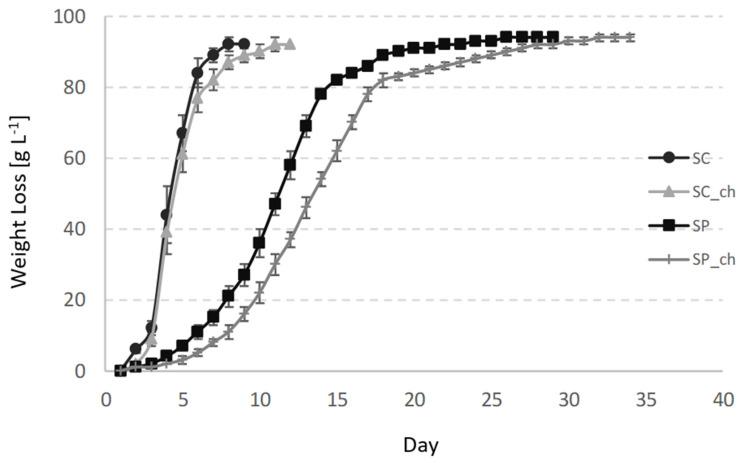
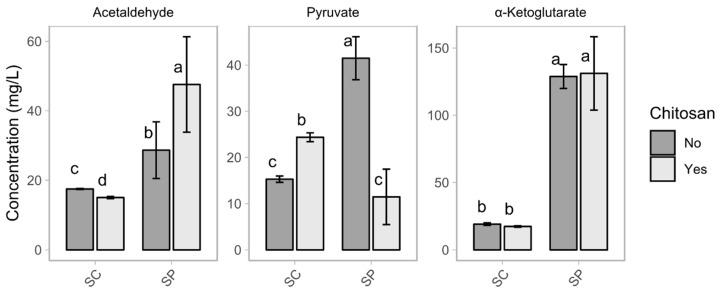
This study investigates the influence of the antimicrobial agent chitosan on a selected strain during the alcoholic fermentation of ultra-pasteurized grape juice with a high concentration of malic acid. It also studies a selected strain as a control. The study examines several parameters relating to wine quality, including volatile and non-volatile compounds. The principal aim of the study is to test the influence of chitosan on the final chemical composition of the wine during alcoholic fermentation, and to compare the two studied fermentative yeasts between them. The results show that chitosan influences the final concentration of acetic acid, ethanol, glycerol, acetaldehyde, pyruvic acid, α-ketoglutarate, higher alcohols, acetate esters, ethyl esters, and fatty acids, depending on the yeast species.
本研究调查了抗菌剂壳聚糖在高浓度苹果酸的超高温瞬时杀菌葡萄汁酒精发酵过程中对选定菌株的影响。同时还研究了选定的菌株作为对照。该研究考察了与葡萄酒质量相关的几个参数,包括挥发性和非挥发性化合物。本研究的主要目的是测试壳聚糖在酒精发酵过程中对葡萄酒最终化学成分的影响,并比较两种研究的发酵酵母。结果表明,壳聚糖会影响乙酸、乙醇、甘油、乙醛、丙酮酸、α-酮戊二酸、高级醇、乙酸酯、乙酯和脂肪酸的最终浓度,这取决于酵母种类。

 Zotero 插件