
基于第二链合成的大规模平行单细胞 RNA 测序揭示了人类炎症性皮肤病理的细胞状态和分子特征。
Second-Strand Synthesis-Based Massively Parallel scRNA-Seq Reveals Cellular States and Molecular Features of Human Inflammatory Skin Pathologies.
机构信息
Institute for Medical Engineering & Science (IMES), MIT, Cambridge, Massachusetts, USA; Department of Immunology, Harvard Medical School, Boston, MA, USA; Broad Institute of MIT and Harvard, Cambridge, MA, USA; Ragon Institute of MGH, MIT and Harvard, Cambridge, MA, USA; Koch Institute for Integrative Cancer Research, MIT, Cambridge, MA, USA; Department of Chemistry, MIT, Cambridge, Massachusetts, USA.
Institute for Medical Engineering & Science (IMES), MIT, Cambridge, Massachusetts, USA; Broad Institute of MIT and Harvard, Cambridge, MA, USA; Ragon Institute of MGH, MIT and Harvard, Cambridge, MA, USA; Koch Institute for Integrative Cancer Research, MIT, Cambridge, MA, USA; Department of Chemistry, MIT, Cambridge, Massachusetts, USA.
出版信息
Immunity. 2020 Oct 13;53(4):878-894.e7. doi: 10.1016/j.immuni.2020.09.015.
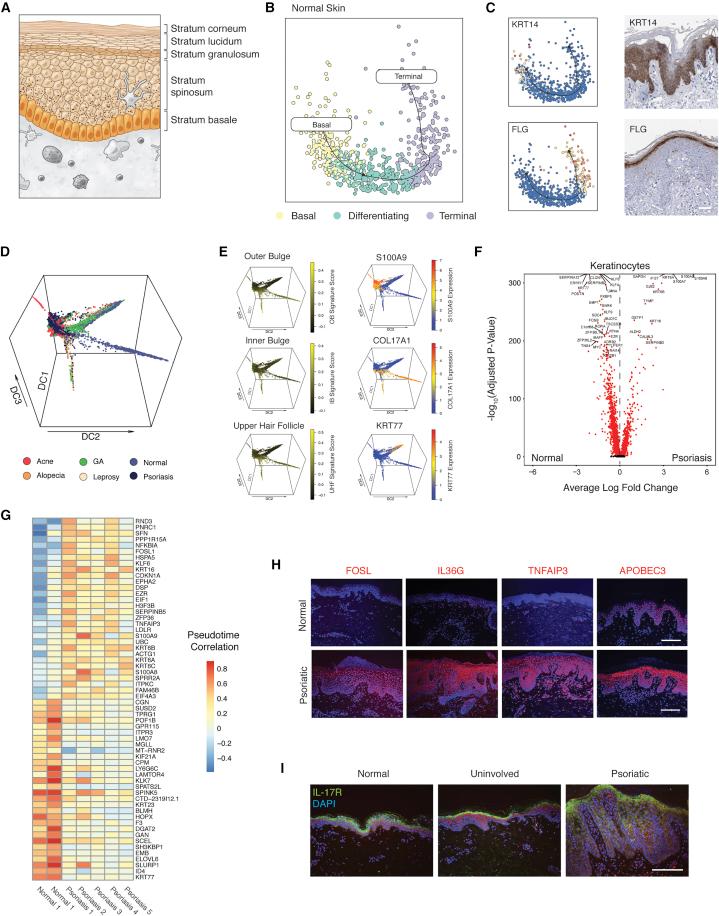
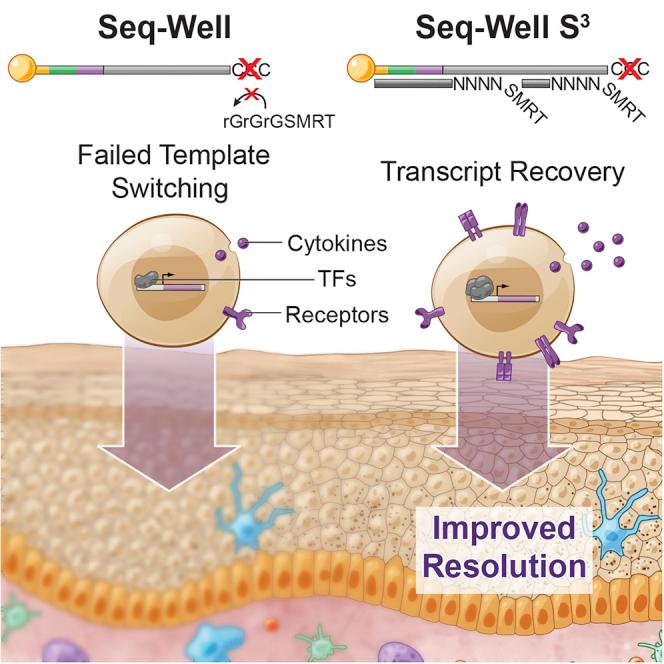
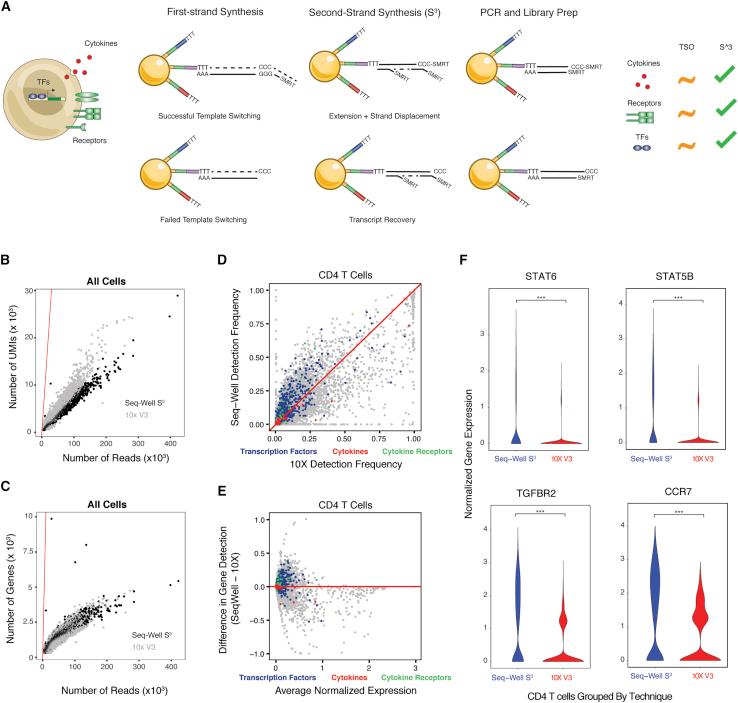
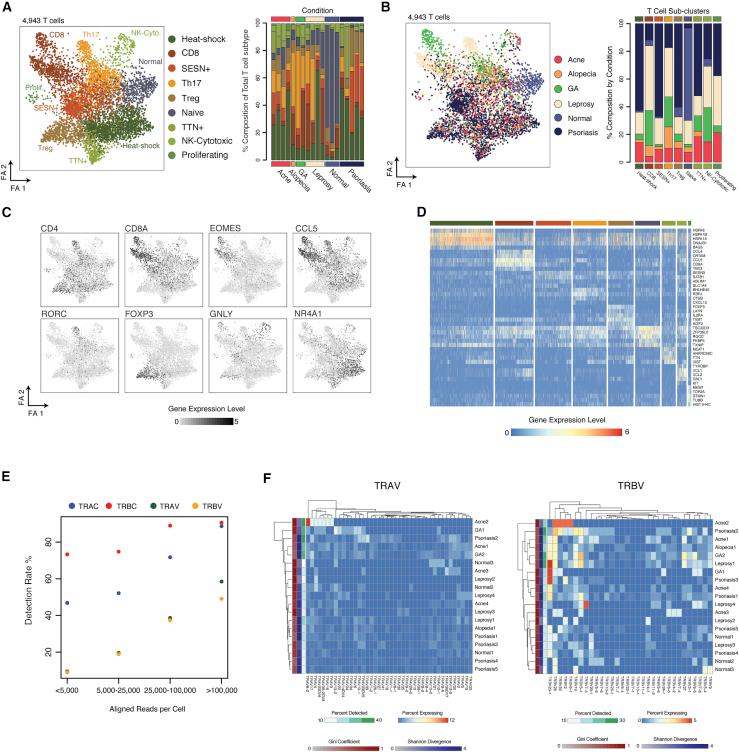
High-throughput single-cell RNA-sequencing (scRNA-seq) methodologies enable characterization of complex biological samples by increasing the number of cells that can be profiled contemporaneously. Nevertheless, these approaches recover less information per cell than low-throughput strategies. To accurately report the expression of key phenotypic features of cells, scRNA-seq platforms are needed that are both high fidelity and high throughput. To address this need, we created Seq-Well S ("Second-Strand Synthesis"), a massively parallel scRNA-seq protocol that uses a randomly primed second-strand synthesis to recover complementary DNA (cDNA) molecules that were successfully reverse transcribed but to which a second oligonucleotide handle, necessary for subsequent whole transcriptome amplification, was not appended due to inefficient template switching. Seq-Well S increased the efficiency of transcript capture and gene detection compared with that of previous iterations by up to 10- and 5-fold, respectively. We used Seq-Well S to chart the transcriptional landscape of five human inflammatory skin diseases, thus providing a resource for the further study of human skin inflammation.
高通量单细胞 RNA 测序(scRNA-seq)方法通过增加可同时分析的细胞数量,从而能够对复杂的生物样本进行特征描述。然而,与低通量策略相比,这些方法每细胞获取的信息量更少。为了准确报告细胞关键表型特征的表达,需要一种既具有高保真度又具有高通量的 scRNA-seq 平台。为了解决这一需求,我们创建了 Seq-Well S(“Second-Strand Synthesis”),这是一种大规模并行的 scRNA-seq 方案,它使用随机引物的第二链合成来回收成功反转录但由于模板转换效率低下而未添加用于随后全转录组扩增的第二个寡核苷酸接头的 cDNA 分子。Seq-Well S 分别将转录本捕获和基因检测的效率提高了 10 倍和 5 倍,与之前的迭代相比。我们使用 Seq-Well S 绘制了五种人类炎症性皮肤病的转录组图谱,从而为人类皮肤炎症的进一步研究提供了资源。


 Zotero 插件