
小 RNA ErsA 在铜绿假单胞菌气道感染发病机制的调控网络中发挥作用。
The Small RNA ErsA Plays a Role in the Regulatory Network of Pseudomonas aeruginosa Pathogenicity in Airway Infections.
机构信息
Department of Biosciences, Università degli Studi di Milano, Milan, Italy
Infections and Cystic Fibrosis Unit, IRCCS San Raffaele Scientific Institute, Milan, Italy.
出版信息
mSphere. 2020 Oct 14;5(5):e00909-20. doi: 10.1128/mSphere.00909-20.
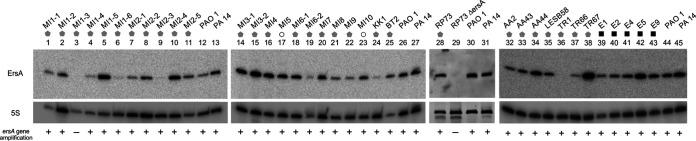
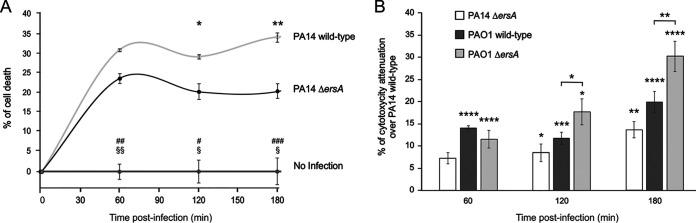
Bacterial small RNAs play a remarkable role in the regulation of functions involved in host-pathogen interaction. ErsA is a small RNA of that contributes to the regulation of bacterial virulence traits such as biofilm formation and motility. Shown to take part in a regulatory circuit under the control of the envelope stress response sigma factor σ, ErsA targets posttranscriptionally the key virulence-associated gene Moreover, ErsA contributes to biofilm development and motility through the posttranscriptional modulation of the transcription factor AmrZ. Intending to evaluate the regulatory relevance of ErsA in the pathogenesis of respiratory infections, we analyzed the impact of ErsA-mediated regulation on the virulence potential of and the stimulation of the inflammatory response during the infection of bronchial epithelial cells and a murine model. Furthermore, we assessed ErsA expression in a collection of clinical pulmonary isolates and investigated the link of ErsA with acquired antibiotic resistance by generating an gene deletion mutant in a multidrug-resistant strain which has long been adapted in the airways of a cystic fibrosis (CF) patient. Our results show that the ErsA-mediated regulation is relevant for the pathogenicity during acute infection and contributes to the stimulation of the host inflammatory response. Besides, ErsA was able to be subjected to selective pressure for pathoadaptation and acquirement of resistance to antibiotics commonly used in clinical practice during chronic CF infections. Our findings establish the role of ErsA as an important regulatory element in the host-pathogen interaction. is one of the most critical multidrug-resistant opportunistic pathogens in humans, able to cause both lethal acute and chronic lung infections. Thorough knowledge of the regulatory mechanisms involved in the establishment and persistence of the airways infections by remains elusive. Emerging candidates as molecular regulators of pathogenesis in are small RNAs, which act posttranscriptionally as signal transducers of host cues. Known for being involved in the regulation of biofilm formation and responsive to envelope stress response, we show that the small RNA ErsA can play regulatory roles in acute infection, stimulation of host inflammatory response, and mechanisms of acquirement of antibiotic resistance and adaptation during the chronic lung infections of cystic fibrosis patients. Elucidating the complexity of the networks regulating host-pathogen interactions is crucial to identify novel targets for future therapeutic applications.
细菌小 RNA 在调节宿主-病原体相互作用中涉及的功能方面发挥着显著作用。ErsA 是一种小 RNA,有助于调节细菌毒力特性,如生物膜形成和运动。已显示其参与受包膜应激反应 σ 因子调控的调控回路,ErsA 在后转录水平靶向关键毒力相关基因 。此外,ErsA 通过转录因子 AmrZ 的转录后调节促进生物膜发育和运动。为了评估 ErsA 在呼吸道感染发病机制中的调节相关性,我们分析了 ErsA 介导的调节对 和在支气管上皮细胞感染和小鼠模型中刺激炎症反应的毒力潜力的影响。此外,我们评估了临床肺部分离株中 ErsA 的表达,并通过在长期适应囊性纤维化 (CF) 患者气道的多药耐药 菌株中生成 基因缺失突变体来研究 ErsA 与获得性抗生素耐药性的关联。我们的结果表明,ErsA 介导的调节与急性感染期间的 致病性相关,并有助于刺激宿主炎症反应。此外,ErsA 能够在慢性 CF 感染期间受到选择压力,从而适应 对临床常用抗生素的耐药性。我们的研究结果确立了 ErsA 作为宿主-病原体相互作用中重要调节因子的作用。 是人类最重要的多药耐药机会性病原体之一,能够导致致命的急性和慢性肺部感染。对 引起的气道感染建立和持续存在所涉及的调节机制仍知之甚少。新兴的候选分子调节剂作为 发病机制中的信号转导因子,在后转录水平发挥作用。已知参与生物膜形成的调节并对包膜应激反应有反应,我们表明小 RNA ErsA 可以在急性感染、刺激宿主炎症反应以及在囊性纤维化患者的慢性肺部感染期间获得抗生素耐药性和适应的机制中发挥调节作用。阐明调节宿主-病原体相互作用的网络的复杂性对于确定未来治疗应用的新靶点至关重要。


 Zotero 插件