
三阴性乳腺癌的实用分类:瘤内异质性、耐药机制及新疗法
Practical classification of triple-negative breast cancer: intratumoral heterogeneity, mechanisms of drug resistance, and novel therapies.
作者信息
Marra Antonio, Trapani Dario, Viale Giulia, Criscitiello Carmen, Curigliano Giuseppe
机构信息
Division of Early Drug Development for Innovative Therapies, IEO, European Institute of Oncology IRCCS, Via Ripamonti, 435, 20141 Milan, Italy.
Department of Oncology and Haemato-Oncology, University of Milano, Via Festa del Perdono, 7, 20122 Milan, Italy.
出版信息
NPJ Breast Cancer. 2020 Oct 16;6:54. doi: 10.1038/s41523-020-00197-2. eCollection 2020.
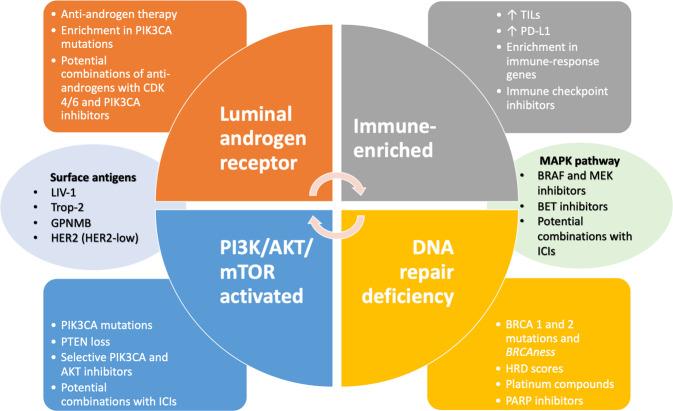
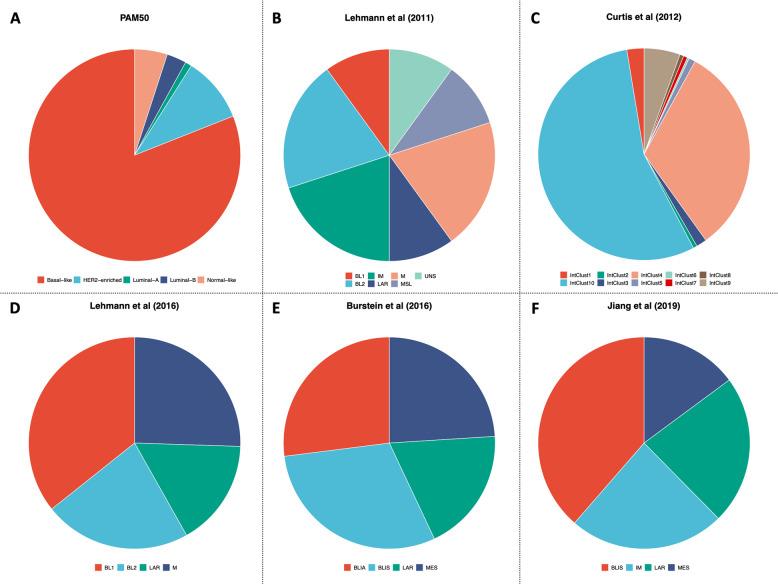
Triple-negative breast cancer (TNBC) is not a unique disease, encompassing multiple entities with marked histopathological, transcriptomic and genomic heterogeneity. Despite several efforts, transcriptomic and genomic classifications have remained merely theoretic and most of the patients are being treated with chemotherapy. Driver alterations in potentially targetable genes, including PIK3CA and AKT, have been identified across TNBC subtypes, prompting the implementation of biomarker-driven therapeutic approaches. However, biomarker-based treatments as well as immune checkpoint inhibitor-based immunotherapy have provided contrasting and limited results so far. Accordingly, a better characterization of the genomic and immune contexture underpinning TNBC, as well as the translation of the lessons learnt in the metastatic disease to the early setting would improve patients' outcomes. The application of multi-omics technologies, biocomputational algorithms, assays for minimal residual disease monitoring and novel clinical trial designs are strongly warranted to pave the way toward personalized anticancer treatment for patients with TNBC.
三阴性乳腺癌(TNBC)并非一种独特的疾病,它包含多个具有显著组织病理学、转录组学和基因组异质性的实体。尽管进行了多项努力,但转录组学和基因组分类仍仅停留在理论层面,大多数患者仍接受化疗。在TNBC各亚型中已鉴定出潜在可靶向基因(包括PIK3CA和AKT)的驱动改变,这促使实施基于生物标志物的治疗方法。然而,到目前为止,基于生物标志物的治疗以及基于免疫检查点抑制剂的免疫疗法所取得的结果喜忧参半且有限。因此,更好地刻画TNBC的基因组和免疫微环境,以及将在转移性疾病中获得的经验应用于早期治疗,将改善患者的预后。多组学技术、生物计算算法、微小残留病监测检测方法以及新型临床试验设计的应用对于为TNBC患者走向个性化抗癌治疗铺平道路具有强烈的必要性。
 Zotero 插件