
妊娠糖尿病状况和饮食摄入改变了母体和脐带血的应激负荷标志物。
Gestational diabetes status and dietary intake modify maternal and cord blood allostatic load markers.
机构信息
Department of Health and Nutrition Sciences, Brooklyn College, Brooklyn, New York, USA.
Department of Obstetrics and Gynecology, SUNY Downstate Health Sciences University, Brooklyn, New York, USA.
出版信息
BMJ Open Diabetes Res Care. 2020 Oct;8(1). doi: 10.1136/bmjdrc-2020-001468.
INTRODUCTION
Allostatic load (AL) defines cardiometabolic, inflammatory, and neuroendocrine changes in the body in response to internal and external stressors. It is largely unknown whether gestational diabetes mellitus (GDM) alters maternal and fetal AL, which in turn affects GDM outcomes. Whether dietary intakes and quality can modify AL and thus influence GDM progression is also unknown.
RESEARCH DESIGN AND METHODS
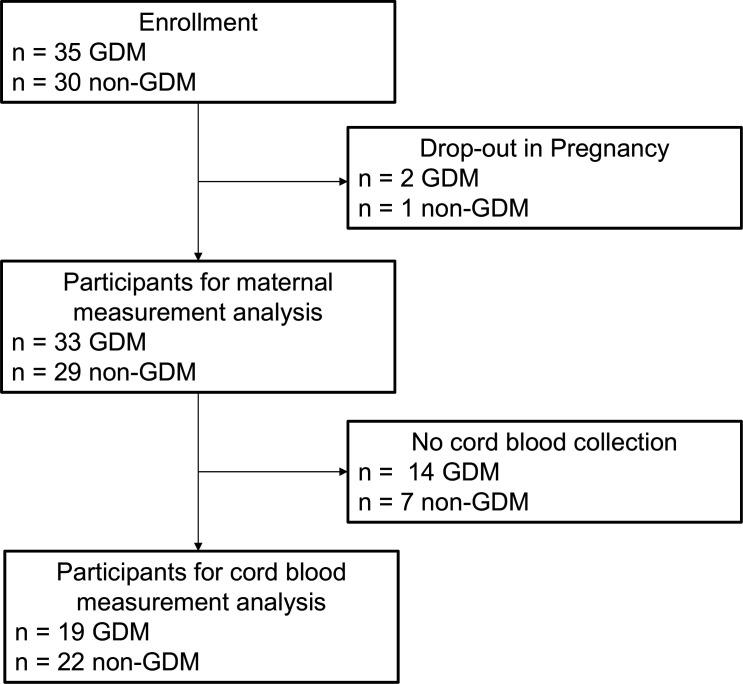
In this study, we recruited 35 GDM and 30 non-GDM women in gestational week 25-33. Fasting blood samples were collected at enrollment, and cord venous blood samples were collected at delivery for the measurement of a series of AL biomarkers to calculate the composite AL index. Three-day dietary recalls were conducted at enrollment.
RESULTS
Results suggest that GDM women had 60% higher composite AL index scores (p value=0.01). Maternal AL index was associated with shorter duration of gestation (β=-0.33, p value=0.047) and higher fetal AL index (β=0.47, p value=0.006) after adjusting for GDM status. Dietary intake of monounsaturated fatty acids was negatively associated with maternal AL index (β=-0.20, p value=0.006). GDM women had lower total caloric intake and dietary glycemic load, yet their linolenic acid, vitamin C and E intakes were also decreased (all p value<0.05). These dietary differences were not related to birth outcomes measured.
CONCLUSIONS
In this study, GDM status and dietary intakes modify AL in this population. AL may serve as an indicator of GDM control. Future research on dietary interventions that can improve maternal AL markers during GDM is warranted.
简介
适应性负荷 (AL) 定义了机体对内部和外部应激源的代谢、炎症和神经内分泌变化。目前尚不清楚妊娠糖尿病 (GDM) 是否会改变母体和胎儿的 AL,进而影响 GDM 结局。饮食摄入和质量是否可以改变 AL 并因此影响 GDM 进展也尚不清楚。
研究设计和方法
本研究纳入了 35 名 GDM 妇女和 30 名非 GDM 妇女,在妊娠 25-33 周时进行招募。在入组时采集空腹血样,并在分娩时采集脐静脉血样,以测量一系列 AL 生物标志物来计算复合 AL 指数。在入组时进行了 3 天的饮食回顾。
结果
结果表明,GDM 妇女的复合 AL 指数得分高 60%(p 值=0.01)。调整 GDM 状态后,母体 AL 指数与妊娠时间缩短(β=-0.33,p 值=0.047)和胎儿 AL 指数升高(β=0.47,p 值=0.006)相关。单不饱和脂肪酸的饮食摄入量与母体 AL 指数呈负相关(β=-0.20,p 值=0.006)。GDM 妇女的总热量摄入和饮食血糖负荷较低,但亚麻酸、维生素 C 和 E 的摄入量也较低(均 p 值<0.05)。这些饮食差异与所测量的出生结局无关。
结论
在本研究中,GDM 状态和饮食摄入改变了该人群的 AL。AL 可能是 GDM 控制的指标。未来有必要研究可以改善 GDM 期间母体 AL 标志物的饮食干预措施。
 Zotero 插件