
一种新型的 SARS-CoV-2 刺突蛋白 1 抗原的快速检测方法,利用人血管紧张素转换酶 2(ACE2)。
A novel rapid detection for SARS-CoV-2 spike 1 antigens using human angiotensin converting enzyme 2 (ACE2).
机构信息
Center for Convergent Research of Emerging Virus Infection, Korea Research Institute of Chemical Technology, Daejeon, 34114, Republic of Korea.
Department of Internal Medicine, Jeonbuk National University Medical School, Jeonju, Jeollabuk-do, 54986, Republic of Korea; Biomedical Research Institute of Jeonbuk National University Hospital, Jeonju, Jeollabuk-do, 54907, Republic of Korea.
出版信息
Biosens Bioelectron. 2021 Jan 1;171:112715. doi: 10.1016/j.bios.2020.112715. Epub 2020 Oct 15.
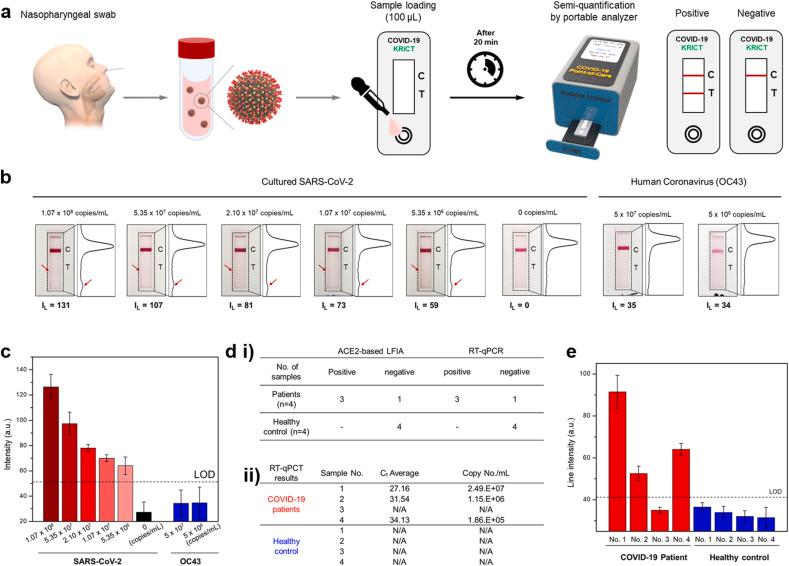
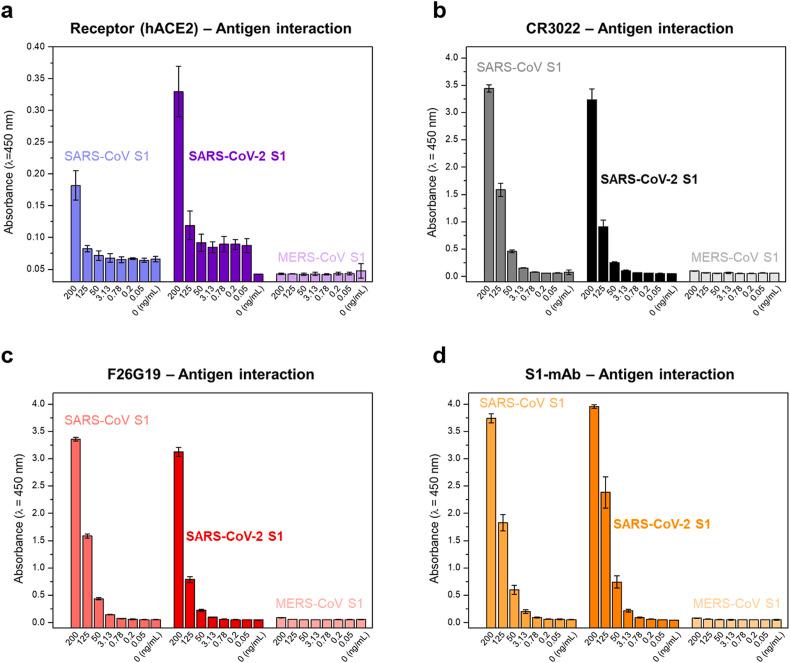
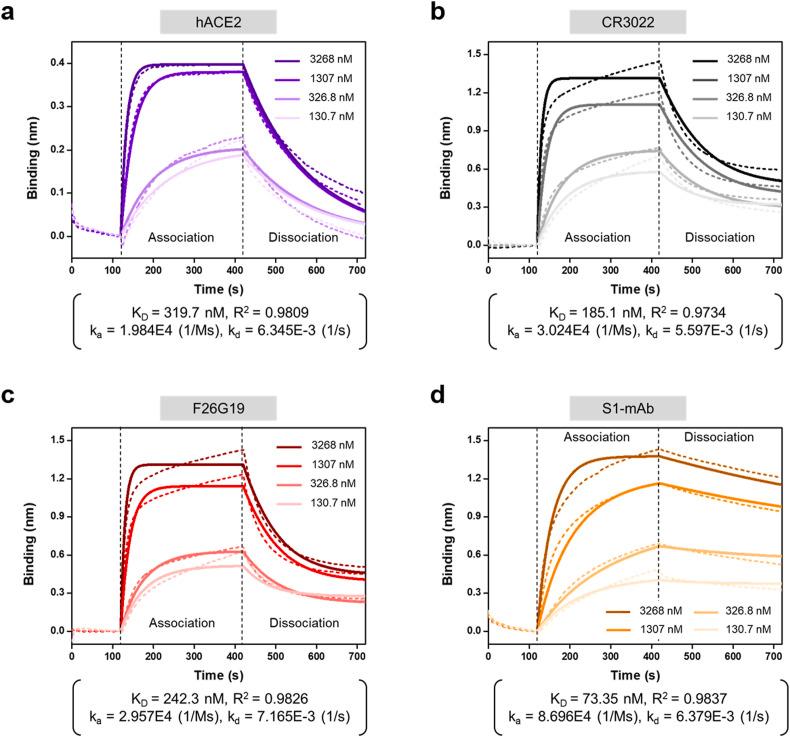
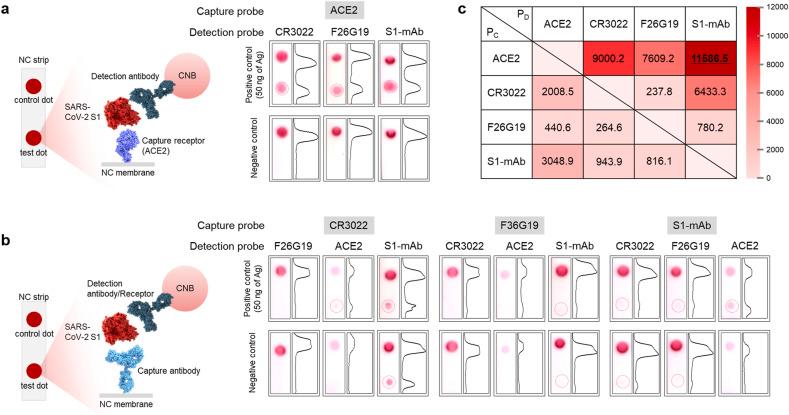
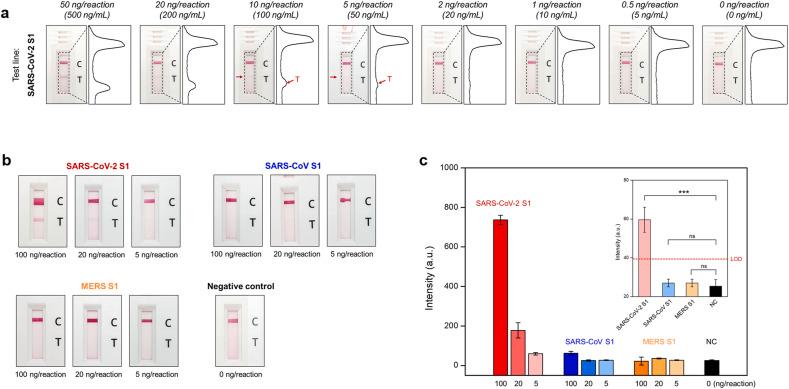
Severe acute respiratory syndrome coronavirus 2 (SARS-CoV-2) causes coronavirus disease 2019 (COVID-19), a newly emerging human infectious disease. Because no specific antiviral drugs or vaccines are available to treat COVID-19, early diagnostics, isolation, and prevention are crucial for containing the outbreak. Molecular diagnostics using reverse transcription polymerase chain reaction (RT-PCR) are the current gold standard for detection. However, viral RNAs are much less stable during transport and storage than proteins such as antigens and antibodies. Consequently, false-negative RT-PCR results can occur due to inadequate collection of clinical specimens or poor handling of a specimen during testing. Although antigen immunoassays are stable diagnostics for detection of past infection, infection progress, and transmission dynamics, no matched antibody pair for immunoassay of SARS-CoV-2 antigens has yet been reported. In this study, we designed and developed a novel rapid detection method for SARS-CoV-2 spike 1 (S1) protein using the SARS-CoV-2 receptor ACE2, which can form matched pairs with commercially available antibodies. ACE2 and S1-mAb were paired with each other for capture and detection in a lateral flow immunoassay (LFIA) that did not cross-react with SARS-CoV Spike 1 or MERS-CoV Spike 1 protein. The SARS-CoV-2 S1 (<5 ng of recombinant proteins/reaction) was detected by the ACE2-based LFIA. The limit of detection of our ACE2-LFIA was 1.86 × 10 copies/mL in the clinical specimen of COVID-19 Patients without no cross-reactivity for nasal swabs from healthy subjects. This is the first study to detect SARS-CoV-2 S1 antigen using an LFIA with matched pair consisting of ACE2 and antibody. Our findings will be helpful to detect the S1 antigen of SARS-CoV-2 from COVID-19 patients.
严重急性呼吸综合征冠状病毒 2(SARS-CoV-2)引起 2019 年冠状病毒病(COVID-19),这是一种新出现的人类传染病。由于目前尚无治疗 COVID-19 的特效抗病毒药物或疫苗,早期诊断、隔离和预防对于控制疫情至关重要。使用逆转录聚合酶链反应(RT-PCR)的分子诊断是目前检测的金标准。然而,与抗原和抗体等蛋白质相比,病毒 RNA 在运输和储存过程中稳定性较差。因此,由于临床标本采集不足或检测过程中标本处理不当,可能会出现假阴性 RT-PCR 结果。尽管抗原免疫测定是检测过去感染、感染进展和传播动态的稳定诊断方法,但尚未报道用于 SARS-CoV-2 抗原免疫测定的匹配抗体对。在这项研究中,我们设计并开发了一种使用 SARS-CoV-2 受体 ACE2 检测 SARS-CoV-2 刺突 1(S1)蛋白的新型快速检测方法,该方法可与市售抗体形成匹配对。ACE2 和 S1-mAb 配对用于侧向流动免疫测定(LFIA)中的捕获和检测,该方法与 SARS-CoV 刺突 1 或 MERS-CoV 刺突 1 蛋白无交叉反应。基于 ACE2 的 LFIA 可检测到 SARS-CoV-2 S1(<5 ng 的重组蛋白/反应)。在没有交叉反应的情况下,我们的 ACE2-LFIA 在 COVID-19 患者的临床标本中的检测限为 1.86×10 拷贝/mL,而对健康受试者的鼻拭子则没有交叉反应。这是首次使用由 ACE2 和抗体组成的匹配对的 LFIA 检测 SARS-CoV-2 S1 抗原的研究。我们的研究结果将有助于从 COVID-19 患者中检测 SARS-CoV-2 S1 抗原。

 Zotero 插件