
铜绿假单胞菌对固有免疫系统衍生氧化剂次氯酸和次硫氰酸的反应。
Response of Pseudomonas aeruginosa to the Innate Immune System-Derived Oxidants Hypochlorous Acid and Hypothiocyanous Acid.
机构信息
Department of Life Sciences, Imperial College London, London, United Kingdom.
National Heart and Lung Institute, Imperial College London, London, United Kingdom.
出版信息
J Bacteriol. 2020 Dec 18;203(2). doi: 10.1128/JB.00300-20.
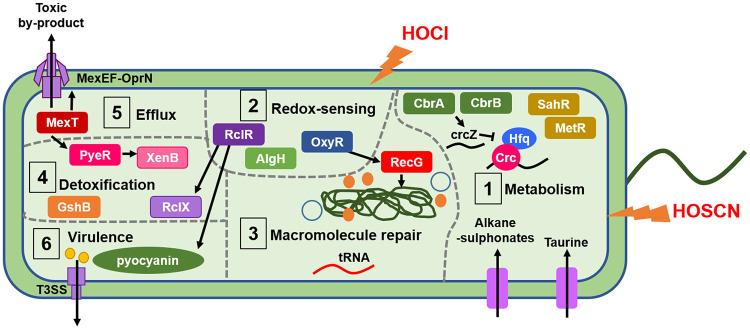
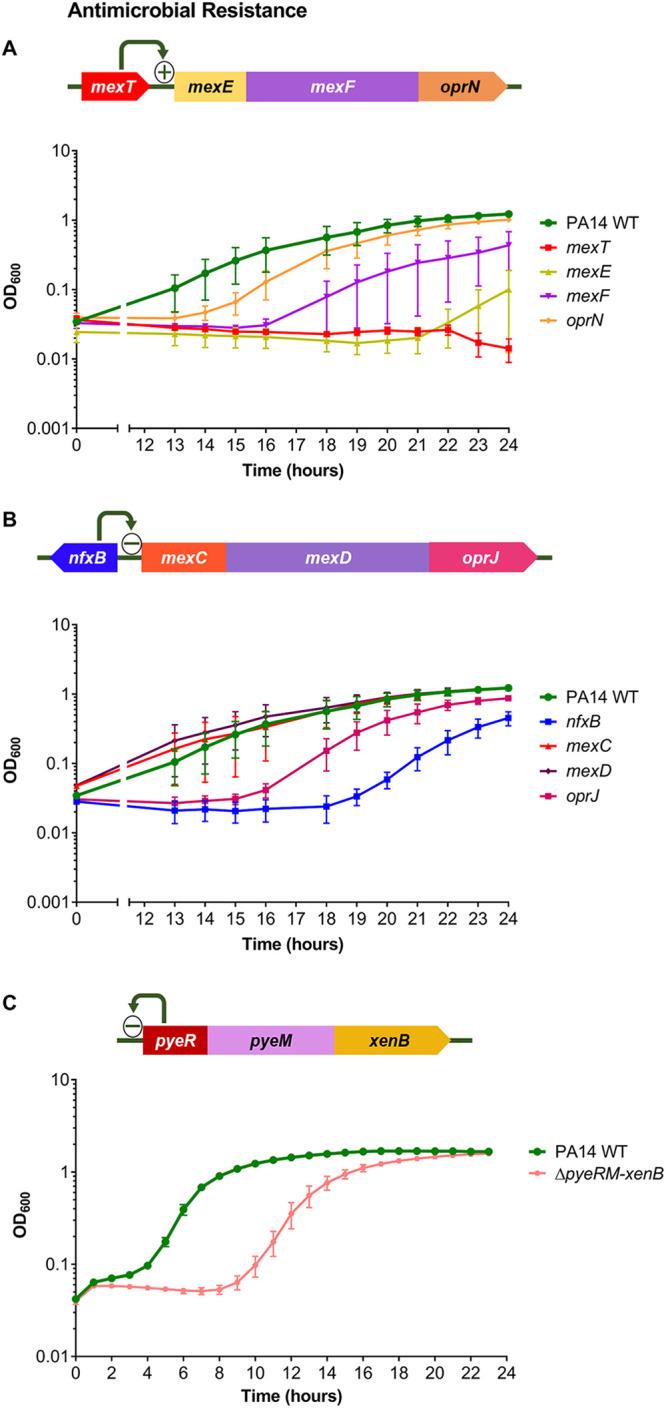
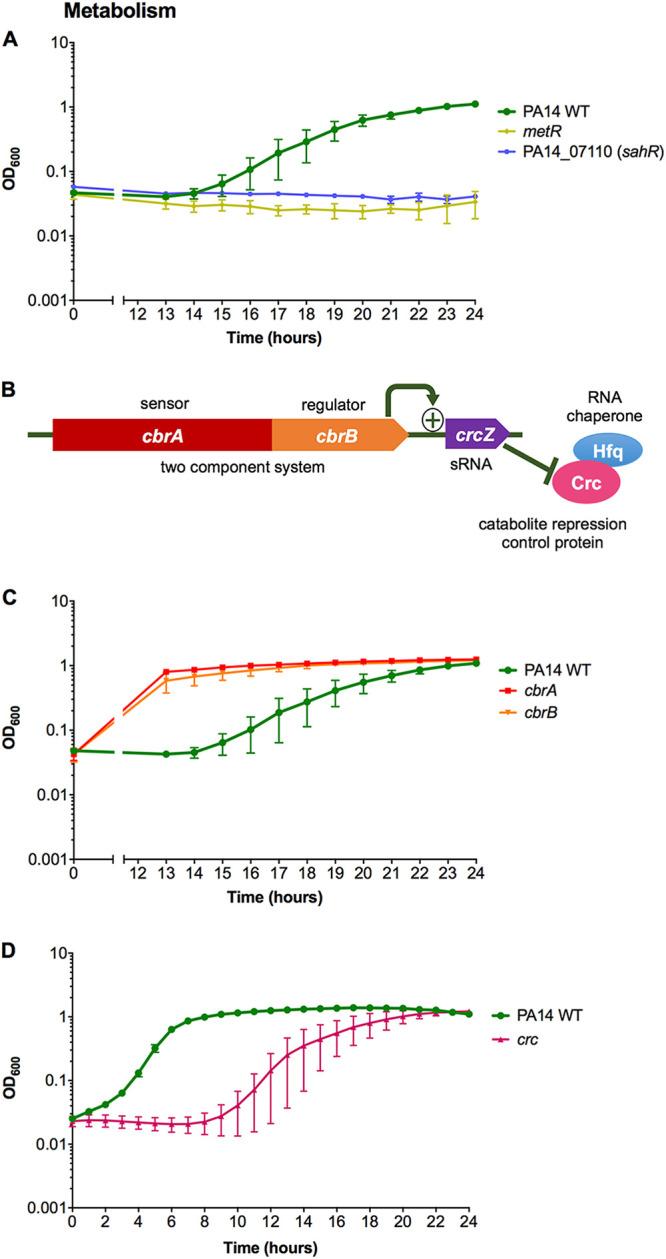
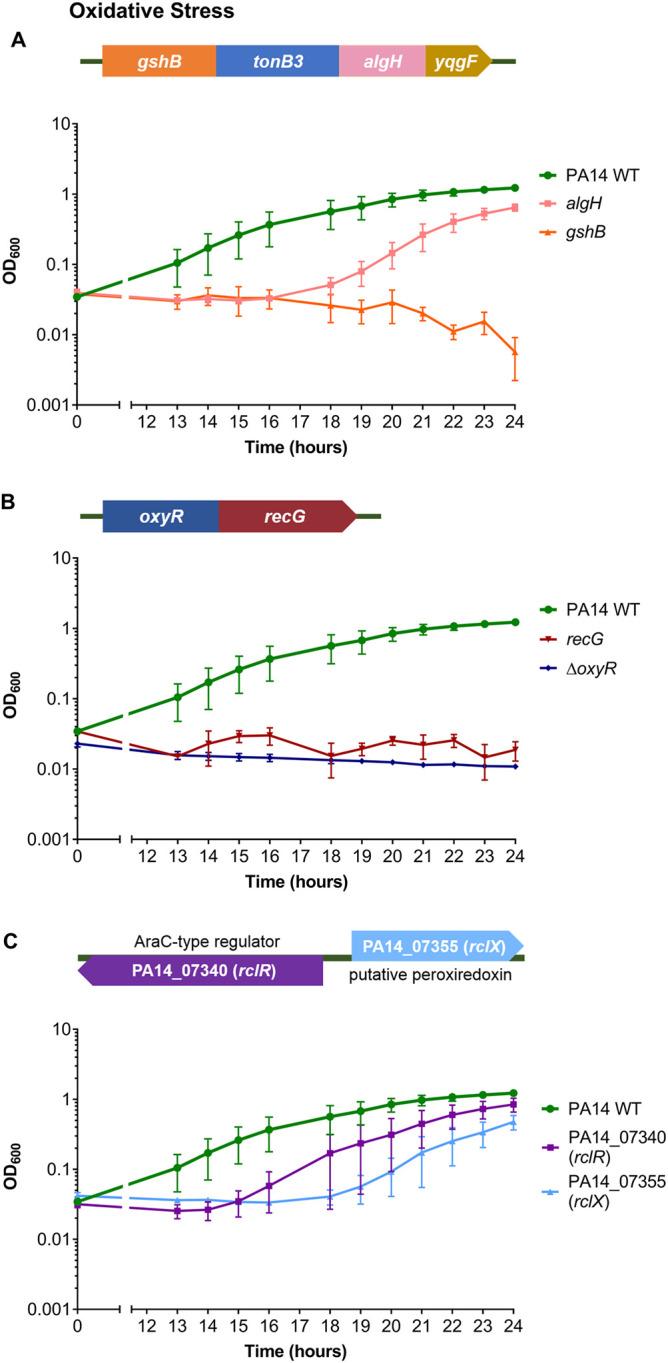
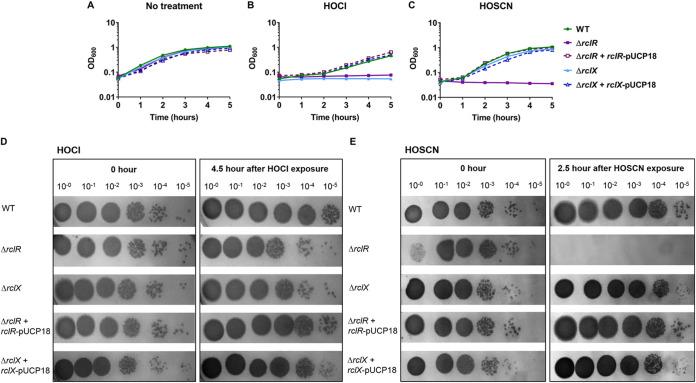
is a significant nosocomial pathogen and is associated with lung infections in cystic fibrosis (CF). Once established, infections persist and are rarely eradicated despite host immune cells producing antimicrobial oxidants, including hypochlorous acid (HOCl) and hypothiocyanous acid (HOSCN). There is limited knowledge as to how senses, responds to, and protects itself against HOCl and HOSCN and the contribution of such responses to its success as a CF pathogen. To investigate the response to these oxidants, we screened 707 transposon mutants, with mutations in regulatory genes, for altered growth following HOCl exposure. We identified regulators of antibiotic resistance, methionine biosynthesis, catabolite repression, and PA14_07340, the homologue of the HOCl-sensor RclR (30% identical), which are required for protection against HOCl. We have shown that RclR (PA14_07340) protects specifically against HOCl and HOSCN stress and responds to both oxidants by upregulating the expression of a putative peroxiredoxin, (PA14_07355). Transcriptional analysis revealed that while there was specificity in the response to HOCl (231 genes upregulated) and HOSCN (105 genes upregulated), there was considerable overlap, with 74 genes upregulated by both oxidants. These included genes encoding the type 3 secretion system, sulfur and taurine transport, and the MexEF-OprN efflux pump. RclR coordinates part of the response to both oxidants, including upregulation of pyocyanin biosynthesis genes, and, in the presence of HOSCN, downregulation of chaperone genes. These data indicate that the response to HOCl and HOSCN is multifaceted, with RclR playing an essential role. The bacterial pathogen causes devastating infections in immunocompromised hosts, including chronic lung infections in cystic fibrosis patients. To combat infection, the host's immune system produces the antimicrobial oxidants hypochlorous acid (HOCl) and hypothiocyanous acid (HOSCN). Little is known about how responds to and survives attack from these oxidants. To address this, we carried out two approaches: a mutant screen and transcriptional study. We identified the transcriptional regulator, RclR, which responds specifically to HOCl and HOSCN stress and is essential for protection against both oxidants. We uncovered a link between the transcriptional response to these oxidants and physiological processes associated with pathogenicity, including antibiotic resistance and the type 3 secretion system.
铜绿假单胞菌是一种重要的医院获得性病原体,与囊性纤维化(CF)患者肺部感染有关。一旦定植,感染持续存在,尽管宿主免疫细胞会产生抗微生物氧化剂,包括次氯酸(HOCl)和次碘酸(HOSCN),但感染很少能被根除。对于铜绿假单胞菌如何感知、应对和保护自身免受 HOCl 和 HOSCN 的侵害,以及这种反应对其作为 CF 病原体成功的贡献,我们知之甚少。为了研究铜绿假单胞菌对这些氧化剂的反应,我们筛选了 707 个转座子突变体,这些突变体的调控基因发生了突变,以研究 HOCl 暴露后生长情况的变化。我们鉴定了抗生素抗性、蛋氨酸生物合成、分解代谢物阻遏和 PA14_07340(与 HOCl 传感器 RclR 同源,同源性为 30%)的调控因子,这些因子对于 HOCl 保护是必需的。我们已经表明,RclR(PA14_07340)特异性地保护铜绿假单胞菌免受 HOCl 和 HOSCN 应激的影响,并通过上调一种假定的过氧化物酶, (PA14_07355),对这两种氧化剂做出反应。转录分析表明,尽管 HOCl(231 个基因上调)和 HOSCN(105 个基因上调)的反应具有特异性,但存在相当大的重叠,有 74 个基因同时被两种氧化剂上调。这些基因包括编码 III 型分泌系统、硫和牛磺酸转运以及 MexEF-OprN 外排泵的基因。RclR 协调了对两种氧化剂的部分反应,包括上调吡咯喹啉生物合成基因,并在存在 HOSCN 的情况下下调伴侣蛋白基因。这些数据表明,铜绿假单胞菌对 HOCl 和 HOSCN 的反应是多方面的,RclR 起着至关重要的作用。细菌病原体铜绿假单胞菌在免疫功能低下的宿主中引起严重感染,包括囊性纤维化患者的慢性肺部感染。为了对抗感染,宿主的免疫系统会产生抗菌氧化剂次氯酸(HOCl)和次碘酸(HOSCN)。目前对于铜绿假单胞菌如何应对和存活于这些氧化剂的攻击知之甚少。为了解决这个问题,我们采用了两种方法:突变体筛选和转录研究。我们鉴定了 转录调控因子 RclR,它特异性地响应 HOCl 和 HOSCN 应激,对于两种氧化剂的保护都是必需的。我们揭示了铜绿假单胞菌对这些氧化剂的转录反应与与致病性相关的生理过程之间的联系,包括抗生素耐药性和 III 型分泌系统。



 Zotero 插件