
晚期糖基化终末产物受体是结直肠癌发展的助推器。
Receptor for Advanced Glycation End Products Acts as a Fuel to Colorectal Cancer Development.
作者信息
Azizian-Farsani Fatemeh, Abedpoor Navid, Hasan Sheikhha Mohammad, Gure Ali Osmay, Nasr-Esfahani Mohammad Hossein, Ghaedi Kamran
机构信息
Department of Medical Genetics, Shahid Sadoughi University of Medical Sciences, Yazd, Iran.
Department of Animal Biotechnology, Cell Science Research Center, Royan Institute for Biotechnology, Academic Center for Education, Culture and Reasearch (ACECR), Isfahan, Iran.
出版信息
Front Oncol. 2020 Sep 29;10:552283. doi: 10.3389/fonc.2020.552283. eCollection 2020.
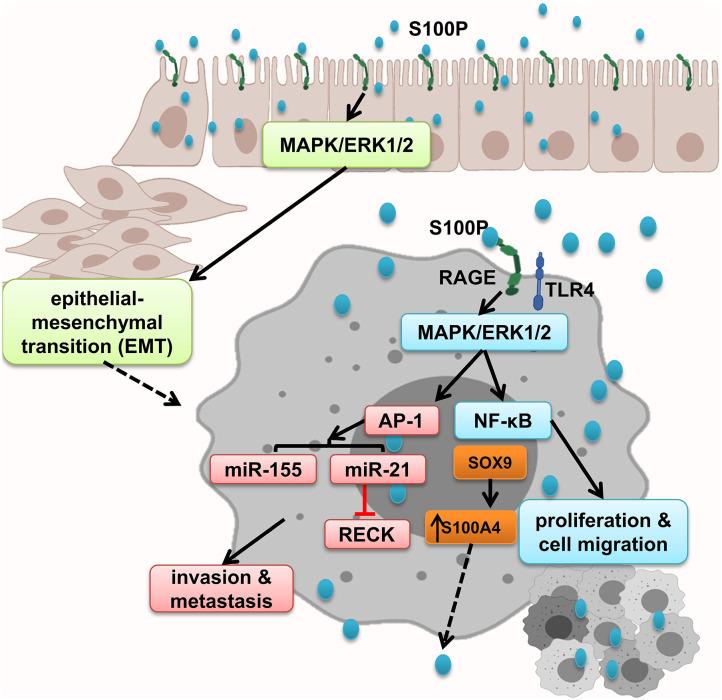
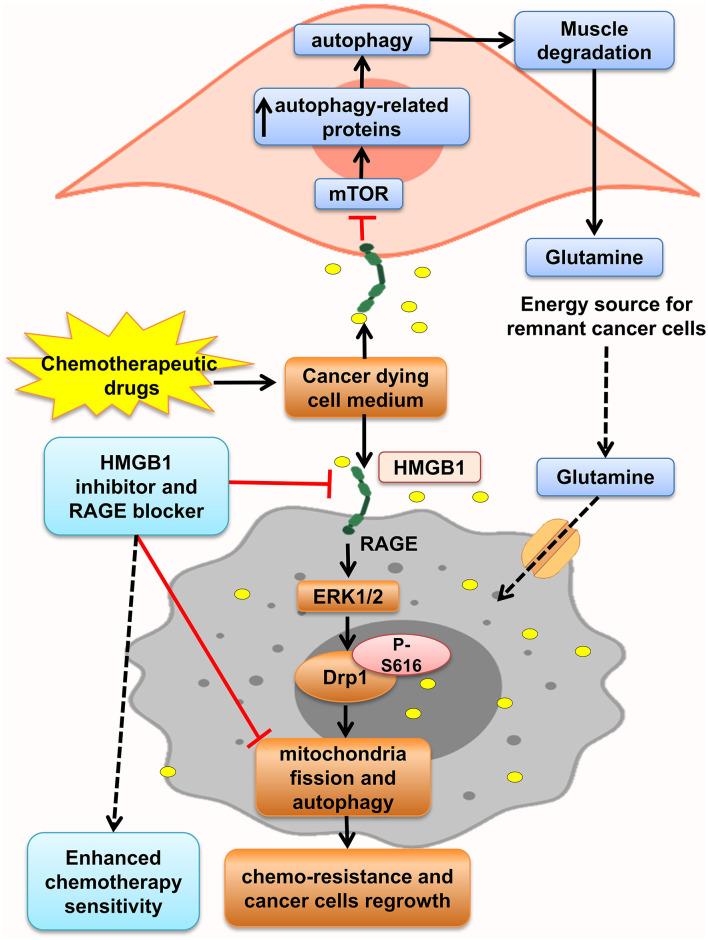
Receptor for advanced glycation end-products (RAGE) is a multiligand binding and single-pass transmembrane protein taken in diverse chronic inflammatory conditions. RAGE behaves as a pattern recognition receptor, which binds and is engaged in the cellular response to a variety of damage-associated molecular pattern molecules, as well as HMGB1, S100 proteins, and AGEs (advanced glycation end-products). The RAGE activation turns out to a formation of numerous intracellular signaling mechanisms, resulting in the progression and prolongation of colorectal carcinoma (CRC). The RAGE expression correlates well with the survival of colon cancer cells. RAGE is involved in the tumorigenesis, which increases and develops well in the stressed tumor microenvironment. In this review, we summarized downstream signaling cascade activated by the multiligand activation of RAGE, as well as RAGE ligands and their sources, clinical studies, and tumor markers related to RAGE particularly in the inflammatory tumor microenvironment in CRC. Furthermore, the role of RAGE signaling pathway in CRC patients with diabetic mellitus is investigated. RAGE has been reported to drive assorted signaling pathways, including activator protein 1, nuclear factor-κB, signal transducer and activator of transcription 3, SMAD family member 4 (Smad4), mitogen-activated protein kinases, mammalian target of rapamycin, phosphoinositide 3-kinases, reticular activating system, Wnt/β-catenin pathway, and Glycogen synthase kinase 3β, and even microRNAs.
晚期糖基化终产物受体(RAGE)是一种多配体结合的单次跨膜蛋白,与多种慢性炎症性疾病相关。RAGE作为一种模式识别受体,可结合并参与细胞对多种损伤相关分子模式分子以及高迁移率族蛋白B1、S100蛋白和晚期糖基化终产物(AGEs)的反应。RAGE激活会引发众多细胞内信号传导机制的形成,导致结直肠癌(CRC)的进展和病程延长。RAGE的表达与结肠癌细胞的存活密切相关。RAGE参与肿瘤发生,在应激的肿瘤微环境中其表达增加且发展良好。在本综述中,我们总结了RAGE多配体激活所激活的下游信号级联反应,以及RAGE配体及其来源、临床研究,特别是在CRC炎症性肿瘤微环境中与RAGE相关的肿瘤标志物。此外,还研究了RAGE信号通路在糖尿病CRC患者中的作用。据报道,RAGE可驱动多种信号通路,包括激活蛋白1、核因子-κB、信号转导和转录激活因子3、SMAD家族成员4(Smad4)、丝裂原活化蛋白激酶、雷帕霉素靶蛋白、磷酸肌醇3激酶、网状激活系统、Wnt/β-连环蛋白通路、糖原合酶激酶3β,甚至微小RNA。




 Zotero 插件