
来曲唑联合或不联合控制性卵巢刺激用于生育力保存的有效性和安全性:一项系统评价和荟萃分析
Efficacy and Safety of Controlled Ovarian Stimulation With or Without Letrozole Co-administration for Fertility Preservation: A Systematic Review and Meta-Analysis.
作者信息
Bonardi Benedetta, Massarotti Claudia, Bruzzone Marco, Goldrat Oranite, Mangili Giorgia, Anserini Paola, Spinaci Stefano, Arecco Luca, Del Mastro Lucia, Ceppi Marcello, Demeestere Isabelle, Lambertini Matteo
机构信息
Research Laboratory on Human Reproduction, Université Libre de Bruxelles (ULB), Brussels, Belgium.
Obstetrics and Gynecology Unit, IRCCS San Raffaele Scientific Institute, Milan, Italy.
出版信息
Front Oncol. 2020 Oct 7;10:574669. doi: 10.3389/fonc.2020.574669. eCollection 2020.
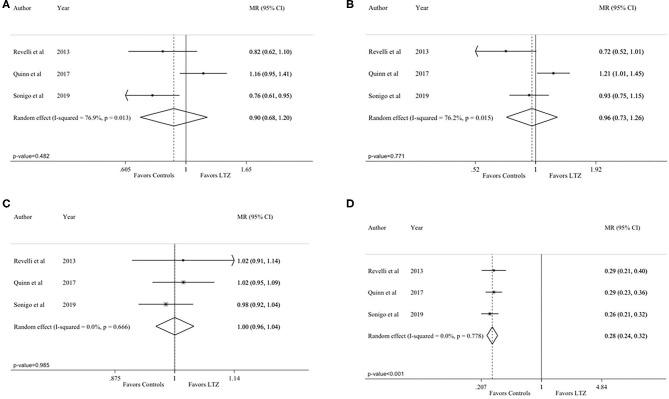
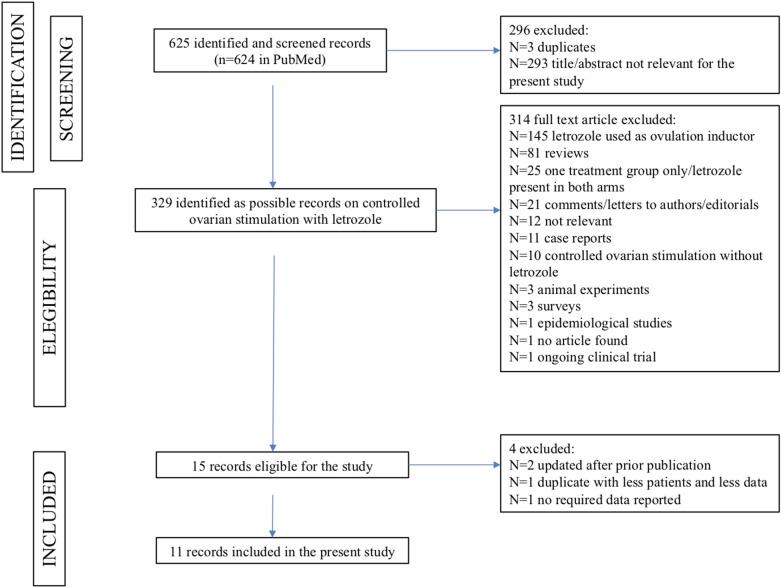
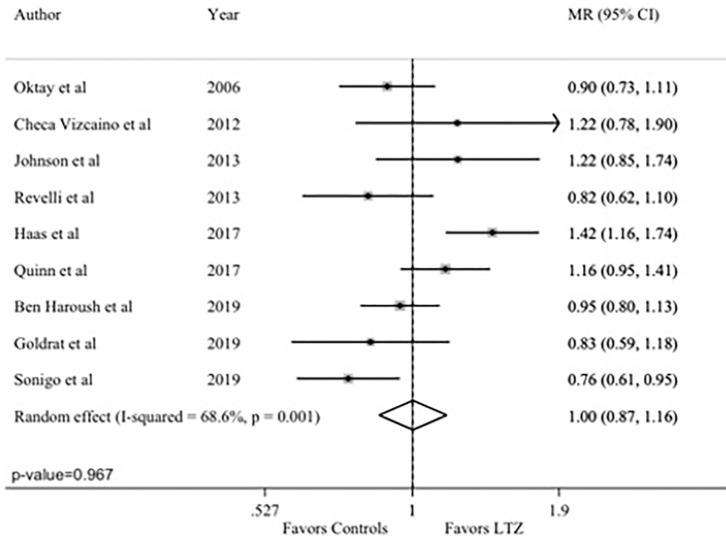
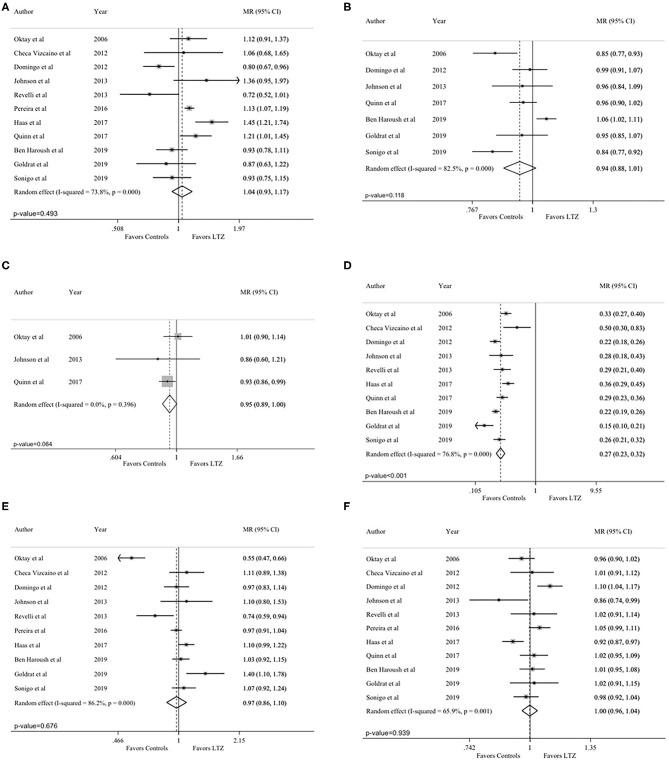
The co-administration of letrozole during controlled ovarian stimulation (COS) with gonadotropins is used to limit the potentially harmful effects of a supra-physiological rise in estrogen levels on hormone-sensitive cancers. However, the efficacy and safety of adding letrozole to COS remain debated. This is a systematic review and meta-analysis of published studies that compared the efficacy and safety of COS with co-administration of letrozole vs. COS without letrozole in all patient populations. A secondary analysis was done including only the studies in breast cancer patients. The primary efficacy endpoint was the number of retrieved mature Metaphase II (MII) oocytes. Secondary efficacy and safety endpoints were total number of oocytes, maturation rate, fertilization rate, number of cryopreserved embryos, peak estradiol levels, progesterone levels, and total gonadotropin dose. Data for each endpoint were reported and analyzed thorough mean ratio (MR) with 95% confidence interval (CI). A total of 11 records were selected including 2,121 patients (990 patients underwent COS with letrozole and 1,131 COS without letrozole). The addition of letrozole to COS did not have any negative effect on the number of mature oocytes collected (MR = 1.00, 95% CI = 0.87-1.16; = 0.967) and the other efficacy endpoints. COS with letrozole was associated with significantly decreased peak estradiol levels (MR = 0.28, 95% CI = 0.24-0.32; < 0.001). Similar results were observed in the secondary analysis including only breast cancer patients. These findings are reassuring on the efficacy and safety of COS with gonadotropins and letrozole and are particularly important for fertility preservation in women with hormone-sensitive cancers.
在使用促性腺激素进行控制性卵巢刺激(COS)期间联合使用来曲唑,用于限制雌激素水平超生理升高对激素敏感性癌症的潜在有害影响。然而,在COS中添加来曲唑的疗效和安全性仍存在争议。这是一项对已发表研究的系统评价和荟萃分析,比较了在所有患者群体中,联合使用来曲唑的COS与不使用来曲唑的COS的疗效和安全性。进行了一项次要分析,仅纳入乳腺癌患者的研究。主要疗效终点是回收的成熟中期II(MII)卵母细胞数量。次要疗效和安全性终点包括卵母细胞总数、成熟率、受精率、冷冻保存胚胎数量、雌二醇峰值水平、孕酮水平和促性腺激素总剂量。每个终点的数据通过平均比值(MR)及95%置信区间(CI)进行报告和分析。共筛选出11篇记录,包括2121例患者(990例患者接受了联合来曲唑的COS,1131例接受了不使用来曲唑的COS)。在COS中添加来曲唑对收集到的成熟卵母细胞数量(MR = 1.00,95% CI = 0.87 - 1.16;P = 0.967)和其他疗效终点没有任何负面影响。联合来曲唑的COS与显著降低的雌二醇峰值水平相关(MR = 0.28,95% CI = 0.24 - 0.32;P < 0.001)。在仅包括乳腺癌患者的次要分析中也观察到了类似结果。这些发现对于促性腺激素和来曲唑联合COS的疗效和安全性令人放心,对于激素敏感性癌症女性的生育力保存尤为重要。
 Zotero 插件