
前列地尔注射液通过 GSK-3β/Nrf2/HO-1 信号通路介导的凋亡抑制减轻冠状动脉微栓塞诱导的心肌损伤。
Alprostadil Injection Attenuates Coronary Microembolization-Induced Myocardial Injury Through GSK-3β/Nrf2/HO-1 Signaling-Mediated Apoptosis Inhibition.
机构信息
Department of Cardiology, The First Affiliated Hospital of Guangxi Medical University, Nanning, Guangxi, China.
出版信息
Drug Des Devel Ther. 2020 Oct 22;14:4407-4422. doi: 10.2147/DDDT.S272877. eCollection 2020.
OBJECTIVE
Coronary microembolization (CME) results in progressive contractile dysfunction associated with cardiomyocyte apoptosis. Alprostadil injection improves microcirculation, which is effective in treating various cardiovascular disorders. However, the therapeutic effects of alprostadil in CME-induced myocardia injury remain unknown. Therefore, we evaluated the effects of alprostadil injection on cardiac protection in a rat model of CME and explored the underlying mechanisms.
METHODS
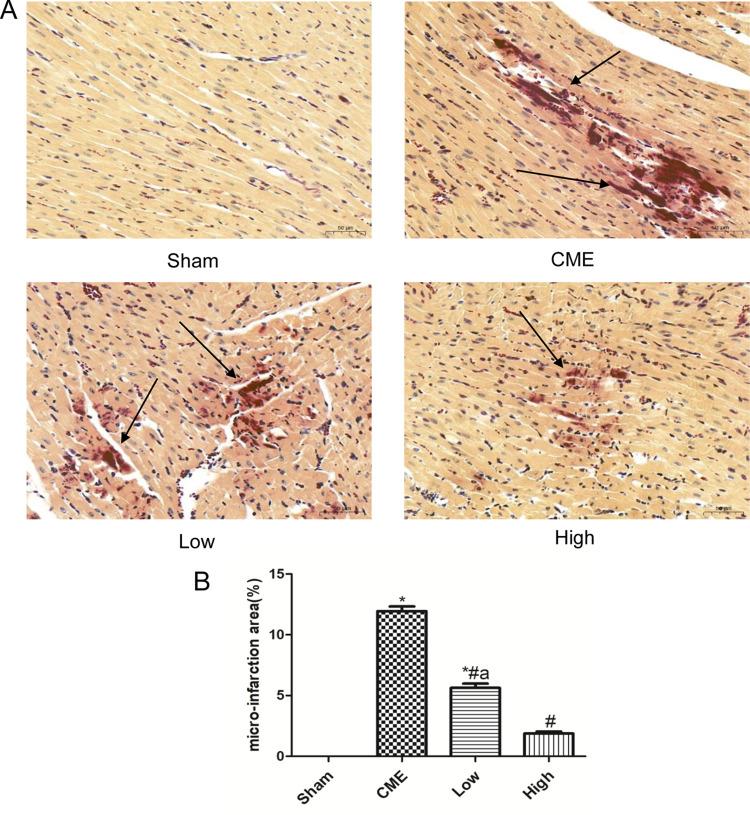
A rat model of CME was established by injecting polyethylene microspheres into the left ventricle. After injection of microspheres, rats in the alprostadil group received alprostadil via tail vein within 2 minutes. Cardiac function, histological alterations in myocardium, serum c-troponin I (cTnI) levels, myocardium adenosine triphosphate (ATP) concentrations, the activity of superoxide dismutase (SOD) and malondialdehyde (MDA) content in myocardium, and myocardial apoptosis-related proteins were detected 12 hours after CME modeling.
RESULTS
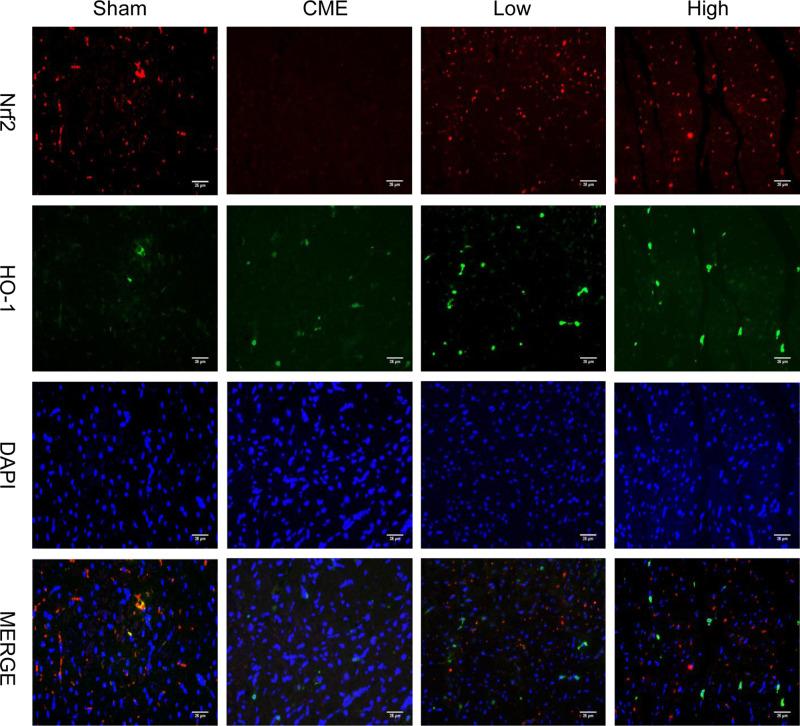
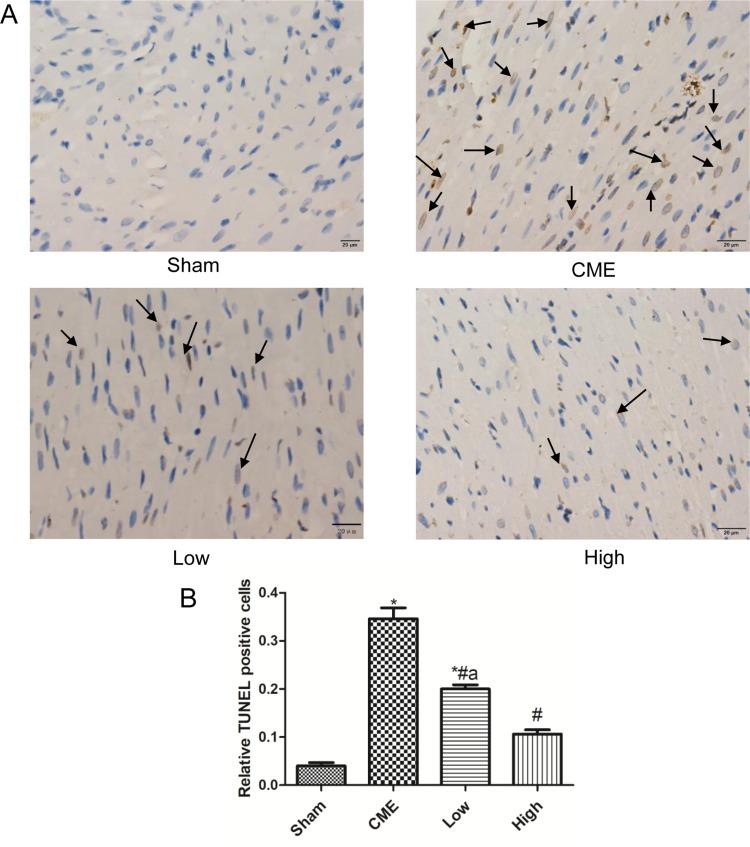
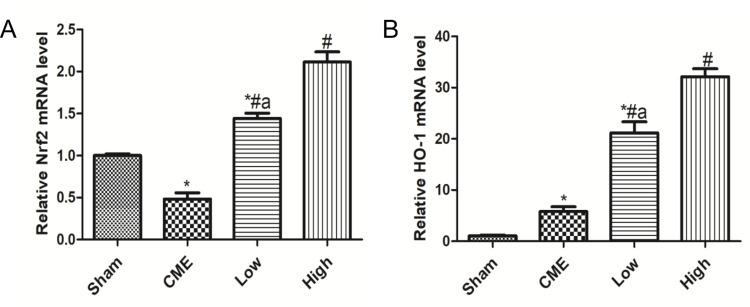
Compared with the Sham group, ATP concentrations, SOD activity in the myocardium, and cardiac function were significantly decreased in a rat model of CME. In addition, serum cTnI levels, MDA content, expression levels of pro-apoptotic proteins, and the number of TUNEL-positive nuclei were remarkably higher in CME group than those in the Sham group. However, alprostadil treatment notably reduced serum cTnI levels and expression levels of pro-apoptotic proteins, while noticeably improved cardiac function, and accelerated SOD activity in the myocardium following CME. Additionally, it was unveiled that the protective effects of alprostadil injection inhibit CME-induced myocardial apoptosis in the myocardium potentially through regulation of the GSK-3β/Nrf2/HO-1 signaling pathway.
CONCLUSION
Alprostadil injection seems to significantly suppress oxidative stress, alleviate myocardial apoptosis in the myocardium, and improve cardiac systolic and diastolic functions following CME by regulating the GSK-3β/Nrf2/HO-1 signaling pathway.
目的
冠状动脉微栓塞(CME)导致与心肌细胞凋亡相关的进行性收缩功能障碍。前列地尔注射可改善微循环,对治疗各种心血管疾病有效。然而,前列地尔治疗 CME 引起的心肌损伤的疗效尚不清楚。因此,我们评估了前列地尔注射在 CME 诱导的心肌损伤大鼠模型中的心脏保护作用,并探讨了其潜在机制。
方法
通过将聚乙烯微球注入左心室建立 CME 大鼠模型。微球注射后,前列地尔组大鼠在 2 分钟内通过尾静脉注射前列地尔。检测 CME 模型建立后 12 小时大鼠的心脏功能、心肌组织学改变、血清 c-肌钙蛋白 I(cTnI)水平、心肌三磷酸腺苷(ATP)浓度、心肌超氧化物歧化酶(SOD)活性和丙二醛(MDA)含量以及心肌细胞凋亡相关蛋白。
结果
与 Sham 组相比,CME 大鼠模型中 ATP 浓度、心肌 SOD 活性和心脏功能明显降低。此外,CME 组血清 cTnI 水平、MDA 含量、促凋亡蛋白表达水平和 TUNEL 阳性细胞核数明显高于 Sham 组。然而,前列地尔治疗明显降低了血清 cTnI 水平和促凋亡蛋白的表达水平,同时显著改善了 CME 后的心脏功能,并加速了心肌中的 SOD 活性。此外,研究表明,前列地尔注射的保护作用可能通过调节 GSK-3β/Nrf2/HO-1 信号通路抑制 CME 诱导的心肌细胞凋亡。
结论
前列地尔注射似乎通过调节 GSK-3β/Nrf2/HO-1 信号通路,显著抑制 CME 后氧化应激,减轻心肌细胞凋亡,改善心脏收缩和舒张功能。




 Zotero 插件