
严重 COVID-19 诱导的急性呼吸窘迫综合征中的促炎和抗炎反应:一项观察性初步研究。
Pro- and Anti-Inflammatory Responses in Severe COVID-19-Induced Acute Respiratory Distress Syndrome-An Observational Pilot Study.
机构信息
Department of Anesthesiology and Intensive Care Medicine, University Hospital Würzburg, Würzburg, Germany.
Department of Medicine II, Rheumatology and Clinical Immunology, University Hospital Würzburg, Würzburg, Germany.
出版信息
Front Immunol. 2020 Oct 6;11:581338. doi: 10.3389/fimmu.2020.581338. eCollection 2020.
OBJECTIVES
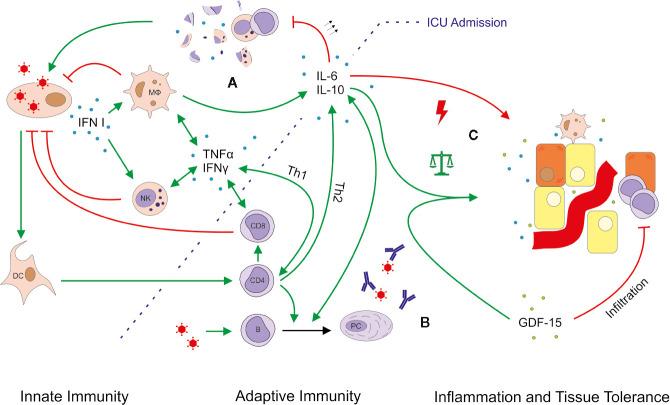
The severity of Coronavirus Disease 2019 (COVID-19) is largely determined by the immune response. First studies indicate altered lymphocyte counts and function. However, interactions of pro- and anti-inflammatory mechanisms remain elusive. In the current study we characterized the immune responses in patients suffering from severe COVID-19-induced acute respiratory distress syndrome (ARDS).
METHODS
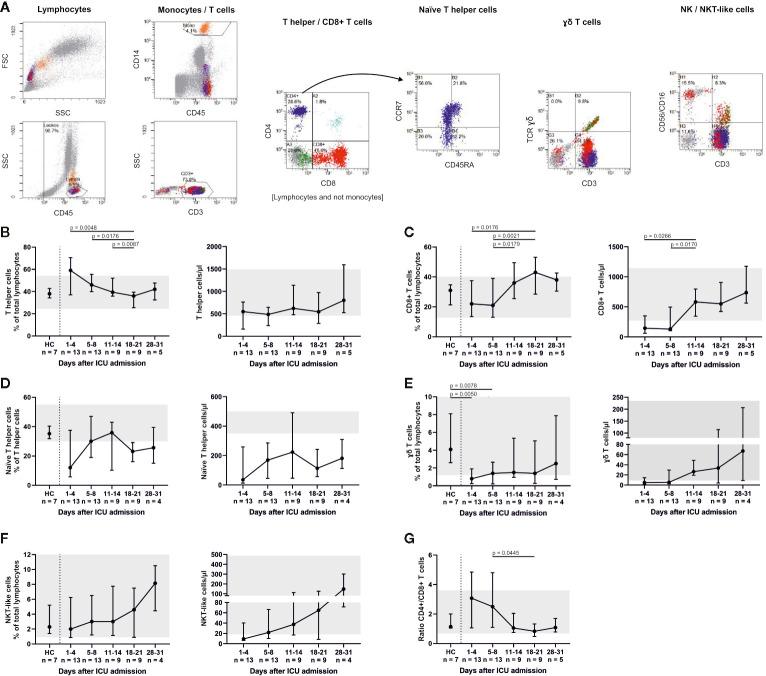
This was a single-center retrospective study in patients admitted to the intensive care unit (ICU) with confirmed COVID-19 between March 14 and May 28 2020 (n = 39). Longitudinal data were collected within routine clinical care, including flow-cytometry of lymphocyte subsets, cytokine analysis and growth differentiation factor 15 (GDF-15). Antibody responses against the receptor binding domain (RBD) of Severe Acute Respiratory Syndrome Coronavirus 2 (SARS-CoV-2) Spike protein were analyzed.
RESULTS
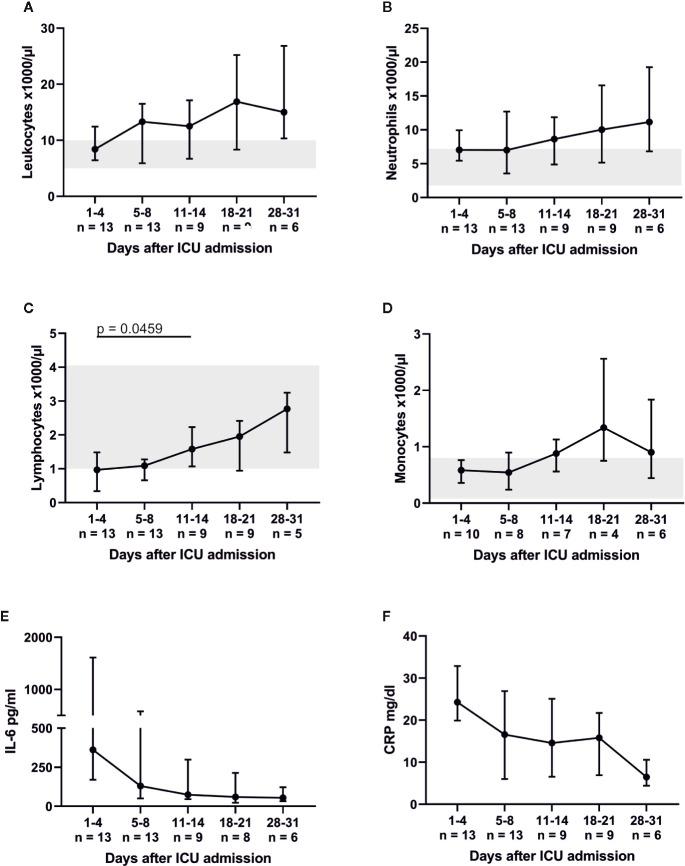
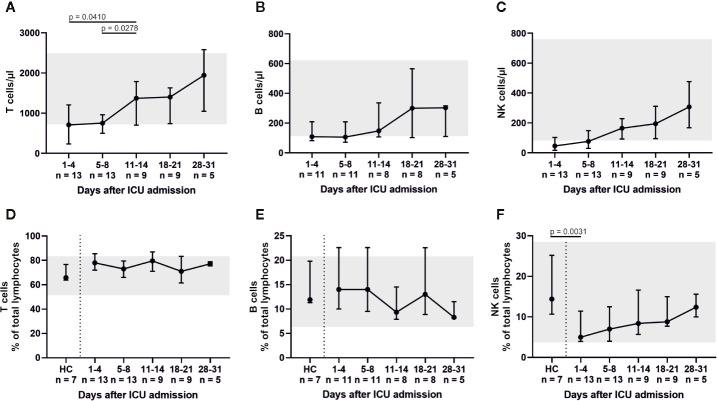
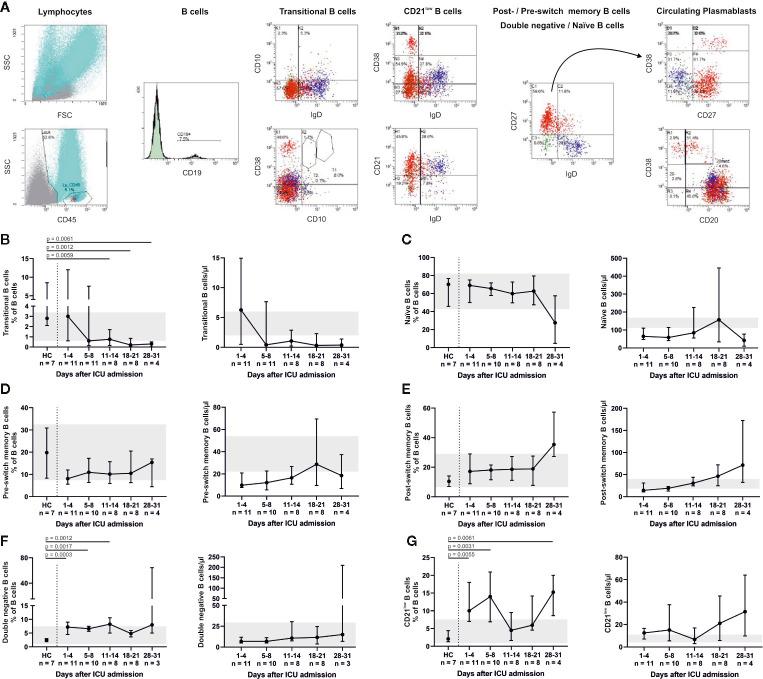
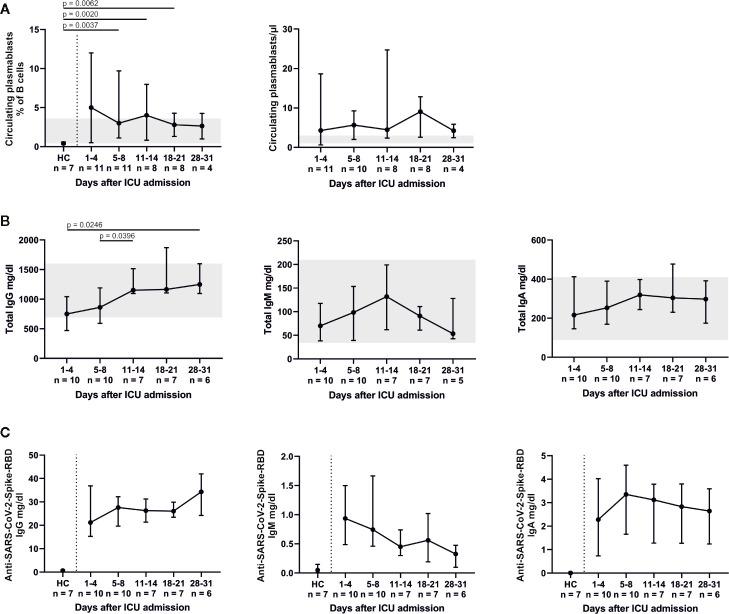
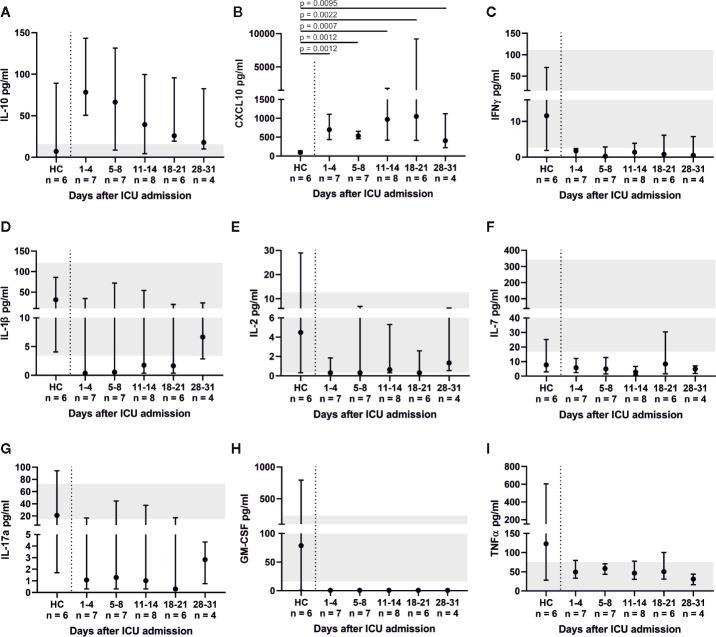
All patients suffered from severe ARDS, 30.8% died. Interleukin (IL)-6 was massively elevated at every time-point. The anti-inflammatory cytokine IL-10 was concomitantly upregulated with IL-6. The cellular response was characterized by lymphocytopenia with low counts of CD8+ T cells, natural killer (NK) and naïve T helper cells. CD8+ T and NK cells recovered after 8 to 14 days. The B cell system was largely unimpeded. This coincided with a slight increase in anti-SARS-CoV-2-Spike-RBD immunoglobulin (Ig) G and a decrease in anti-SARS-CoV-2-Spike-RBD IgM. GDF-15 levels were elevated throughout ICU treatment.
CONCLUSIONS
Massively elevated levels of IL-6 and a delayed cytotoxic immune defense characterized severe COVID-19-induced ARDS. The B cell response and antibody production were largely unimpeded. No obvious imbalance of pro- and anti-inflammatory mechanisms was observed, with elevated GDF-15 levels suggesting increased tissue resilience.
目的
2019 年冠状病毒病(COVID-19)的严重程度在很大程度上取决于免疫反应。最初的研究表明淋巴细胞计数和功能发生改变。然而,促炎和抗炎机制的相互作用仍不清楚。在本研究中,我们对患有严重 COVID-19 诱导的急性呼吸窘迫综合征(ARDS)的患者的免疫反应进行了特征描述。
方法
这是一项单中心回顾性研究,纳入 2020 年 3 月 14 日至 5 月 28 日期间入住重症监护病房(ICU)并确诊为 COVID-19 的患者(n=39)。在常规临床护理中收集了纵向数据,包括淋巴细胞亚群的流式细胞术、细胞因子分析和生长分化因子 15(GDF-15)。分析了针对严重急性呼吸综合征冠状病毒 2(SARS-CoV-2)刺突蛋白受体结合域(RBD)的抗体反应。
结果
所有患者均患有严重的 ARDS,30.8%死亡。白细胞介素(IL)-6 在每个时间点均显著升高。抗炎细胞因子 IL-10 与 IL-6 同时上调。细胞反应表现为淋巴细胞减少,CD8+T 细胞、自然杀伤(NK)细胞和幼稚 T 辅助细胞计数降低。CD8+T 和 NK 细胞在 8 至 14 天后恢复。B 细胞系统基本不受影响。这与 SARS-CoV-2 刺突-RBD 免疫球蛋白(Ig)G 抗体轻度增加和 SARS-CoV-2 刺突-RBD IgM 抗体减少同时发生。GDF-15 水平在整个 ICU 治疗期间升高。
结论
IL-6 水平显著升高和细胞毒性免疫防御延迟是严重 COVID-19 诱导的 ARDS 的特征。B 细胞反应和抗体产生基本不受影响。未观察到促炎和抗炎机制明显失衡,GDF-15 水平升高提示组织弹性增加。

 Zotero 插件