
利用长读转录组测序揭示人类转录组的暗面。
Illuminating the dark side of the human transcriptome with long read transcript sequencing.
机构信息
The Roslin Institute and Royal (Dick) School of Veterinary Studies, University of Edinburgh, Midlothian, EH25 9RG, UK.
The University of Queensland, St. Lucia, Brisbane, QLD, 4072, Australia.
出版信息
BMC Genomics. 2020 Oct 30;21(1):751. doi: 10.1186/s12864-020-07123-7.
BACKGROUND
The human transcriptome annotation is regarded as one of the most complete of any eukaryotic species. However, limitations in sequencing technologies have biased the annotation toward multi-exonic protein coding genes. Accurate high-throughput long read transcript sequencing can now provide additional evidence for rare transcripts and genes such as mono-exonic and non-coding genes that were previously either undetectable or impossible to differentiate from sequencing noise.
RESULTS
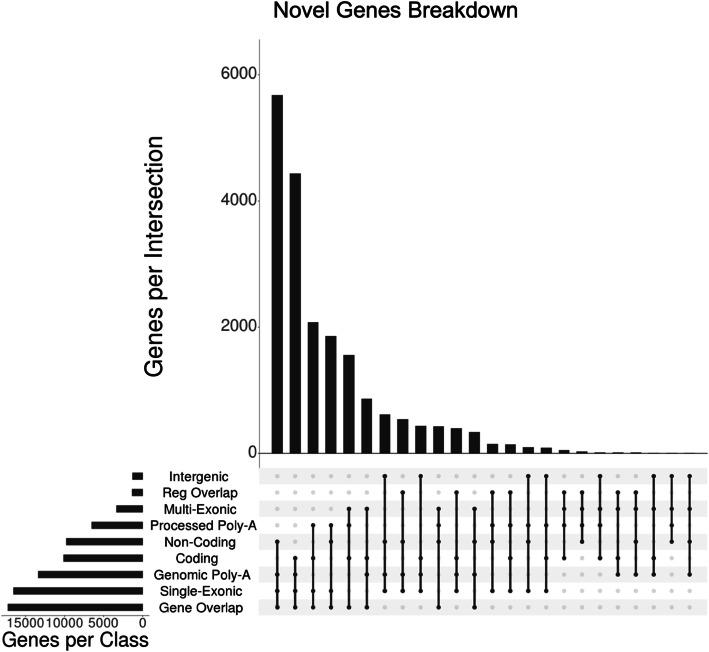
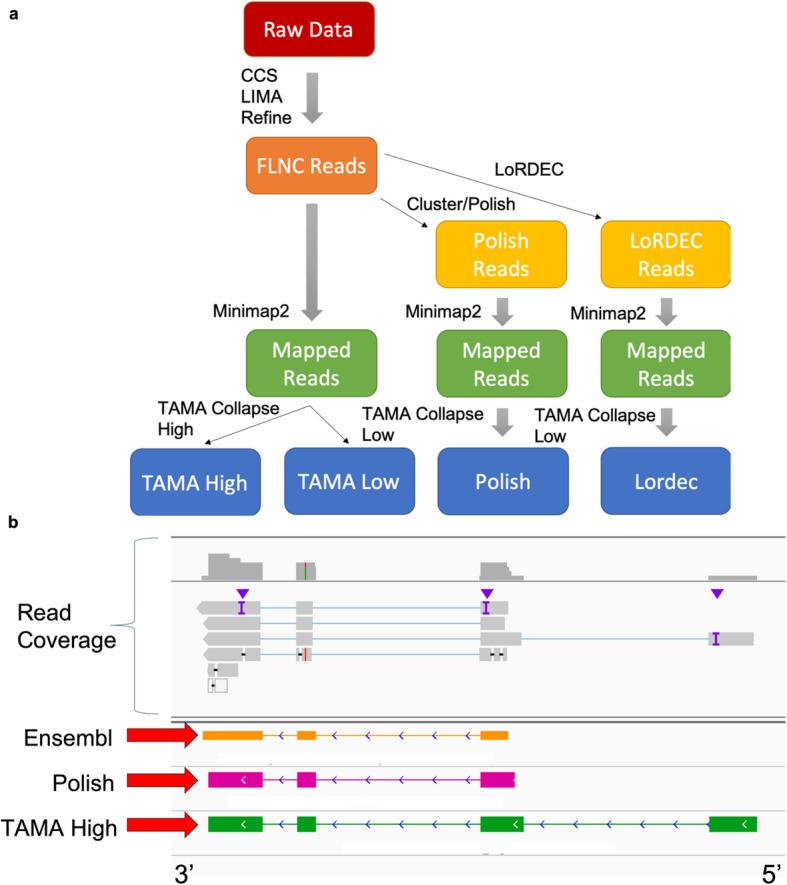
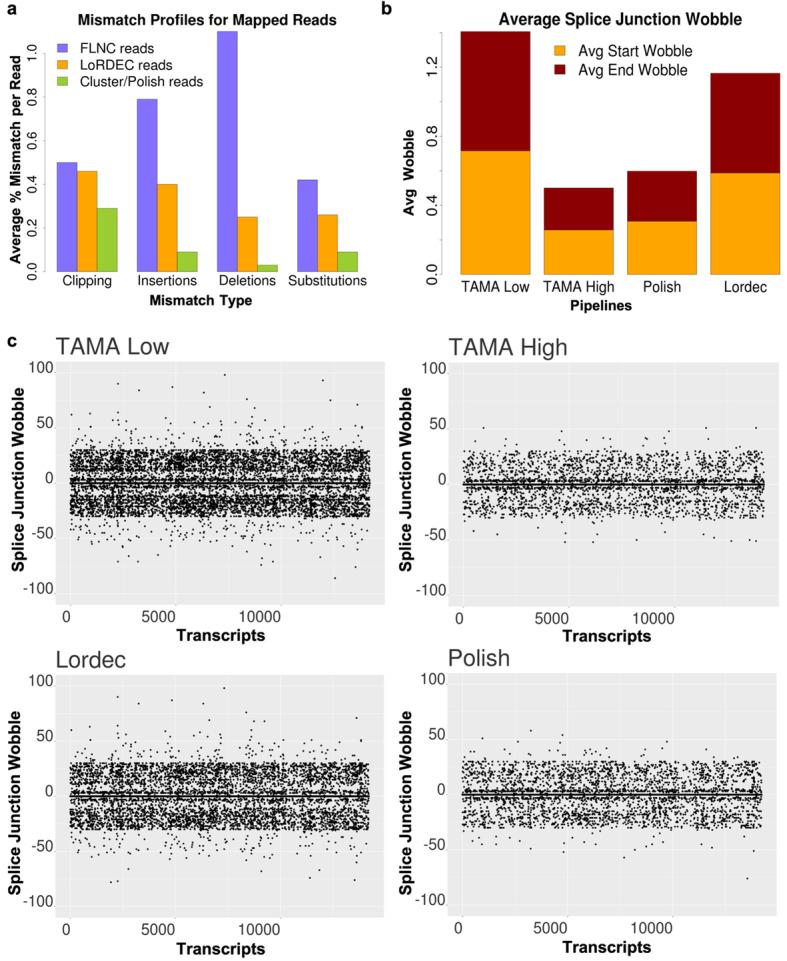
We developed the Transcriptome Annotation by Modular Algorithms (TAMA) software to leverage the power of long read transcript sequencing and address the issues with current data processing pipelines. TAMA achieved high sensitivity and precision for gene and transcript model predictions in both reference guided and unguided approaches in our benchmark tests using simulated Pacific Biosciences (PacBio) and Nanopore sequencing data and real PacBio datasets. By analyzing PacBio Sequel II Iso-Seq sequencing data of the Universal Human Reference RNA (UHRR) using TAMA and other commonly used tools, we found that the convention of using alignment identity to measure error correction performance does not reflect actual gain in accuracy of predicted transcript models. In addition, inter-read error correction can cause major changes to read mapping, resulting in potentially over 6 K erroneous gene model predictions in the Iso-Seq based human genome annotation. Using TAMA's genome assembly based error correction and gene feature evidence, we predicted 2566 putative novel non-coding genes and 1557 putative novel protein coding gene models.
CONCLUSIONS
Long read transcript sequencing data has the power to identify novel genes within the highly annotated human genome. The use of parameter tuning and extensive output information of the TAMA software package allows for in depth exploration of eukaryotic transcriptomes. We have found long read data based evidence for thousands of unannotated genes within the human genome. More development in sequencing library preparation and data processing are required for differentiating sequencing noise from real genes in long read RNA sequencing data.
背景
人类转录组注释被认为是所有真核生物中最完整的注释之一。然而,测序技术的局限性使得注释偏向于多外显子的蛋白质编码基因。准确的高通量长读转录组测序现在可以为以前无法检测或不可能从测序噪声中区分的稀有转录本和基因,如单外显子和非编码基因,提供额外的证据。
结果
我们开发了 Transcriptome Annotation by Modular Algorithms (TAMA) 软件,利用长读转录组测序的强大功能,并解决当前数据处理管道存在的问题。在使用模拟 Pacific Biosciences (PacBio) 和 Nanopore 测序数据以及真实 PacBio 数据集进行的基准测试中,我们使用 TAMA 以及其他常用工具在有指导和无指导的方法中对基因和转录本模型预测进行了测试,结果表明 TAMA 实现了高灵敏度和高精度。通过使用 TAMA 和其他常用工具分析使用 PacBio Sequel II Iso-Seq 测序的 Universal Human Reference RNA (UHRR) 的测序数据,我们发现使用比对同一性来衡量纠错性能的方法并不能反映预测转录本模型准确性的实际提高。此外,读段间纠错可能会导致读段映射发生重大变化,从而导致基于 Iso-Seq 的人类基因组注释中潜在超过 6000 个错误的基因模型预测。使用 TAMA 的基于基因组组装的纠错和基因特征证据,我们预测了 2566 个假定的新非编码基因和 1557 个假定的新蛋白质编码基因模型。
结论
长读转录组测序数据具有在高度注释的人类基因组中识别新基因的能力。TAMA 软件包的参数调整和广泛的输出信息的使用允许对真核转录组进行深入探索。我们在人类基因组中发现了数千个未注释的基因的长读数据证据。在长读 RNA 测序数据中,需要进一步开发测序文库制备和数据处理方法,以区分测序噪声和真实基因。




 Zotero 插件