
全基因组病毒序列揭示了 SARS-CoV-2 在以色列境内和之间传播的模式。
Full genome viral sequences inform patterns of SARS-CoV-2 spread into and within Israel.
机构信息
The Shmunis School of Biomedicine and Cancer Research, George S. Wise Faculty of Life Sciences, Tel Aviv University, Tel Aviv, Israel.
Department of Biology, Emory University, Atlanta, GA, USA.
出版信息
Nat Commun. 2020 Nov 2;11(1):5518. doi: 10.1038/s41467-020-19248-0.
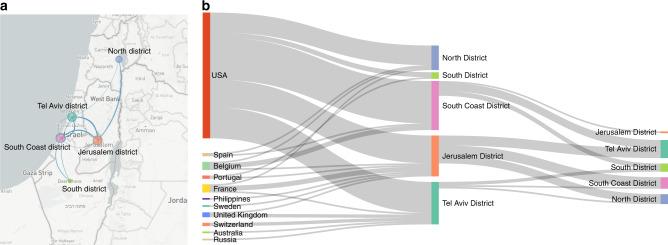
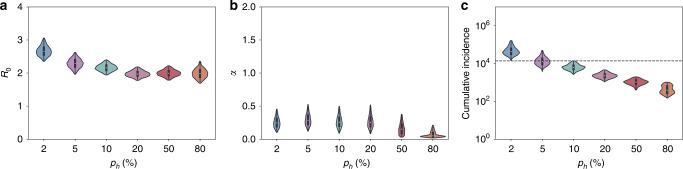
Full genome sequences are increasingly used to track the geographic spread and transmission dynamics of viral pathogens. Here, with a focus on Israel, we sequence 212 SARS-CoV-2 sequences and use them to perform a comprehensive analysis to trace the origins and spread of the virus. We find that travelers returning from the United States of America significantly contributed to viral spread in Israel, more than their proportion in incoming infected travelers. Using phylodynamic analysis, we estimate that the basic reproduction number of the virus was initially around 2.5, dropping by more than two-thirds following the implementation of social distancing measures. We further report high levels of transmission heterogeneity in SARS-CoV-2 spread, with between 2-10% of infected individuals resulting in 80% of secondary infections. Overall, our findings demonstrate the effectiveness of social distancing measures for reducing viral spread.
全基因组序列越来越多地被用于追踪病毒病原体的地理传播和传播动态。在这里,我们重点关注以色列,对 212 个 SARS-CoV-2 序列进行测序,并利用它们进行全面分析,以追踪病毒的起源和传播。我们发现,从美国返回的旅行者对以色列的病毒传播贡献显著,超过了入境感染者旅行者的比例。通过系统发育动力学分析,我们估计病毒的基本繁殖数最初约为 2.5,在实施社会隔离措施后下降了三分之二以上。我们还报告了 SARS-CoV-2 传播中存在高度的传播异质性,2-10%的感染者导致 80%的二次感染。总的来说,我们的研究结果表明,社会隔离措施对于减少病毒传播是有效的。


 Zotero 插件