
与乳腺癌患者术前化疗的病理及治疗效果相关的免疫因子。
Immune factors associated with the pathological and therapeutic effects of preoperative chemotherapy in patients with breast cancer.
作者信息
Kim Ryungsa, Kawai Ami, Wakisaka Megumi, Sawada Sayaka, Shimoyama Mika, Yasuda Naomi, Hidaka Masayuki, Morita Yukitaka, Ohtani Shoichiro, Ito Mitsuya, Kawasaki Kensuke, Kin Takanori, Arihiro Koji
机构信息
Breast Surgery, Hiroshima Mark Clinic, 1-4-3F, 2-Chome Ohte-machi, Naka-ku, Hiroshima, Japan.
Breast Surgery, Hiroshima Mark Clinic, 1-4-3F, 2-Chome Ohte-machi, Naka-ku, Hiroshima, Japan.
出版信息
Transl Oncol. 2021 Jan;14(1):100927. doi: 10.1016/j.tranon.2020.100927. Epub 2020 Nov 3.
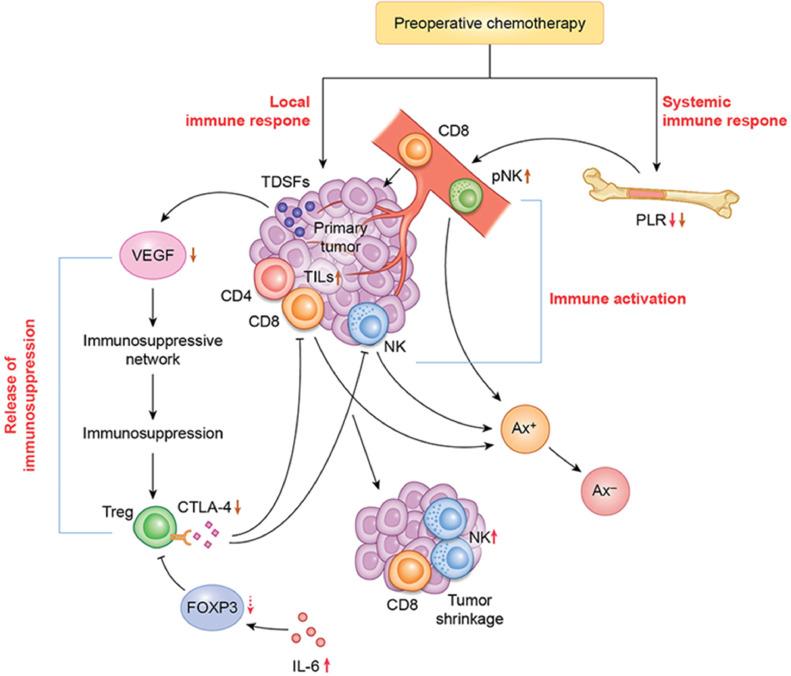
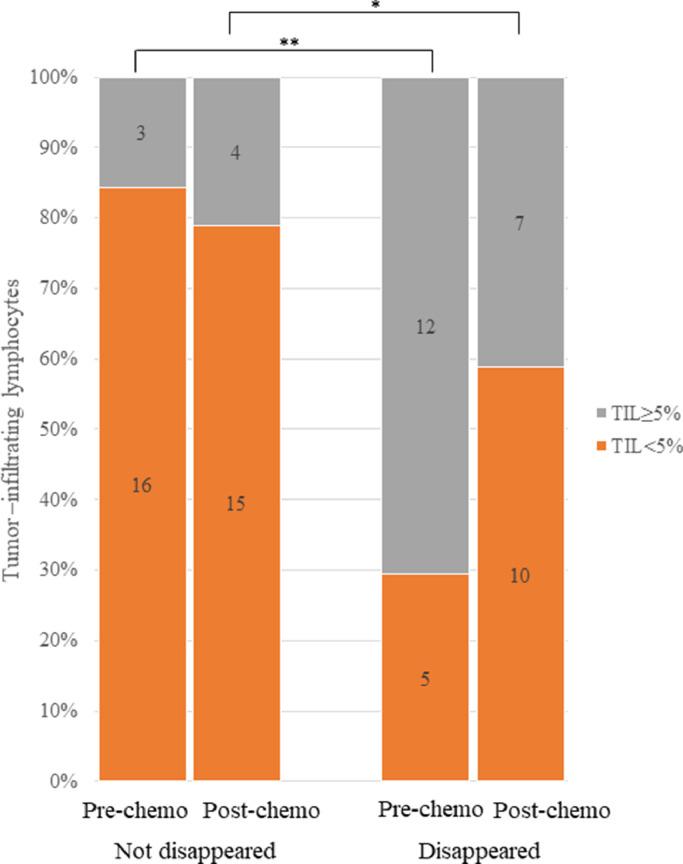
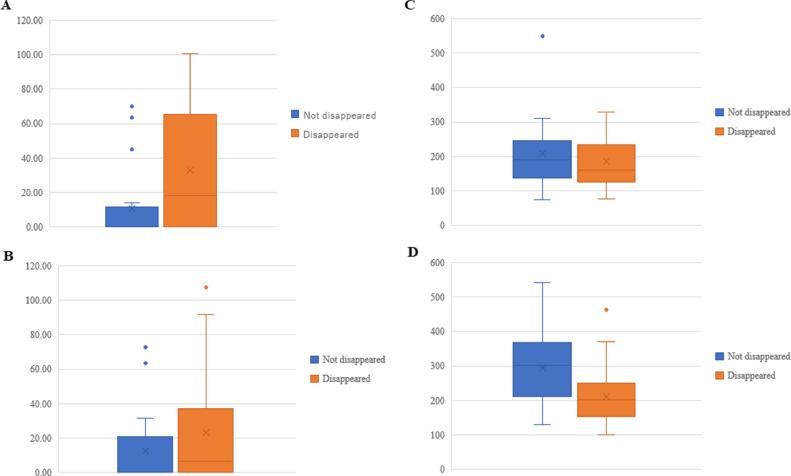
Immune activation plays an important role in achieving the pathological and therapeutic effects of preoperative chemotherapy in patients with breast cancer. We evaluated how the immune response contributes to various therapeutic effects. This study was conducted on 43 patients with stages II-IV breast cancer who received preoperative chemotherapy followed by surgery. Peripheral natural killer (pNK) cell activity and the neutrophil-lymphocyte ratio, lymphocyte-monocyte ratio, and platelet-lymphocyte ratio (PLR) were assessed before and after chemotherapy. Tumor-infiltrating lymphocytes (TILs) and levels of 14 tumor microenvironmental factors, analyzed by next-generation sequencing, were assessed in formalin-fixed, paraffin-embedded sections of preoperative biopsy samples and surgical specimens. Univariate analysis showed that grade 2 (G2) and better therapeutic effects were significantly associated with human epidermal growth factor receptor 2 (HER-2)-positive cancer, lower PLRs, and higher NK cell and interleukin-6 levels after chemotherapy. The disappearance of axillary lymph-node metastasis was significantly associated with HER-2-positive cancer; increased pNK cell activity and lower PLRs and vascular endothelial growth factor (VEGF) levels after chemotherapy; and increased cytotoxic T lymphocyte antigen 4 (CTLA-4) levels in regulatory T cells (Tregs) and ≥5% TILs before chemotherapy. Multivariate analysis showed that G2 and better therapeutic effects tended to be associated with higher NK cell levels after chemotherapy (odds ratio = 1.02; 95% confidence interval, 0.99-1.05; P = 0.07). The activation of local and systemic immune responses by downregulation of immunosuppressive factors, such as VEGF and CTLA-4 in Tregs, had variable pathological and therapeutic effects after preoperative chemotherapy in patients with breast cancer.
免疫激活在乳腺癌患者术前化疗的病理及治疗效果达成中发挥着重要作用。我们评估了免疫反应如何促成各种治疗效果。本研究针对43例II-IV期乳腺癌患者开展,这些患者先接受术前化疗,随后接受手术。在化疗前后评估外周自然杀伤(pNK)细胞活性以及中性粒细胞与淋巴细胞比值、淋巴细胞与单核细胞比值和血小板与淋巴细胞比值(PLR)。通过下一代测序分析的肿瘤浸润淋巴细胞(TILs)以及14种肿瘤微环境因子水平,在术前活检样本和手术标本的福尔马林固定、石蜡包埋切片中进行评估。单因素分析显示,2级(G2)及更好的治疗效果与人类表皮生长因子受体2(HER-2)阳性癌、较低的PLR以及化疗后较高的NK细胞和白细胞介素-6水平显著相关。腋窝淋巴结转移的消失与HER-2阳性癌显著相关;化疗后pNK细胞活性增加、PLR和血管内皮生长因子(VEGF)水平降低;化疗前调节性T细胞(Tregs)中细胞毒性T淋巴细胞抗原4(CTLA-4)水平升高且TILs≥5%。多因素分析显示,G2及更好的治疗效果倾向于与化疗后较高的NK细胞水平相关(比值比=1.02;95%置信区间,0.99-1.05;P=0.07)。通过下调免疫抑制因子(如Tregs中的VEGF和CTLA-4)激活局部和全身免疫反应后,乳腺癌患者术前化疗后具有不同的病理和治疗效果。

 Zotero 插件