
核酸治疗药物的药代动力学及临床应用进展。
Pharmacokinetics and Proceedings in Clinical Application of Nucleic Acid Therapeutics.
机构信息
Institute of Molecular and Translational Therapeutic Strategies (IMTTS), Hannover Medical School (MHH), Hannover, Germany.
Institute of Molecular and Translational Therapeutic Strategies (IMTTS), Hannover Medical School (MHH), Hannover, Germany; REBIRTH Center for Translational Regenerative Medicine, Hannover Medical School (MHH), Hannover, Germany; Fraunhofer Institute of Toxicology and Experimental Medicine, Hannover, Germany.
出版信息
Mol Ther. 2021 Feb 3;29(2):521-539. doi: 10.1016/j.ymthe.2020.11.008. Epub 2020 Nov 12.
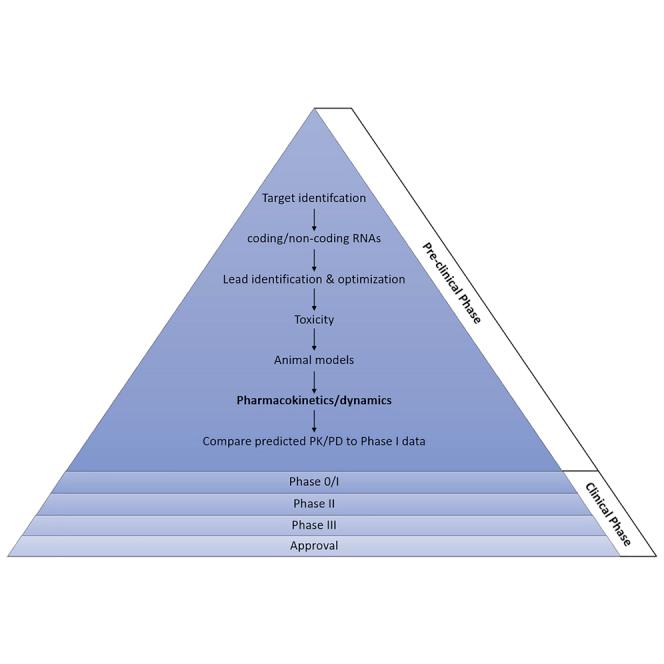
Oligonucleotide therapeutics are a novel promising class of drugs designed to specifically target either coding or non-coding RNA molecules to revolutionize treatment of various diseases. During preclinical development, investigations of the pharmacokinetic characteristics of these oligonucleotide-based drug candidates are essential. Oligonucleotides possess a long history of chemical modifications to enhance their stability and binding affinity, as well as reducing toxicity. Phosphorothioate backbone modifications of oligonucleotides were a hallmark of this development process that greatly enhanced plasma stability and protein binding of these agents. Modifications such as 2'-O-methylation further improved stability, while other modifications of the ribose, such as locked nucleic acid (LNA) modification, significantly increased binding affinity, potency, and tissue half-life. These attributes render oligonucleotide therapeutics able to regulate protein expression in both directions depending on the target RNA. Thus, a growing interest has emerged using these oligonucleotides in the treatment of neurodegenerative and cardiac disorders as well as cancer, since the deregulation of certain coding and non-coding RNAs plays a key role in the development of these diseases. Cutting edge research is being performed in the field of non-coding RNAs, identifying potential therapeutic targets, and developing novel oligonucleotide-based agents that outperform classical drugs. Some of these agents are either in clinical trials showing promising results or are already US Food and Drug Administration (FDA) approved, with more oligonucleotides being developed for therapeutic purposes. This is the advent of mechanism-based next-generation therapeutics for a wide range of diseases.
寡核苷酸疗法是一类新型有前途的药物,旨在专门针对编码或非编码 RNA 分子,从而彻底改变各种疾病的治疗方法。在临床前开发过程中,对这些基于寡核苷酸的候选药物的药代动力学特征进行研究至关重要。寡核苷酸在其发展过程中经历了长期的化学修饰,以提高其稳定性和结合亲和力,并降低毒性。寡核苷酸的磷酸硫代酯骨架修饰是这一发展过程的标志,极大地提高了这些药物在血浆中的稳定性和蛋白结合能力。修饰如 2'-O-甲基化进一步提高了稳定性,而核糖的其他修饰,如锁核酸(LNA)修饰,显著增加了结合亲和力、效力和组织半衰期。这些特性使得寡核苷酸疗法能够根据靶 RNA 双向调节蛋白质表达。因此,人们越来越感兴趣地将这些寡核苷酸用于治疗神经退行性和心脏疾病以及癌症,因为某些编码和非编码 RNA 的失调在这些疾病的发展中起着关键作用。在非编码 RNA 领域正在进行前沿研究,确定潜在的治疗靶点,并开发新型基于寡核苷酸的药物,这些药物比经典药物具有更好的疗效。其中一些药物正在临床试验中显示出有希望的结果,或者已经获得美国食品和药物管理局(FDA)的批准,还有更多的寡核苷酸正在开发用于治疗目的。这是一类针对广泛疾病的基于机制的下一代疗法的出现。
 Zotero 插件