
物种对工业环境的基因组适应
Genomic Adaptation of Species to Industrial Environments.
作者信息
Giannakou Konstantina, Cotterrell Mark, Delneri Daniela
机构信息
Manchester Institute of Biotechnology, Faculty of Biology, Medicine and Health, The University of Manchester, Manchester, United Kingdom.
Cloudwater Brew Co., Manchester, United Kingdom.
出版信息
Front Genet. 2020 Aug 27;11:916. doi: 10.3389/fgene.2020.00916. eCollection 2020.
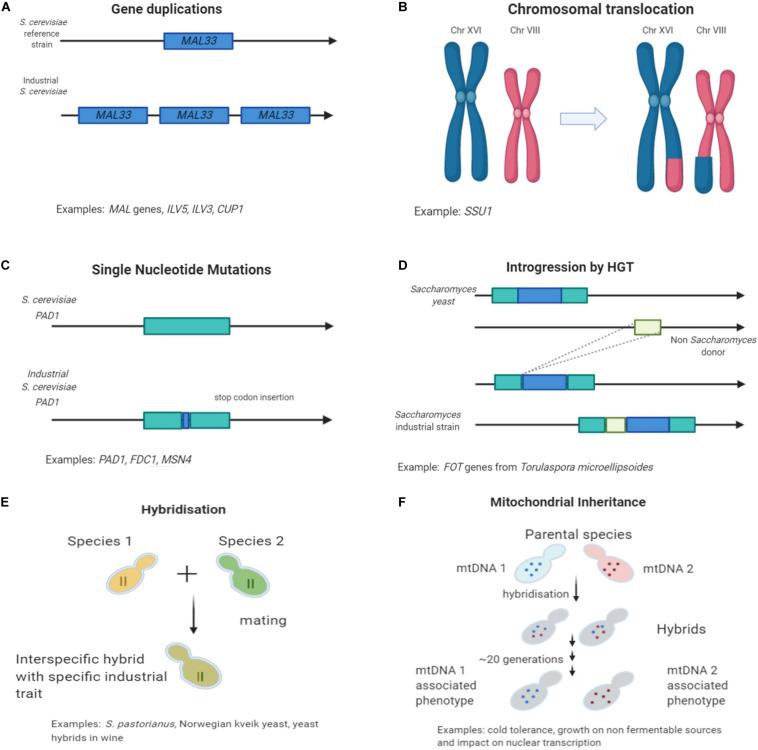
The budding yeast has been extensively studied for its physiological performance in fermentative environments and, due to its remarkable plasticity, is used in numerous industrial applications like in brewing, baking and wine fermentations. Furthermore, thanks to its small and relatively simple eukaryotic genome, the molecular mechanisms behind its evolution and domestication are more easily explored. Considerable work has been directed into examining the industrial adaptation processes that shaped the genotypes of species and hybrids belonging to the group, specifically in relation to beverage fermentation performances. A variety of genetic mechanisms are responsible for the yeast response to stress conditions, such as genome duplication, chromosomal re-arrangements, hybridization and horizontal gene transfer, and these genetic alterations are also contributing to the diversity in the industrial strains. Here, we review the recent genetic and evolutionary studies exploring domestication and biodiversity of yeast strains.
出芽酵母因其在发酵环境中的生理性能而受到广泛研究,并且由于其显著的可塑性,被用于众多工业应用,如酿造、烘焙和葡萄酒发酵。此外,由于其小而相对简单的真核基因组,更容易探索其进化和驯化背后的分子机制。大量工作致力于研究塑造该类物种和杂种基因型的工业适应过程,特别是与饮料发酵性能相关的过程。多种遗传机制负责酵母对胁迫条件的反应,如基因组复制、染色体重排、杂交和水平基因转移,这些遗传改变也导致了工业菌株的多样性。在此,我们综述了探索酵母菌株驯化和生物多样性的最新遗传和进化研究。
 Zotero 插件