
使用微流控技术开发脂质纳米颗粒的制造考量
Manufacturing Considerations for the Development of Lipid Nanoparticles Using Microfluidics.
作者信息
Roces Carla B, Lou Gustavo, Jain Nikita, Abraham Suraj, Thomas Anitha, Halbert Gavin W, Perrie Yvonne
机构信息
Strathclyde Institute of Pharmacy and Biomedical Sciences, University of Strathclyde, 161 Cathedral Street, Glasgow G4 0RE, UK.
Precision NanoSystems Inc., #50 655 W Kent Ave N, Vancouver, BC V6P 6T7, Canada.
出版信息
Pharmaceutics. 2020 Nov 15;12(11):1095. doi: 10.3390/pharmaceutics12111095.
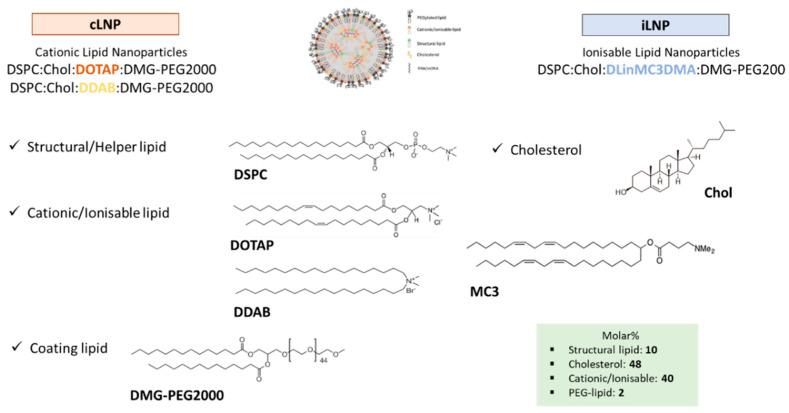
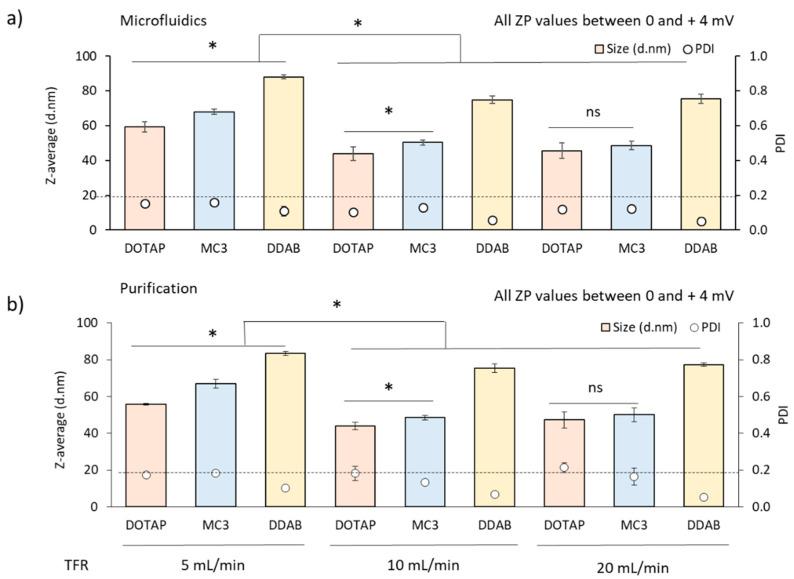
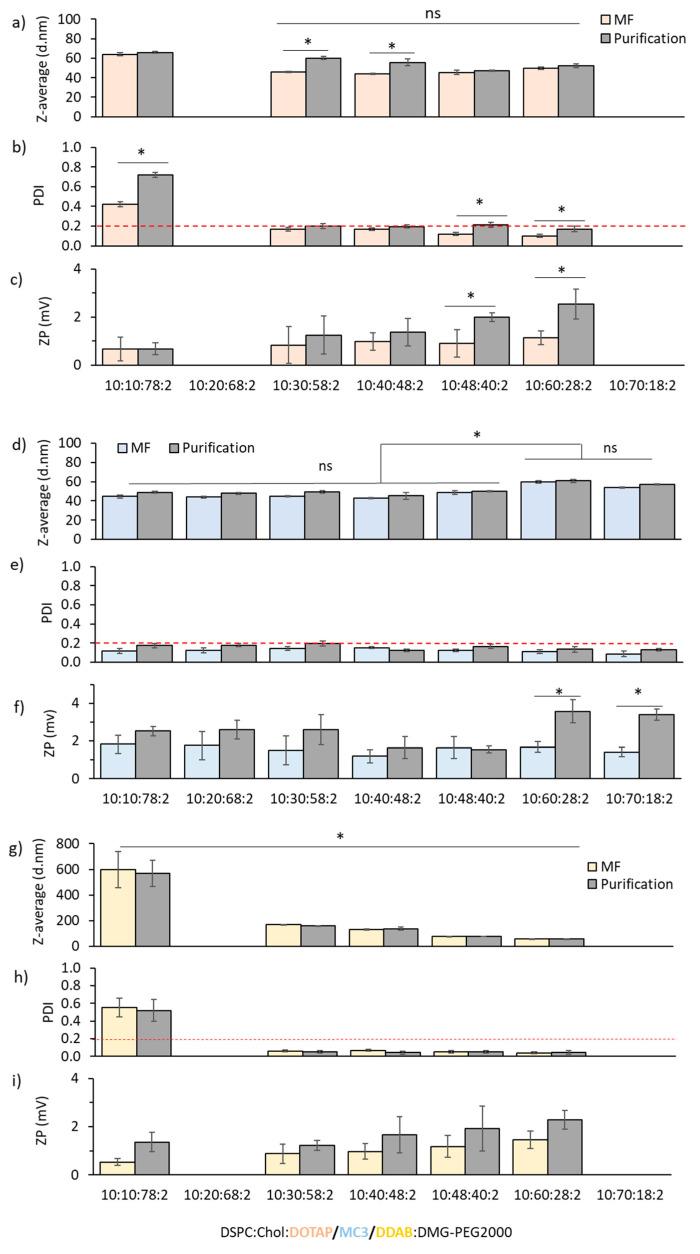
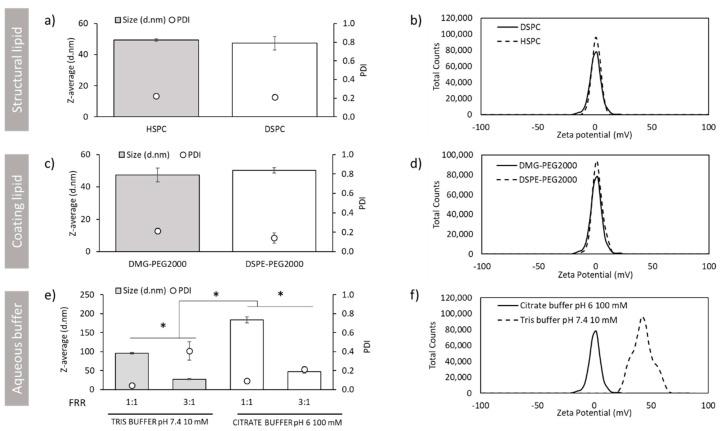
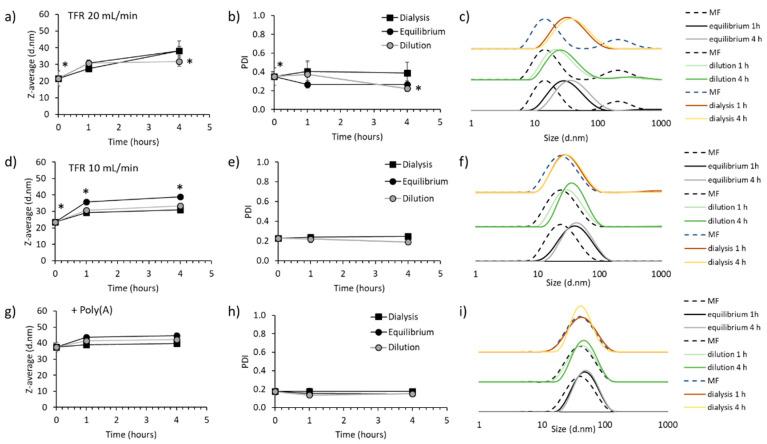
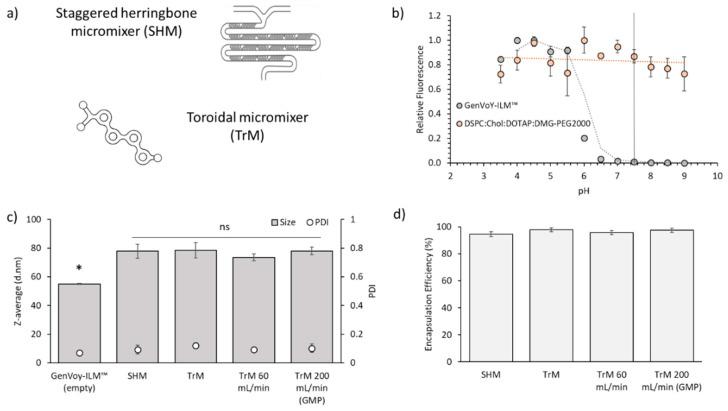
In the recent of years, the use of lipid nanoparticles (LNPs) for RNA delivery has gained considerable attention, with a large number in the clinical pipeline as vaccine candidates or to treat a wide range of diseases. Microfluidics offers considerable advantages for their manufacture due to its scalability, reproducibility and fast preparation. Thus, in this study, we have evaluated operating and formulation parameters to be considered when developing LNPs. Among them, the flow rate ratio (FRR) and the total flow rate (TFR) have been shown to significantly influence the physicochemical characteristics of the produced particles. In particular, increasing the TFR or increasing the FRR decreased the particle size. The amino lipid choice (cationic-DOTAP and DDAB; ionisable-MC3), buffer choice (citrate buffer pH 6 or TRIS pH 7.4) and type of nucleic acid payload (PolyA, ssDNA or mRNA) have also been shown to have an impact on the characteristics of these LNPs. LNPs were shown to have a high (>90%) loading in all cases and were below 100 nm with a low polydispersity index (≤0.25). The results within this paper could be used as a guide for the development and scalable manufacture of LNP systems using microfluidics.
近年来,脂质纳米颗粒(LNPs)用于RNA递送受到了广泛关注,大量LNPs正处于临床研发阶段,作为疫苗候选物或用于治疗多种疾病。微流控技术因其可扩展性、可重复性和快速制备等优点,在LNPs制造方面具有显著优势。因此,在本研究中,我们评估了开发LNPs时需考虑的操作和配方参数。其中,流速比(FRR)和总流速(TFR)已被证明会显著影响所制备颗粒的物理化学特性。特别是,增加TFR或增加FRR会减小颗粒尺寸。氨基脂质的选择(阳离子型-DOTAP和DDAB;可电离型-MC3)、缓冲液的选择(pH 6的柠檬酸盐缓冲液或pH 7.4的TRIS缓冲液)以及核酸载荷的类型(PolyA、单链DNA或mRNA)也已被证明会对这些LNPs的特性产生影响。在所有情况下,LNPs均显示出高负载率(>90%),粒径低于100 nm,多分散指数较低(≤0.25)。本文的研究结果可为使用微流控技术开发和规模化制造LNP系统提供指导。



 Zotero 插件