
影响全球补充和替代医学使用的潜在因素:系统评价。
Potential factors that influence usage of complementary and alternative medicine worldwide: a systematic review.
机构信息
Department of Clinical Pharmacy, Faculty of Pharmacy, Srinakharinwirot University, Nakhonnayok, 26120, Thailand.
Division of Pharmacy Practice and Policy, School of Pharmacy, University of Nottingham, Nottingham, UK.
出版信息
BMC Complement Med Ther. 2020 Nov 23;20(1):363. doi: 10.1186/s12906-020-03157-2.
OBJECTIVES
To determine similarities and differences in the reasons for using or not using complementary and alternative medicine (CAM) amongst general and condition-specific populations, and amongst populations in each region of the globe.
METHODS
A literature search was performed on Pubmed, ScienceDirect and EMBASE.
KEYWORDS
'herbal medicine' OR 'herbal and dietary supplement' OR 'complementary and alternative medicine' AND 'reason' OR 'attitude'. Quantitative or qualitative original articles in English, published between 2003 and 2018 were reviewed. Conference proceedings, pilot studies, protocols, letters, and reviews were excluded. Papers were appraised using valid tools and a 'risk of bias' assessment was also performed. Thematic analysis was conducted. Reasons were coded in each paper, then codes were grouped into categories. If several categories reported similar reasons, these were combined into a theme. Themes were then analysed using χ tests to identify the main factors related to reasons for CAM usage.
RESULTS
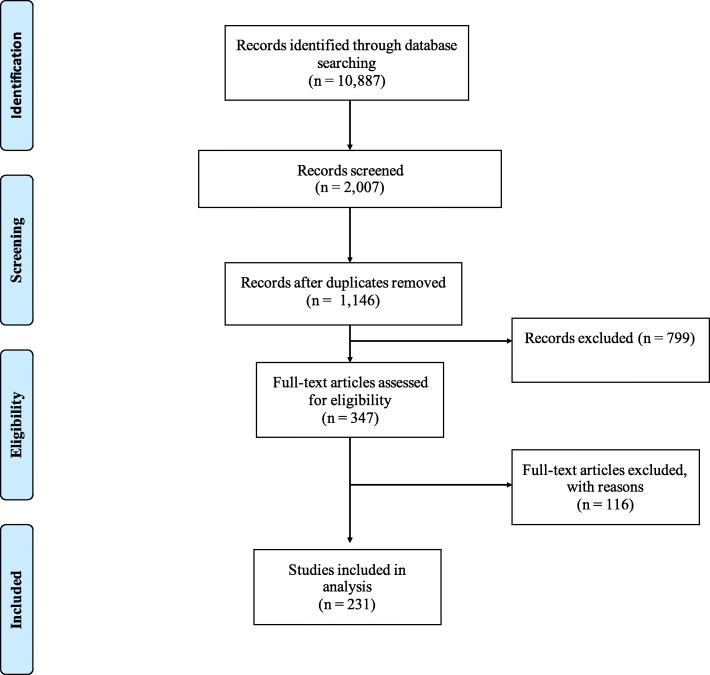
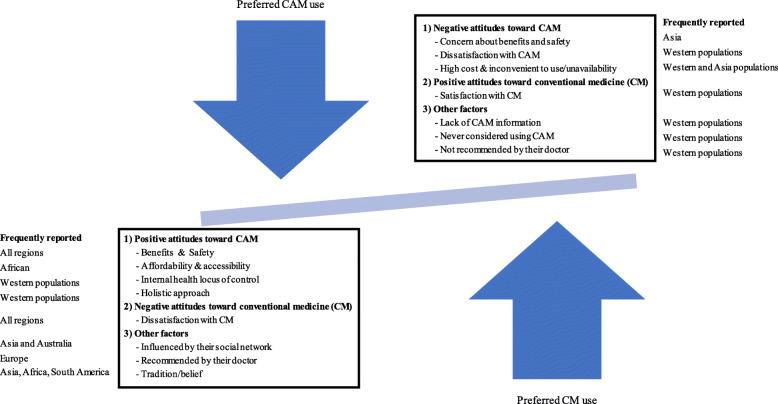
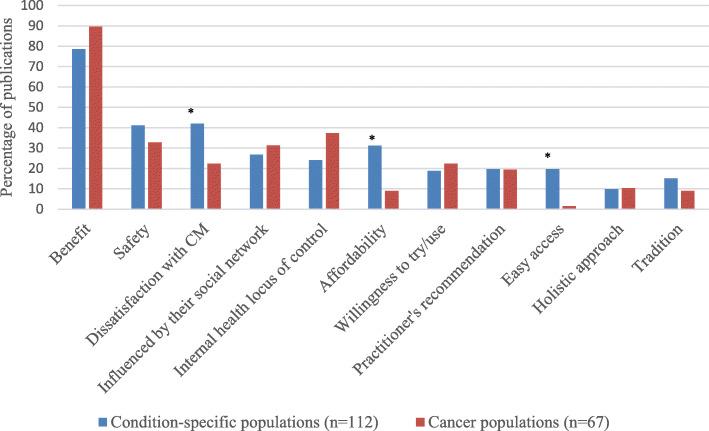
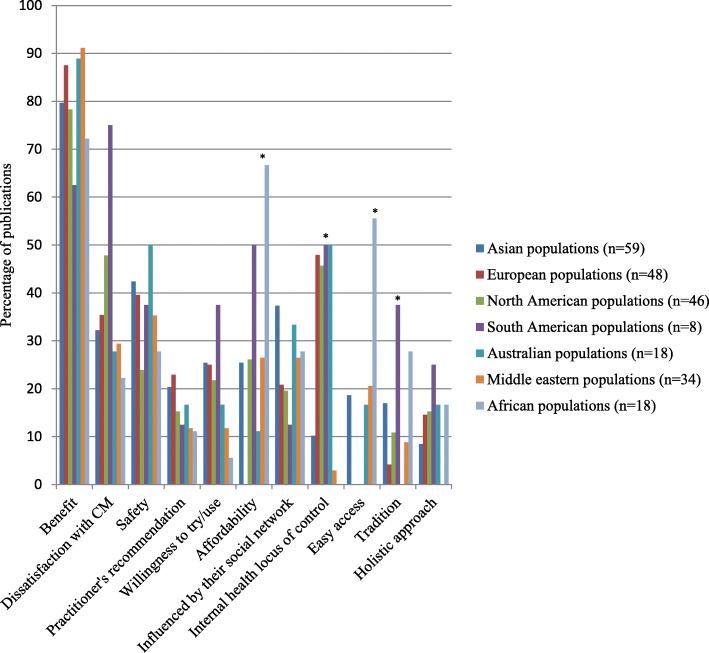
231 publications were included. Reasons for CAM use amongst general and condition-specific populations were similar. The top three reasons for CAM use were: (1) having an expectation of benefits of CAM (84% of publications), (2) dissatisfaction with conventional medicine (37%) and (3) the perceived safety of CAM (37%). Internal health locus of control as an influencing factor was more likely to be reported in Western populations, whereas the social networks was a common factor amongst Asian populations (p < 0.05). Affordability, easy access to CAM and tradition were significant factors amongst African populations (p < 0.05). Negative attitudes towards CAM and satisfaction with conventional medicine (CM) were the main reasons for non-use (p < 0.05).
CONCLUSIONS
Dissatisfaction with CM and positive attitudes toward CAM, motivate people to use CAM. In contrast, satisfaction with CM and negative attitudes towards CAM are the main reasons for non-use.
目的
确定一般人群和特定疾病人群、以及全球各地区人群在使用或不使用补充和替代医学(CAM)的原因方面的异同。
方法
在 Pubmed、ScienceDirect 和 EMBASE 上进行文献检索。
关键词
“草药”或“草药和膳食补充剂”或“补充和替代医学”以及“原因”或“态度”。综述了 2003 年至 2018 年间以英语发表的定量或定性原始文章。排除会议记录、试点研究、方案、信件和评论。使用有效工具评估论文,并进行“偏倚风险”评估。进行主题分析。在每篇论文中对原因进行编码,然后将代码分组为类别。如果有几个类别报告了类似的原因,则将它们合并为一个主题。然后使用 χ 检验分析主题,以确定与 CAM 使用原因相关的主要因素。
结果
共纳入 231 篇文献。一般人群和特定疾病人群使用 CAM 的原因相似。使用 CAM 的前三个原因是:(1)对 CAM 益处的期望(84%的文献),(2)对常规医学的不满(37%)和(3)对 CAM 的感知安全性(37%)。作为影响因素的内部健康控制源在西方人群中更有可能被报道,而社会网络是亚洲人群的共同因素(p < 0.05)。在非洲人群中,可负担性、CAM 易于获得和传统是重要因素(p < 0.05)。对 CAM 的负面态度和对常规医学的满意是不使用的主要原因(p < 0.05)。
结论
对常规医学的不满和对 CAM 的积极态度促使人们使用 CAM。相比之下,对常规医学的满意和对 CAM 的负面态度是不使用的主要原因。


 Zotero 插件