
SARS-CoV-2:对冠状病毒认识的新维度。
SARS-CoV-2: a new dimension to our understanding of coronaviruses.
机构信息
Department of Genetic Engineering and Biotechnology, School of Life Sciences, Shahjalal University of Science and Technology, Sylhet, Bangladesh.
Biotechnology Program, Department of Mathematics and Natural Sciences, School of Data and Sciences, BRAC University, Dhaka, Bangladesh.
出版信息
Int Microbiol. 2021 Jan;24(1):19-24. doi: 10.1007/s10123-020-00152-y. Epub 2020 Nov 24.
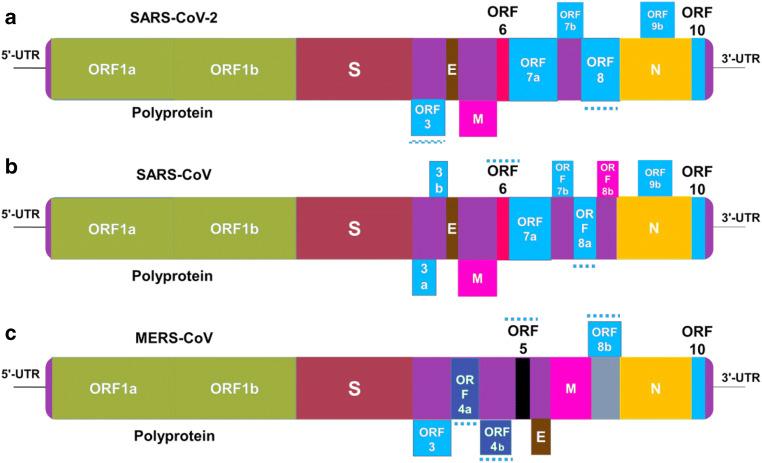
Coronaviruses have marked their significant emergence since the twenty-first century with the outbreaks of three out of the seven existing human coronaviruses, including the severe acute respiratory syndrome coronavirus (SARS-CoV) in 2003, Middle East respiratory syndrome coronavirus (MERS-CoV) in 2012, and severe acute respiratory syndrome coronavirus 2 (SARS-CoV-2) in 2019. These viruses have not only acquired large-scale transmission during their specified outbreak period, but cases of MERS-CoV still remain active, although there is only limited transmission. While, on the other hand, SARS-CoV-2 continues to remain a rising threat to global public health. The recent novel coronavirus, SARS-CoV-2, responsible for the ongoing coronavirus disease 2019 (COVID-19), emerged during December 2019 in Wuhan, China, and has repeatedly raised questions about its characteristic variability. Despite belonging to the same family, SARS-CoV-2 has proven to be quite difficult to control and contain in terms of transmissibility, leading to around 19.8 million reported cases and more than 730,000 deaths of individuals worldwide. Here, we discuss how SARS-CoV-2 differs from its two other related human coronaviruses in terms of genome composition, site of infection, and transmissibility, among several other notable aspects-all indicating to the possibility that it is these variations in addition to other unknowns that are contributing to this virus' differing deadly pattern.
冠状病毒自 21 世纪以来已经显著出现,其中七种人类冠状病毒中的三种已经爆发,包括 2003 年的严重急性呼吸综合征冠状病毒(SARS-CoV)、2012 年的中东呼吸综合征冠状病毒(MERS-CoV)和 2019 年的严重急性呼吸综合征冠状病毒 2(SARS-CoV-2)。这些病毒不仅在特定爆发期间获得了大规模传播,而且 MERS-CoV 仍有病例活跃,尽管传播有限。另一方面,SARS-CoV-2 继续对全球公共卫生构成威胁。最近的新型冠状病毒,SARS-CoV-2,是导致持续的 2019 年冠状病毒病(COVID-19)的罪魁祸首,它于 2019 年 12 月在中国武汉出现,并多次引发了对其特征变异性的质疑。尽管属于同一科,但 SARS-CoV-2 在传染性方面被证明很难控制和遏制,导致全球约有 1980 万例报告病例和超过 73 万人死亡。在这里,我们讨论了 SARS-CoV-2 在基因组组成、感染部位和传染性等几个方面与另外两种相关人类冠状病毒的不同之处——所有这些都表明,除了其他未知因素外,这些变化可能是导致该病毒致命模式不同的原因。
 Zotero 插件