
患有糖尿病的犬类的血清和唾液蛋白质组
The Serum and Saliva Proteome of Dogs with Diabetes Mellitus.
作者信息
Franco-Martínez Lorena, Gelemanović Andrea, Horvatić Anita, Contreras-Aguilar María Dolores, Mrljak Vladimir, Cerón José Joaquín, Martínez-Subiela Silvia, Tvarijonaviciute Asta
机构信息
Interdisciplinary Laboratory of Clinical Pathology, Interlab-UMU, Regional Campus of International Excellence 'Campus Mare Nostrum', University of Murcia, 30100 Murcia, Spain.
Mediterranean Institute for Life Sciences (MedILS), 21 000 Split, Croatia.
出版信息
Animals (Basel). 2020 Dec 1;10(12):2261. doi: 10.3390/ani10122261.
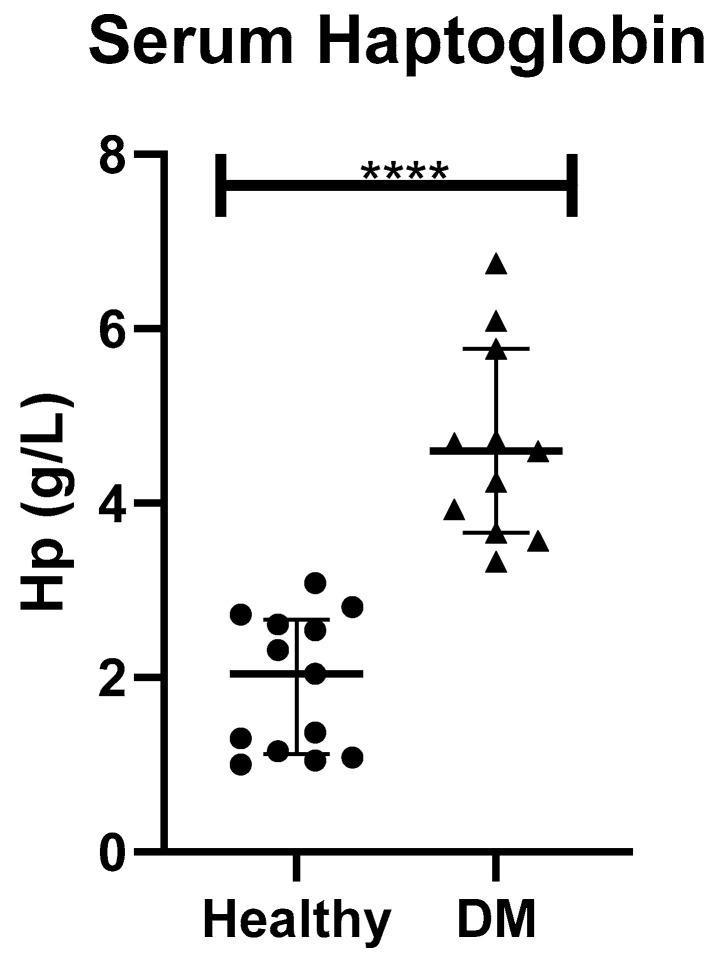
This study aims to evaluate the changes in salivary and serum proteomes that occur in canine diabetes mellitus type-1 (DM) through a high-throughput quantitative proteomic analysis. The proteomes of 10 paired serum and saliva samples from healthy controls (HC group, = 5) and dogs with untreated DM (DM group, = 5) were analyzed using Tandem Mass Tags (TMT)-based proteomic approach. Additionally, 24 serum samples from healthy controls and untreated DM were used to validate haptoglobin in serum. The TMT analysis quantified 767 and 389 proteins in saliva and serum, respectively. Of those, 16 unique proteins in serum and 26 in saliva were differently represented between DM and HC groups. The verification of haptoglobin in serum was in concordance with the proteomic data. Our results pointed out changes in both saliva and serum proteomes that reflect different physiopathological changes in dogs with DM. Although some of the proteins identified here, such as malate dehydrogenase or glyceraldehyde-3-phosphate dehydrogenase, were previously related with DM in dogs, most of the proteins modulated in serum and saliva are described in canine DM for the first time and could be a source of potential biomarkers of the disease. Additionally, the molecular function, biological process, pathways and protein class of the differential proteins were revealed, which could improve the understanding of the disease's pathological mechanisms.
本研究旨在通过高通量定量蛋白质组学分析,评估1型犬糖尿病(DM)中唾液和血清蛋白质组的变化。使用基于串联质谱标签(TMT)的蛋白质组学方法,分析了来自健康对照(HC组,n = 5)和未经治疗的DM犬(DM组,n = 5)的10对配对血清和唾液样本的蛋白质组。此外,还使用了来自健康对照和未经治疗的DM的24份血清样本,以验证血清中的触珠蛋白。TMT分析分别在唾液和血清中定量了767种和389种蛋白质。其中,DM组和HC组之间血清中有16种独特蛋白质,唾液中有26种独特蛋白质的表达存在差异。血清中触珠蛋白的验证与蛋白质组学数据一致。我们的结果指出,唾液和血清蛋白质组的变化反映了DM犬不同的生理病理变化。尽管此处鉴定出的一些蛋白质,如苹果酸脱氢酶或甘油醛-3-磷酸脱氢酶,以前与犬的DM有关,但血清和唾液中大多数被调节的蛋白质是首次在犬DM中被描述,可能是该疾病潜在生物标志物的来源。此外,还揭示了差异蛋白质的分子功能、生物学过程、途径和蛋白质类别,这有助于提高对该疾病病理机制的理解。

 Zotero 插件