
新型糖酵解相关基因特征对肾细胞癌进展、预后和免疫微环境的影响。
The effect of a novel glycolysis-related gene signature on progression, prognosis and immune microenvironment of renal cell carcinoma.
机构信息
Department of Medicine, Xi'an Jiaotong University, No. 76, Yanta West Road, Xi'an, 710061, Shaanxi, China.
Department of Urology, The Second Affiliated Hospital of Xi'an Jiaotong University, No. 157, West Five Road, Xi'an, 710000, Shaanxi, China.
出版信息
BMC Cancer. 2020 Dec 7;20(1):1207. doi: 10.1186/s12885-020-07702-7.
BACKGROUND
Glycolysis is a central metabolic pathway for tumor cells. However, the potential roles of glycolysis-related genes in renal cell carcinoma (RCC) have not been investigated.
METHODS
Seven glycolysis-related gene sets were selected from MSigDB and were analyzed through GSEA. Using TCGA database, the glycolysis-related gene signature was constructed. Prognostic analyses were based on the Kaplan-Meier method. The cBioPortal database was employed to perform the mutation analyses. The CIBERSORT algorithm and TIMER database were used to determine the immunological effect of glycolytic gene signature. The expressions in protein level of eight glycolytic risk genes were determined by HPA database. Finally, qPCR, MTT and Transwell invasion assays were conducted to validate the roles of core glycolytic risk genes (CD44, PLOD1 and PLOD2) in RCC.
RESULTS
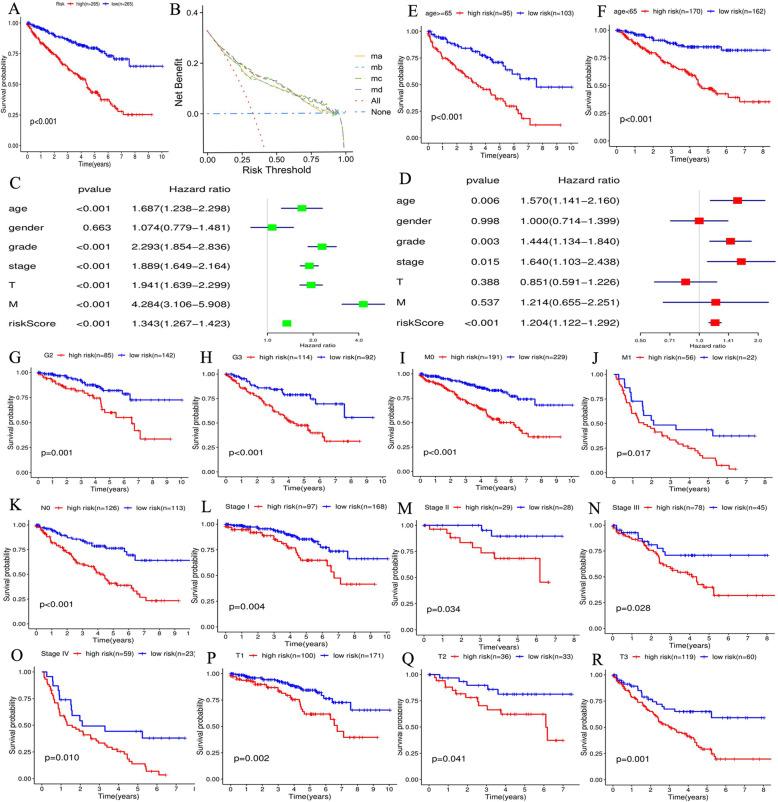
Four glycolysis-related gene sets were significantly enriched in RCC samples. The glycolytic risk signature was constructed (including CD44, PLOD2, KIF20A, IDUA, PLOD1, HMMR, DEPDC1 and ANKZF1) and identified as an independent RCC prognostic factor (HR = 1.204). Moreover, genetic alterations of glycolytic risk genes were uncommon in RCC (10.5%) and glycolytic risk signature can partially affect immune microenvironment of RCC. Six glycolytic risk genes (except for IDUA and HMMR) were over-expression in A498 and 786-O renal cancer cells through qPCR test. MTT and Transwell assays revealed that silencing of CD44, PLOD1 and PLOD2 suppressed the proliferation and invasion of renal cancer cells.
CONCLUSIONS
The glycolysis-related risk signature is closely associated with RCC prognosis, progression and immune microenvironment. CD44, PLOD1 and PLOD2 may serve as RCC oncogenes.
背景
糖酵解是肿瘤细胞的中心代谢途径。然而,糖酵解相关基因在肾细胞癌(RCC)中的潜在作用尚未得到研究。
方法
从 MSigDB 中选择了七个糖酵解相关基因集,并通过 GSEA 进行了分析。使用 TCGA 数据库构建了糖酵解相关基因特征。基于 Kaplan-Meier 方法进行预后分析。使用 cBioPortal 数据库进行突变分析。使用 CIBERSORT 算法和 TIMER 数据库确定糖酵解基因特征的免疫效应。通过 HPA 数据库确定八个糖酵解风险基因的蛋白水平表达。最后,进行 qPCR、MTT 和 Transwell 侵袭实验,以验证核心糖酵解风险基因(CD44、PLOD1 和 PLOD2)在 RCC 中的作用。
结果
四个糖酵解相关基因集在 RCC 样本中显著富集。构建了糖酵解风险特征(包括 CD44、PLOD2、KIF20A、IDUA、PLOD1、HMMR、DEPDC1 和 ANKZF1),并确定为 RCC 的独立预后因素(HR=1.204)。此外,糖酵解风险基因的遗传改变在 RCC 中并不常见(10.5%),糖酵解风险特征可以部分影响 RCC 的免疫微环境。通过 qPCR 实验发现,在 A498 和 786-O 肾癌细胞中,除 IDUA 和 HMMR 外,六个糖酵解风险基因(CD44、PLOD1、PLOD2、KIF20A、DEPDC1 和 ANKZF1)表达上调。MTT 和 Transwell 实验表明,沉默 CD44、PLOD1 和 PLOD2 抑制了肾癌细胞的增殖和侵袭。
结论
糖酵解相关风险特征与 RCC 预后、进展和免疫微环境密切相关。CD44、PLOD1 和 PLOD2 可能作为 RCC 癌基因。




 Zotero 插件