
一种强大的复合零假设下的多效性分析方法鉴定了 2 型糖尿病和前列腺癌之间的新的共享位点。
A powerful method for pleiotropic analysis under composite null hypothesis identifies novel shared loci between Type 2 Diabetes and Prostate Cancer.
机构信息
Department of Epidemiology, Bloomberg School of Public Health, Johns Hopkins University, Baltimore, Maryland, United States of America.
Department of Biostatistics, Bloomberg School of Public Health, Johns Hopkins University, Baltimore, Maryland, United States of America.
出版信息
PLoS Genet. 2020 Dec 8;16(12):e1009218. doi: 10.1371/journal.pgen.1009218. eCollection 2020 Dec.
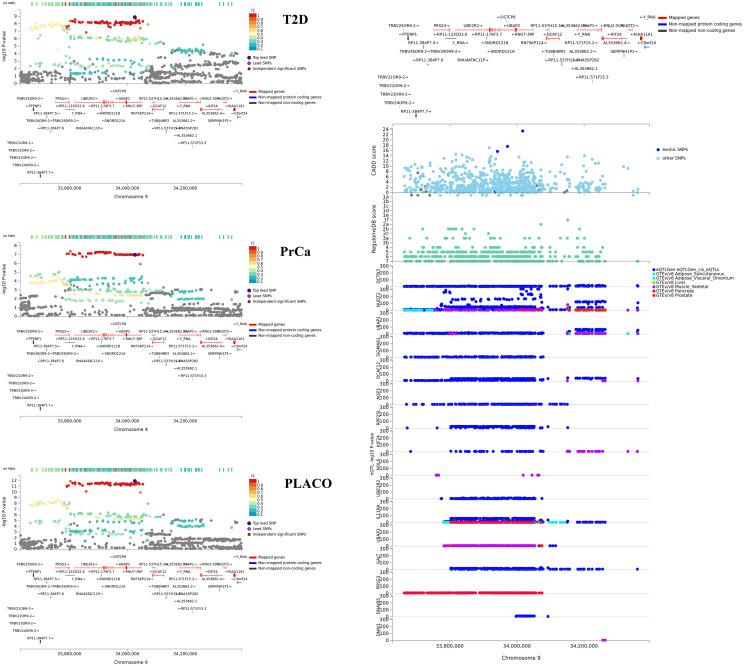
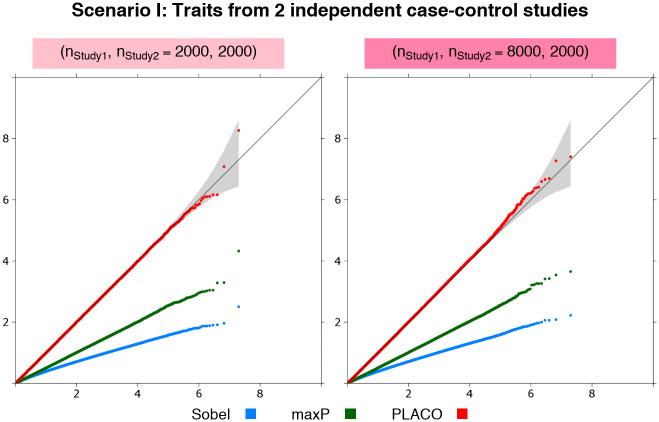
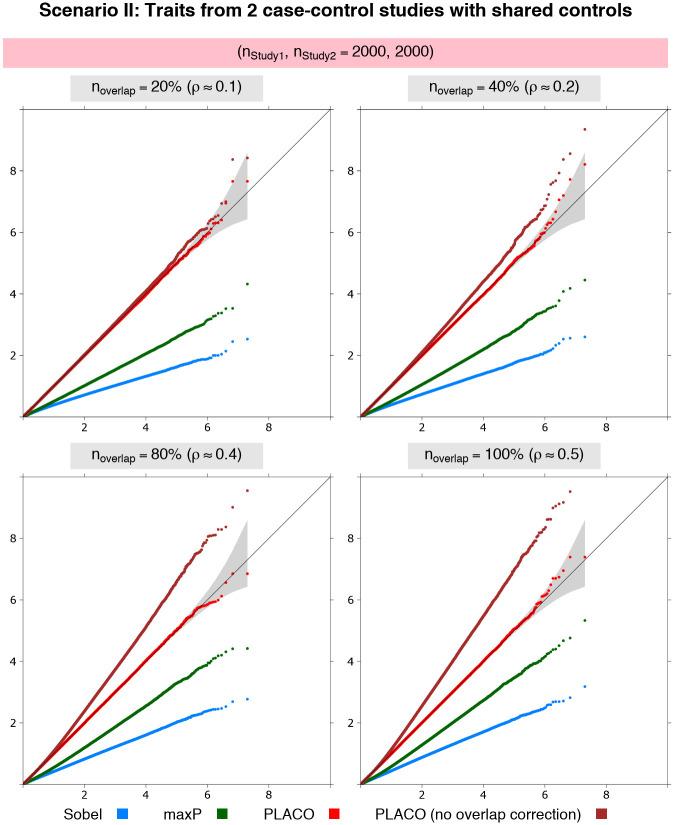
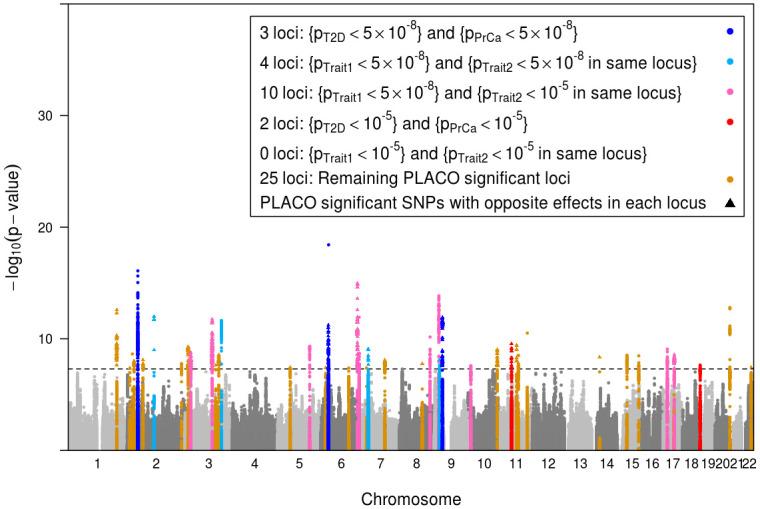
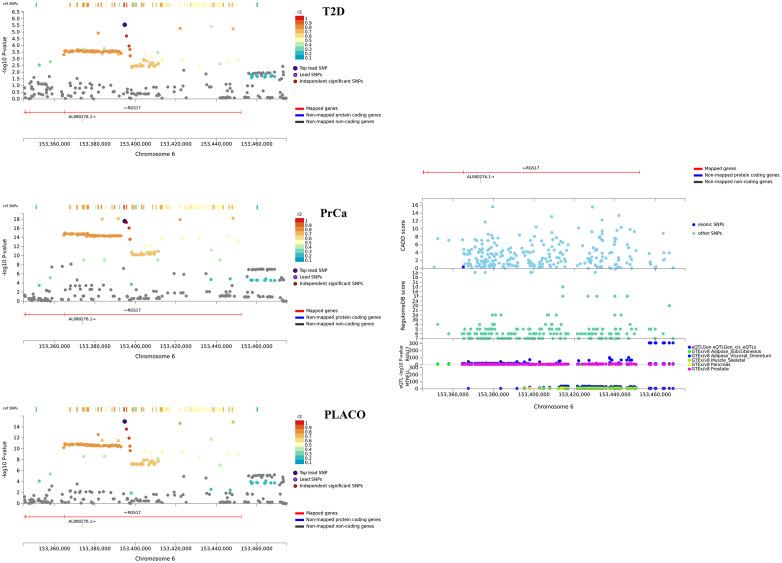
There is increasing evidence that pleiotropy, the association of multiple traits with the same genetic variants/loci, is a very common phenomenon. Cross-phenotype association tests are often used to jointly analyze multiple traits from a genome-wide association study (GWAS). The underlying methods, however, are often designed to test the global null hypothesis that there is no association of a genetic variant with any of the traits, the rejection of which does not implicate pleiotropy. In this article, we propose a new statistical approach, PLACO, for specifically detecting pleiotropic loci between two traits by considering an underlying composite null hypothesis that a variant is associated with none or only one of the traits. We propose testing the null hypothesis based on the product of the Z-statistics of the genetic variants across two studies and derive a null distribution of the test statistic in the form of a mixture distribution that allows for fractions of variants to be associated with none or only one of the traits. We borrow approaches from the statistical literature on mediation analysis that allow asymptotic approximation of the null distribution avoiding estimation of nuisance parameters related to mixture proportions and variance components. Simulation studies demonstrate that the proposed method can maintain type I error and can achieve major power gain over alternative simpler methods that are typically used for testing pleiotropy. PLACO allows correlation in summary statistics between studies that may arise due to sharing of controls between disease traits. Application of PLACO to publicly available summary data from two large case-control GWAS of Type 2 Diabetes and of Prostate Cancer implicated a number of novel shared genetic regions: 3q23 (ZBTB38), 6q25.3 (RGS17), 9p22.1 (HAUS6), 9p13.3 (UBAP2), 11p11.2 (RAPSN), 14q12 (AKAP6), 15q15 (KNL1) and 18q23 (ZNF236).
越来越多的证据表明,多效性,即多个特征与相同遗传变异/位点的关联,是一种非常普遍的现象。跨表型关联测试常用于联合分析全基因组关联研究(GWAS)中的多个特征。然而,底层方法通常旨在检验遗传变异与任何特征都没有关联的全局零假设,该假设的拒绝并不暗示存在多效性。在本文中,我们提出了一种新的统计方法 PLACO,用于通过考虑潜在的复合零假设来专门检测两个特征之间的多效性位点,该假设认为一个变异与无特征或只有一个特征相关联。我们建议基于两个研究中遗传变异的 Z 统计量的乘积来检验零假设,并推导出测试统计量的零分布形式为混合分布,该分布允许变异的分数与无特征或只有一个特征相关联。我们借鉴了统计文献中关于中介分析的方法,这些方法允许对零分布进行渐近逼近,避免了与混合比例和方差分量相关的混杂参数的估计。模拟研究表明,与通常用于检测多效性的替代简单方法相比,该方法可以维持 I 型错误,并获得主要的功效增益。PLACO 允许在研究之间的汇总统计数据中存在相关性,这可能是由于疾病特征之间共享对照引起的。将 PLACO 应用于公开的 2 型糖尿病和前列腺癌的两个大型病例对照 GWAS 的汇总数据,发现了一些新的共享遗传区域:3q23(ZBTB38)、6q25.3(RGS17)、9p22.1(HAUS6)、9p13.3(UBAP2)、11p11.2(RAPSN)、14q12(AKAP6)、15q15(KNL1)和 18q23(ZNF236)。

 Zotero 插件