
在牛感染大肠杆菌 O157:H7 期间,肠道中早期的免疫先天特征和微生物组变化。
Early immune innate hallmarks and microbiome changes across the gut during Escherichia coli O157: H7 infection in cattle.
机构信息
Agrobiotechnology and Molecular Biology Institute (IABIMO)-CICVyA, National Agricultural Technology Institute (INTA), National Scientific and Technical Research Council (CONICET), Hurlingham, Argentina.
Faculty Veterinary Medicine, Production Animal Health, University of Calgary, HSC 2519, 3330 Hospital Dr. NW, Calgary, AB, T2N 4N1, Canada.
出版信息
Sci Rep. 2020 Dec 9;10(1):21535. doi: 10.1038/s41598-020-78752-x.
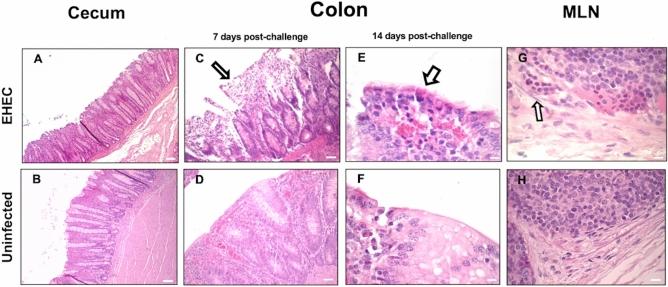
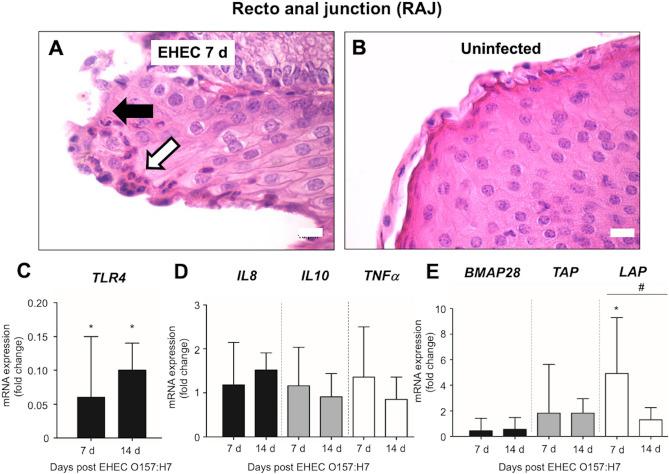
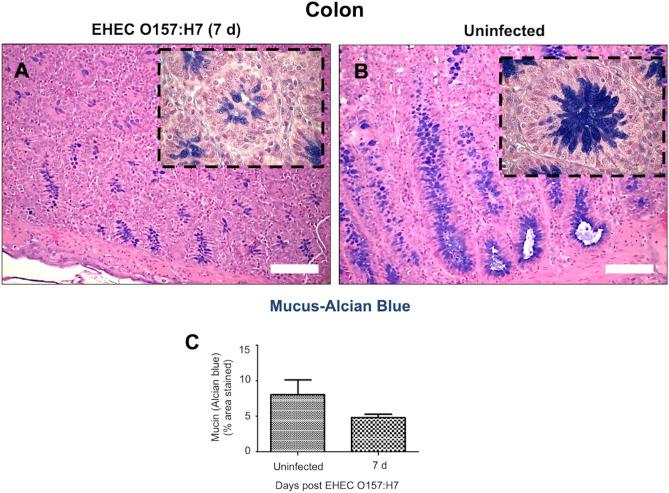
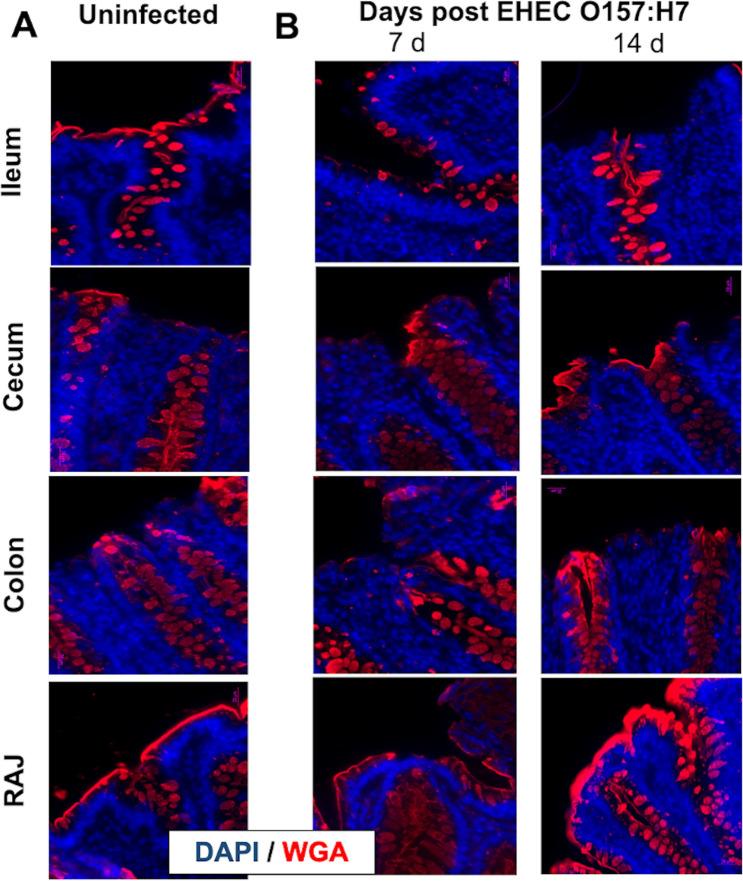
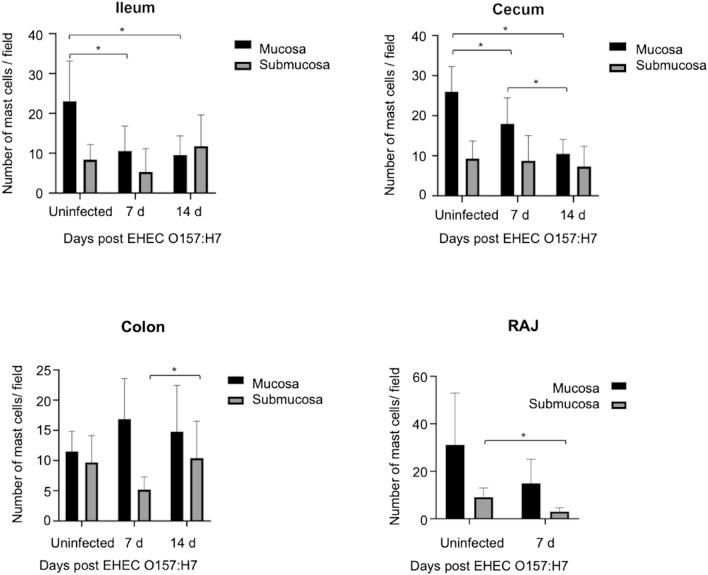
The zoonotic enterohemorrhagic Escherichia coli (EHEC) O157: H7 bacterium causes diarrhea, hemorrhagic colitis, and hemolytic uremic syndrome (HUS) in humans. Cattle are primary reservoirs and EHEC O157: H7; the bacteria predominately inhabit the colon and recto-anal junctions (RAJ). The early innate immune reactions in the infected gut are critical in the pathogenesis of EHEC O157: H7. In this study, calves orally inoculated with EHEC O157: H7 showed infiltration of neutrophils in the lamina propria of ileum and RAJ at 7 and 14 days post-infection. Infected calves had altered mucin layer and mast cell populations across small and large intestines. There were differential transcription expressions of key bovine β defensins, tracheal antimicrobial peptide (TAP) in the ileum, and lingual antimicrobial peptide (LAP) in RAJ. The main Gram-negative bacterial/LPS signaling Toll-Like receptor 4 (TLR4) was downregulated in RAJ. Intestinal infection with EHEC O157: H7 impacted the gut bacterial communities and influenced the relative abundance of Negativibacillus and Erysipelotrichaceae in mucosa-associated bacteria in the rectum. Thus, innate immunity in the gut of calves showed unique characteristics during infection with EHEC O157: H7, which occurred in the absence of major clinical manifestations but denoted an active immunological niche.
肠出血性大肠杆菌(EHEC)O157:H7 细菌会引起人类腹泻、出血性结肠炎和溶血性尿毒症综合征(HUS)。牛是主要的储存宿主,EHEC O157:H7;细菌主要栖息在结肠和直肠肛门交界处(RAJ)。感染肠道中的早期先天免疫反应对 EHEC O157:H7 的发病机制至关重要。在这项研究中,经口接种 EHEC O157:H7 的小牛在感染后 7 天和 14 天显示出回肠和 RAJ 固有层中中性粒细胞的浸润。感染的小牛在小肠和大肠中改变了粘蛋白层和肥大细胞群体。回肠中关键牛β防御素和气管抗菌肽(TAP)以及 RAJ 中舌抗菌肽(LAP)的转录表达存在差异。RAJ 中的主要革兰氏阴性菌/LPS 信号 Toll 样受体 4(TLR4)下调。EHEC O157:H7 肠道感染影响肠道细菌群落,并影响直肠粘膜相关细菌中 Negativibacillus 和 Erysipelotrichaceae 的相对丰度。因此,EHEC O157:H7 感染时,小牛肠道中的先天免疫表现出独特的特征,尽管没有出现主要的临床症状,但表示出一个活跃的免疫生态位。


 Zotero 插件