
基于 MRI 的肽介导主动靶向的心外膜基质细胞(EpiSC)分子成像。
MRI-based molecular imaging of epicardium-derived stromal cells (EpiSC) by peptide-mediated active targeting.
机构信息
Department of Molecular Cardiology, Heinrich Heine University Düsseldorf, Düsseldorf, NRW, Germany.
Department of Biochemistry and Molecular Biology II, Heinrich Heine University Düsseldorf, Düsseldorf, NRW, Germany.
出版信息
Sci Rep. 2020 Dec 10;10(1):21669. doi: 10.1038/s41598-020-78600-y.
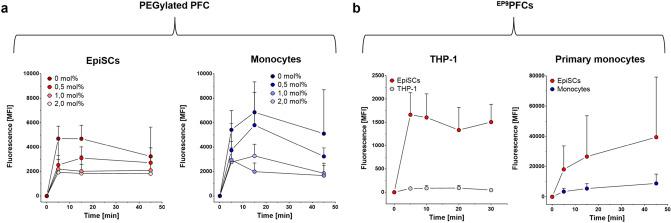
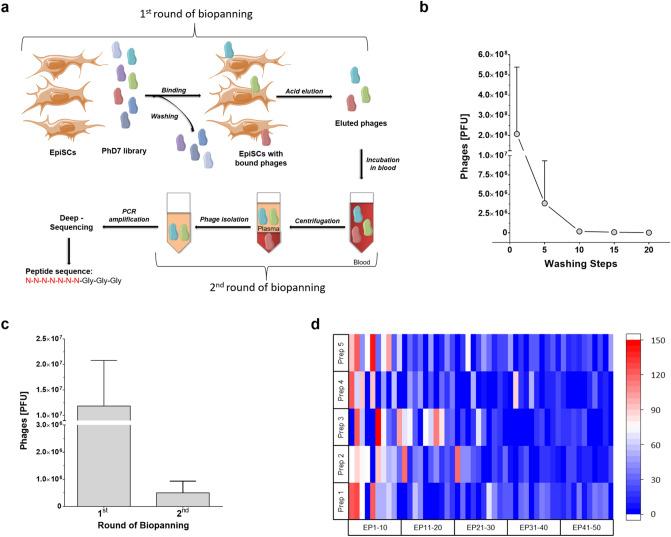
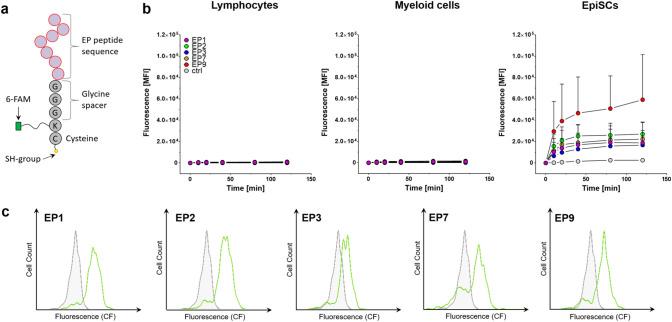
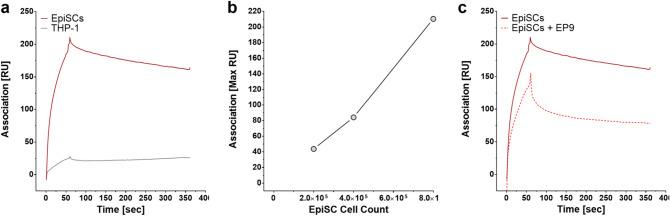
After myocardial infarction (MI), epicardial cells reactivate their embryonic program, proliferate and migrate into the damaged tissue to differentiate into fibroblasts, endothelial cells and, if adequately stimulated, to cardiomyocytes. Targeting epicardium-derived stromal cells (EpiSC) by specific ligands might enable the direct imaging of EpiSCs after MI to better understand their biology, but also may permit the cell-specific delivery of small molecules to improve the post-MI healing process. Therefore, the aim of this study was to identify specific peptides by phage display screening to enable EpiSC specific cargo delivery by active targeting. To this end, we utilized a sequential panning of a phage library on cultured rat EpiSCs and then subtracted phage that nonspecifically bound blood immune cells. EpiSC specific phage were analyzed by deep sequencing and bioinformatics analysis to identify a total of 78 300 ± 31 900 different, EpiSC-specific, peptide insertion sequences. Flow cytometry of the five most highly abundant peptides (EP1, -2, -3, -7 or EP9) showed strong binding to EpiSCs but not to blood immune cells. The best binding properties were found for EP9 which was further studied by surface plasmon resonance (SPR). SPR revealed rapid and stable association of EpiSCs with EP9. As a negative control, THP-1 monocytes did not associate with EP9. Coupling of EP9 to perfluorocarbon nanoemulsions (PFCs) resulted in the efficient delivery of F cargo to EpiSCs and enabled their visualization by F MRI. Moreover, active targeting of EpiSCs by EP9-labelled PFCs was able to outcompete the strong phagocytic uptake of PFCs by circulating monocytes. In summary, we have identified a 7-mer peptide, (EP9) that binds to EpiSCs with high affinity and specificity. This peptide can be used to deliver small molecule cargos such as contrast agents to permit future in vivo tracking of EpiSCs by molecular imaging and to transfer small pharmaceutical molecules to modulate the biological activity of EpiSCs.
心肌梗死后(MI),心外膜细胞重新激活其胚胎程序,增殖并迁移到受损组织中分化为成纤维细胞、内皮细胞,如果受到充分刺激,还可分化为心肌细胞。通过特异性配体靶向心外膜衍生的基质细胞(EpiSC),可能能够在 MI 后直接对 EpiSCs 进行成像,从而更好地了解其生物学特性,但也可能允许细胞特异性递送来改善 MI 后的愈合过程。因此,本研究的目的是通过噬菌体展示筛选来鉴定特定的肽段,从而通过主动靶向实现 EpiSC 特异性货物的递送。为此,我们利用噬菌体文库在培养的大鼠 EpiSCs 上进行了连续的淘选,然后减去了非特异性结合血液免疫细胞的噬菌体。通过深度测序和生物信息学分析来分析 EpiSC 特异性噬菌体,总共鉴定出 78300±31900 种不同的、EpiSC 特异性的肽插入序列。五种最丰富肽段(EP1、-2、-3、-7 或 EP9)的流式细胞术显示它们与 EpiSCs 强烈结合,但与血液免疫细胞不结合。EP9 具有最佳的结合特性,进一步通过表面等离子体共振(SPR)进行了研究。SPR 显示 EpiSCs 与 EP9 快速且稳定地结合。作为阴性对照,THP-1 单核细胞与 EP9 不结合。EP9 与全氟碳纳米乳液(PFCs)偶联导致 F 货物有效地递送至 EpiSCs,并通过 F MRI 使它们可视化。此外,EP9 标记的 PFCs 对 EpiSCs 的主动靶向能够竞争过循环单核细胞对 PFCs 的强烈吞噬摄取。总之,我们鉴定出了一种与 EpiSCs 高亲和力和特异性结合的 7 肽(EP9)。该肽可用于递小分子药物载体,如对比剂,以允许将来通过分子成像对 EpiSCs 进行体内追踪,并递送来调节 EpiSCs 生物学活性的小分子药物。

 Zotero 插件