
大规模的东亚和欧洲人群荟萃分析更新了类风湿关节炎的遗传结构和变异驱动生物学,确定了 11 个新的易感性位点。
Large-scale meta-analysis across East Asian and European populations updated genetic architecture and variant-driven biology of rheumatoid arthritis, identifying 11 novel susceptibility loci.
机构信息
Department of Biology and Department of Life and Nanopharmaceutical Sciences, Kyung Hee University, Seoul, Republic of Korea.
Department of Rheumatology, Hanyang University Hospital for Rheumatic Diseases, Seoul, Republic of Korea
出版信息
Ann Rheum Dis. 2021 May;80(5):558-565. doi: 10.1136/annrheumdis-2020-219065. Epub 2020 Dec 11.
OBJECTIVES
Nearly 110 susceptibility loci for rheumatoid arthritis (RA) with modest effect sizes have been identified by population-based genetic association studies, suggesting a large number of undiscovered variants behind a highly polygenic genetic architecture of RA. Here, we performed the largest-ever trans-ancestral meta-analysis with the aim to identify new RA loci and to better understand RA biology underlying genetic associations.
METHODS
Genome-wide RA association summary statistics in three large case-control collections consisting of 311 292 individuals of Korean, Japanese and European populations were used in an inverse-variance-weighted fixed-effects meta-analysis. Several computational analyses using public omics resources were conducted to prioritise causal variants and genes, RA variant-implicating features (tissues, pathways and transcription factors) and potentially repurposable drugs for RA treatment.
RESULTS
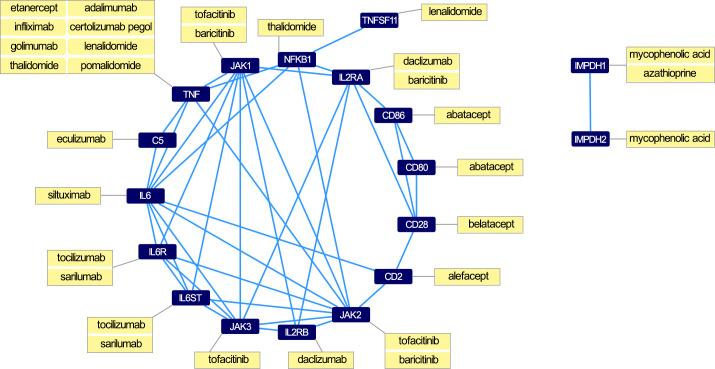
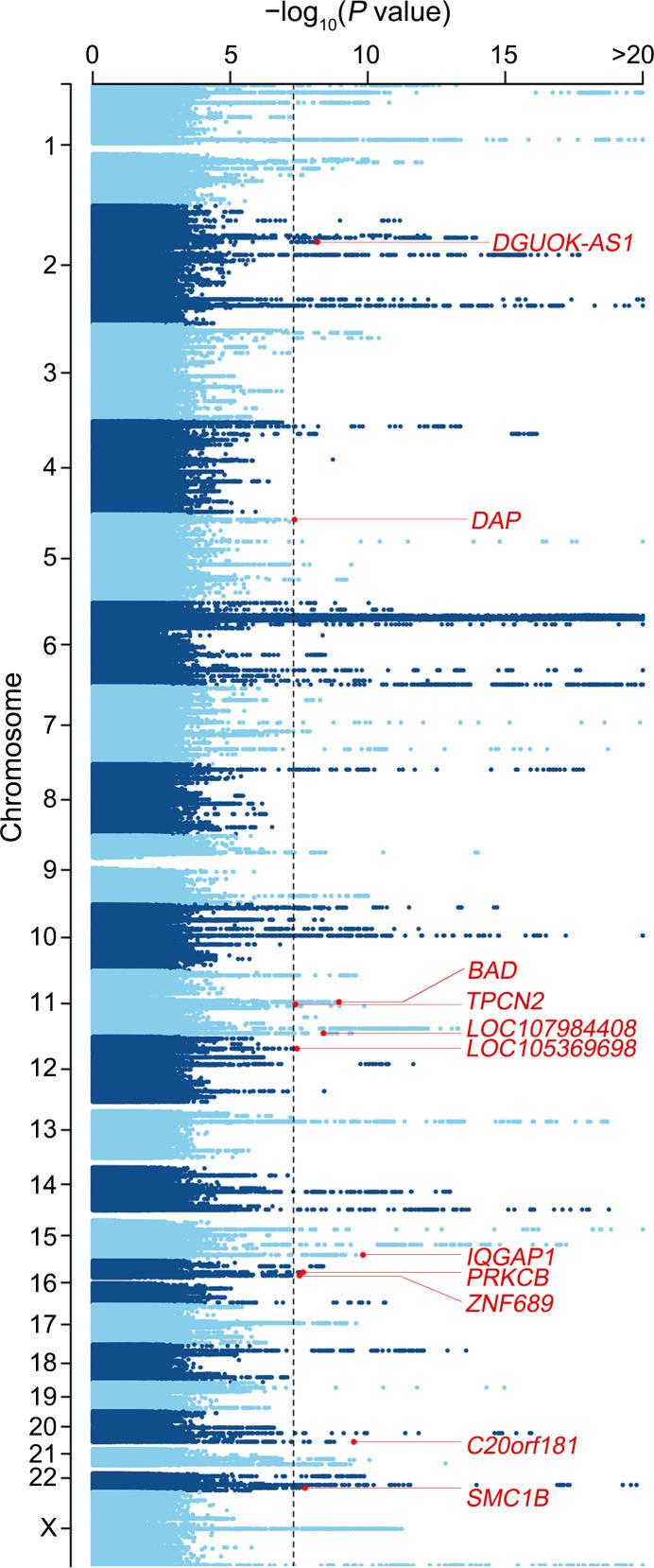
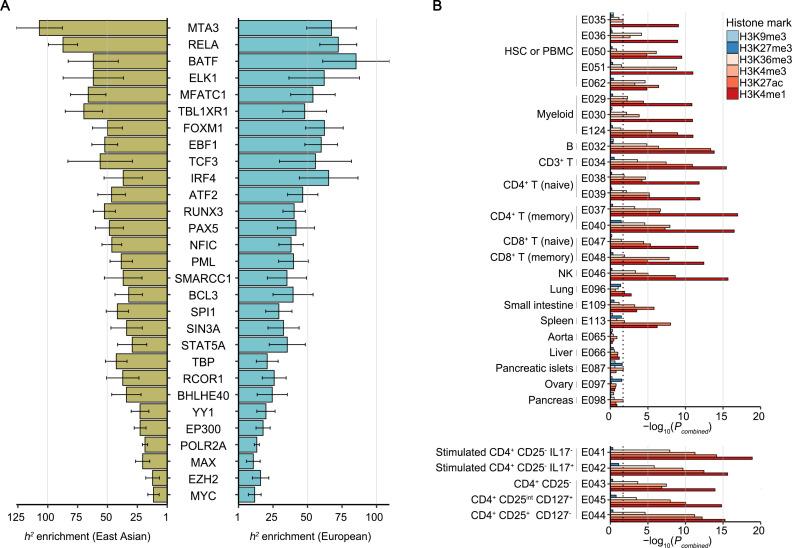
We identified 11 new RA susceptibility loci that explained 6.9% and 1.8% of the single-nucleotide polymorphism-based heritability in East Asians and Europeans, respectively, and confirmed 71 known non-human leukocyte antigens (HLA) susceptibility loci, identifying 90 independent association signals. The RA variants were preferentially located in binding sites of various transcription factors and in cell type-specific transcription-activation histone marks that simultaneously highlighted the importance of CD4 T-cell activation and the potential role of non-immune organs in RA pathogenesis. A total of 615 plausible effector genes, based on gene-based associations, expression-associated variants and chromatin interaction, included targets of drugs approved for RA treatments and potentially repurposable drugs approved for other indications.
CONCLUSION
Our findings provide useful insights regarding RA genetic aetiology and variant-driven RA pathogenesis.
目的
通过基于人群的遗传关联研究,已经鉴定出近 110 个与类风湿关节炎(RA)相关的易感基因座,这些基因座的效应大小适中,这表明在 RA 的高度多基因遗传结构背后存在大量未被发现的变异。在这里,我们进行了有史以来最大规模的跨祖先荟萃分析,旨在确定新的 RA 基因座,并更好地了解遗传关联背后的 RA 生物学。
方法
使用来自韩国、日本和欧洲三个大型病例对照集的全基因组 RA 关联汇总统计数据,对 311292 名个体进行了逆方差加权固定效应荟萃分析。利用公共组学资源进行了几种计算分析,以优先考虑因果变异和基因、RA 变异暗示特征(组织、途径和转录因子)以及可能用于 RA 治疗的可再利用药物。
结果
我们确定了 11 个新的 RA 易感性基因座,分别解释了东亚人和欧洲人基于单核苷酸多态性的遗传率的 6.9%和 1.8%,并确认了 71 个已知的非人类白细胞抗原(HLA)易感性基因座,确定了 90 个独立的关联信号。RA 变异优先位于各种转录因子的结合位点和细胞类型特异性转录激活组蛋白标记中,同时突出了 CD4 T 细胞激活的重要性和非免疫器官在 RA 发病机制中的潜在作用。基于基因关联、表达相关变体和染色质相互作用,共有 615 个合理的效应基因,包括已批准用于 RA 治疗的药物的靶点和可能用于其他适应症的可再利用药物。
结论
我们的研究结果为 RA 的遗传病因学和变异驱动的 RA 发病机制提供了有用的见解。

 Zotero 插件