
重组 ACE2 表达是 SARS-CoV-2 感染原代人血管内皮细胞并诱导炎症和促凝反应所必需的。
Recombinant ACE2 Expression Is Required for SARS-CoV-2 To Infect Primary Human Endothelial Cells and Induce Inflammatory and Procoagulative Responses.
机构信息
Department of Microbiology and Immunology, Stony Brook University, Stony Brook, New York, USA.
Department of Microbiology and Immunology, Stony Brook University, Stony Brook, New York, USA
出版信息
mBio. 2020 Dec 11;11(6):e03185-20. doi: 10.1128/mBio.03185-20.
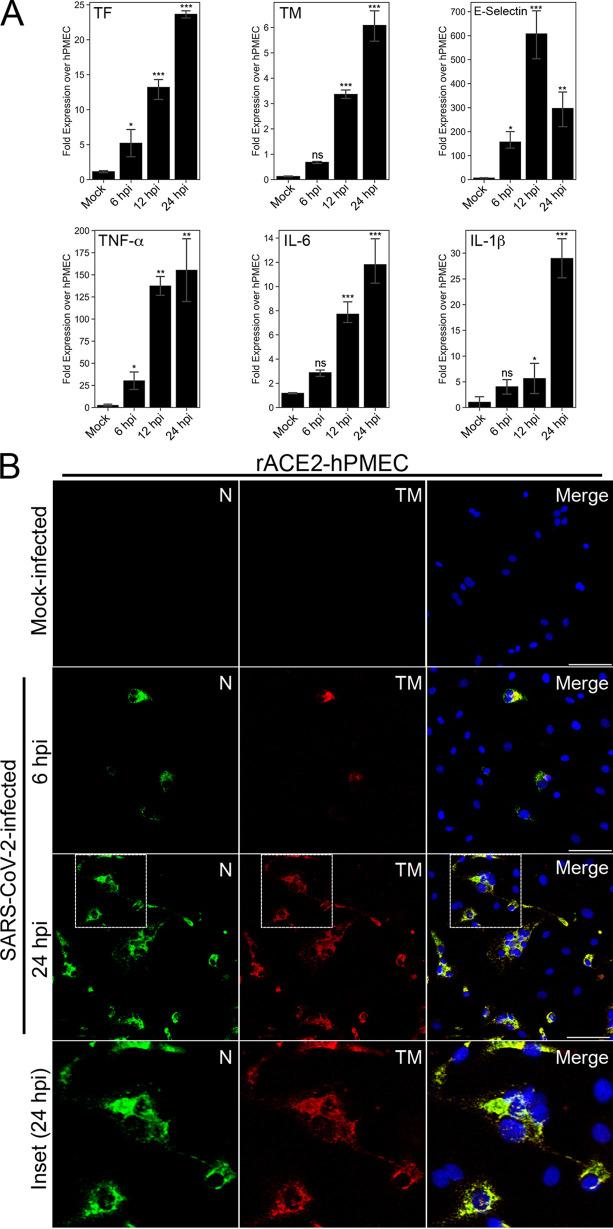
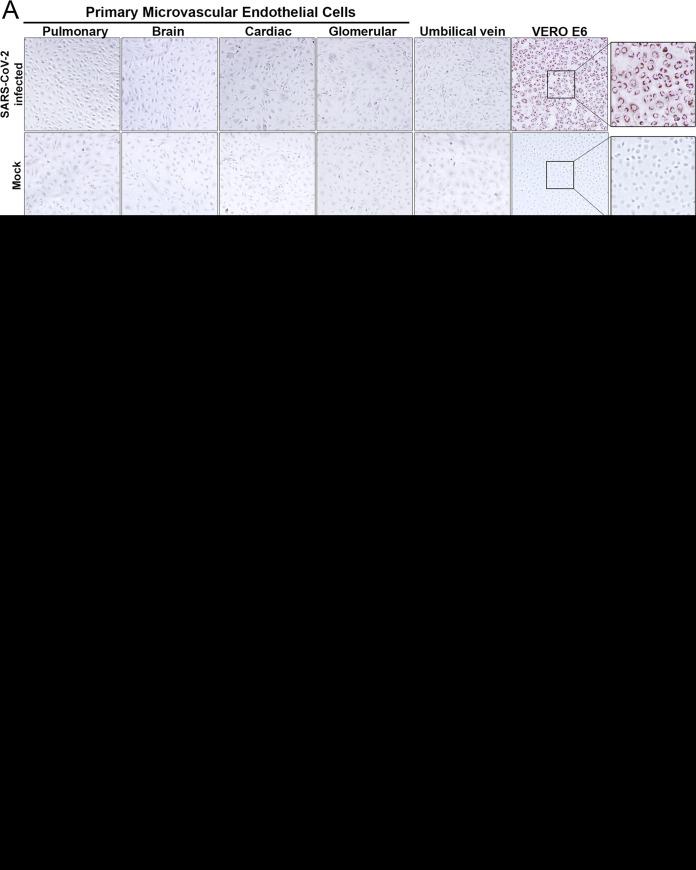
SARS-CoV-2 causes COVID-19, an acute respiratory distress syndrome (ARDS) characterized by pulmonary edema, viral pneumonia, multiorgan dysfunction, coagulopathy, and inflammation. SARS-CoV-2 uses angiotensin-converting enzyme 2 (ACE2) receptors to infect and damage ciliated epithelial cells in the upper respiratory tract. In alveoli, gas exchange occurs across an epithelial-endothelial barrier that ties respiration to endothelial cell (EC) regulation of edema, coagulation, and inflammation. How SARS-CoV-2 dysregulates vascular functions to cause ARDS in COVID-19 patients remains an enigma focused on dysregulated EC responses. Whether SARS-CoV-2 directly or indirectly affects functions of the endothelium remains to be resolved and is critical to understanding SARS-CoV-2 pathogenesis and therapeutic targets. We demonstrate that primary human ECs lack ACE2 receptors at protein and RNA levels and that SARS-CoV-2 is incapable of directly infecting ECs derived from pulmonary, cardiac, brain, umbilical vein, or kidney tissues. In contrast, pulmonary ECs transduced with recombinant ACE2 receptors are infected by SARS-CoV-2 and result in high viral titers (∼1 × 10/ml), multinucleate syncytia, and EC lysis. SARS-CoV-2 infection of ACE2-expressing ECs elicits procoagulative and inflammatory responses observed in COVID-19 patients. The inability of SARS-CoV-2 to directly infect and lyse ECs without ACE2 expression explains the lack of vascular hemorrhage in COVID-19 patients and indicates that the endothelium is not a primary target of SARS-CoV-2 infection. These findings are consistent with SARS-CoV-2 indirectly activating EC programs that regulate thrombosis and endotheliitis in COVID-19 patients and focus strategies on therapeutically targeting epithelial and inflammatory responses that activate the endothelium or initiate limited ACE2-independent EC infection. SARS-CoV-2 infects pulmonary epithelial cells through ACE2 receptors and causes ARDS. COVID-19 causes progressive respiratory failure resulting from diffuse alveolar damage and systemic coagulopathy, thrombosis, and capillary inflammation that tie alveolar responses to EC dysfunction. This has prompted theories that SARS-CoV-2 directly infects ECs through ACE2 receptors, yet SARS-CoV-2 antigen has not been colocalized with ECs and prior studies indicate that ACE2 colocalizes with alveolar epithelial cells and vascular smooth muscle cells, not ECs. Here, we demonstrate that primary human ECs derived from lung, kidney, heart, brain, and umbilical veins require expression of recombinant ACE2 receptors in order to be infected by SARS-CoV-2. However, SARS-CoV-2 lytically infects ACE2-ECs and elicits procoagulative and inflammatory responses observed in COVID-19 patients. These findings suggest a novel mechanism of COVID-19 pathogenesis resulting from indirect EC activation, or infection of a small subset of ECs by an ACE2-independent mechanism, that transforms rationales and targets for therapeutic intervention.
SARS-CoV-2 导致 COVID-19,这是一种以肺水肿、病毒性肺炎、多器官功能障碍、凝血功能障碍和炎症为特征的急性呼吸窘迫综合征 (ARDS)。SARS-CoV-2 使用血管紧张素转换酶 2 (ACE2) 受体感染和损害上呼吸道的纤毛上皮细胞。在肺泡中,气体交换发生在连接呼吸和内皮细胞调节水肿、凝血和炎症的上皮-内皮屏障上。SARS-CoV-2 如何失调血管功能导致 COVID-19 患者发生 ARDS 仍然是一个谜,其重点是失调的内皮细胞反应。SARS-CoV-2 是否直接或间接影响内皮细胞的功能仍有待解决,这对于理解 SARS-CoV-2 的发病机制和治疗靶点至关重要。我们证明,原代人内皮细胞在蛋白质和 RNA 水平上缺乏 ACE2 受体,SARS-CoV-2 无法直接感染源自肺、心脏、大脑、脐静脉或肾脏组织的内皮细胞。相比之下,转导重组 ACE2 受体的肺内皮细胞被 SARS-CoV-2 感染,并导致高病毒滴度(∼1×10/ml)、多核合胞体和内皮细胞裂解。SARS-CoV-2 感染表达 ACE2 的内皮细胞会引发 COVID-19 患者中观察到的促凝和炎症反应。缺乏 ACE2 表达的 SARS-CoV-2 无法直接感染和裂解内皮细胞,这解释了 COVID-19 患者中血管出血的缺乏,并表明内皮细胞不是 SARS-CoV-2 感染的主要靶标。这些发现与 SARS-CoV-2 间接激活调节 COVID-19 患者血栓形成和内皮炎症的内皮细胞程序一致,并将策略集中在针对激活内皮细胞或引发有限的 ACE2 非依赖性内皮细胞感染的上皮和炎症反应的治疗靶点上。SARS-CoV-2 通过 ACE2 受体感染肺上皮细胞并导致 ARDS。COVID-19 导致进行性呼吸衰竭,原因是弥漫性肺泡损伤和全身凝血功能障碍、血栓形成和毛细血管炎症,将肺泡反应与内皮细胞功能障碍联系起来。这引发了 SARS-CoV-2 通过 ACE2 受体直接感染内皮细胞的理论,但 SARS-CoV-2 抗原尚未与内皮细胞共定位,先前的研究表明 ACE2 与肺泡上皮细胞和血管平滑肌细胞共定位,而不是内皮细胞。在这里,我们证明源自肺、肾、心、脑和脐静脉的原代人内皮细胞需要表达重组 ACE2 受体才能被 SARS-CoV-2 感染。然而,SARS-CoV-2 可裂解感染 ACE2-内皮细胞,并引发 COVID-19 患者中观察到的促凝和炎症反应。这些发现表明 COVID-19 发病机制的一种新机制是由于间接的内皮细胞激活,或通过 ACE2 非依赖性机制感染一小部分内皮细胞,从而改变了治疗干预的理由和靶点。
 Zotero 插件