
宿主蛋白参与 SARS-CoV-2 感染的遗传结构。
Genetic architecture of host proteins involved in SARS-CoV-2 infection.
机构信息
MRC Epidemiology Unit, University of Cambridge, Cambridge, UK.
Institute of Computational Biology, Helmholtz Zentrum München - German Research Center for Environmental Health, Neuherberg, Germany.
出版信息
Nat Commun. 2020 Dec 16;11(1):6397. doi: 10.1038/s41467-020-19996-z.
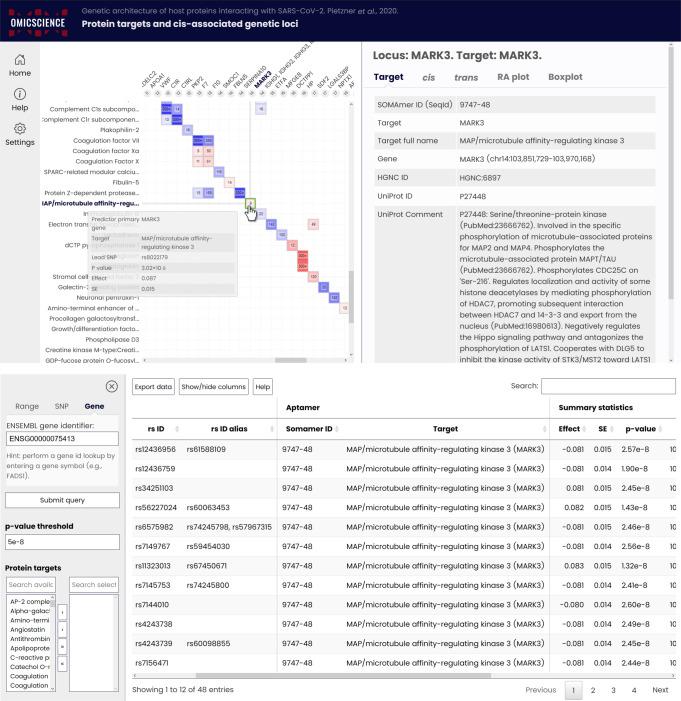
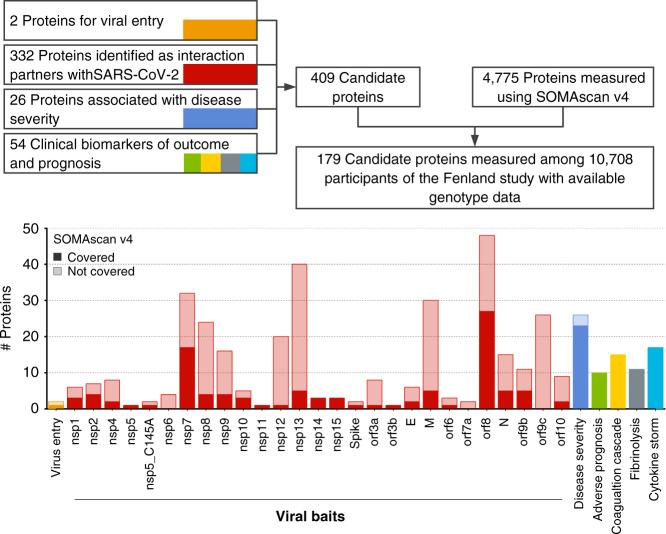
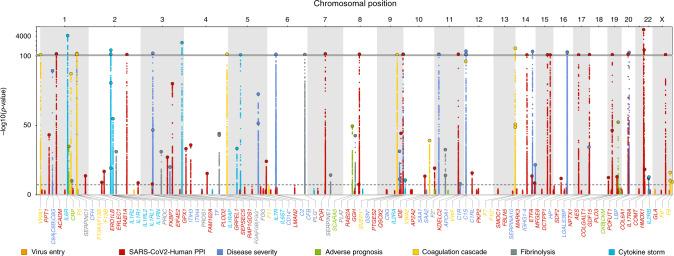
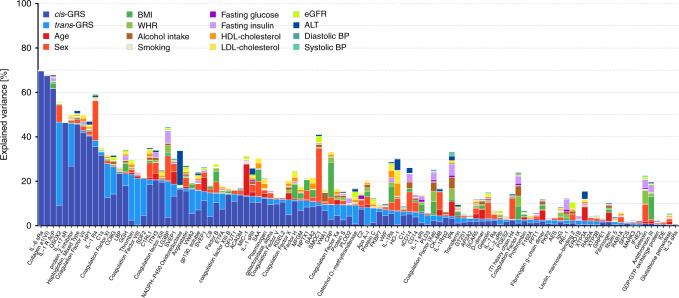
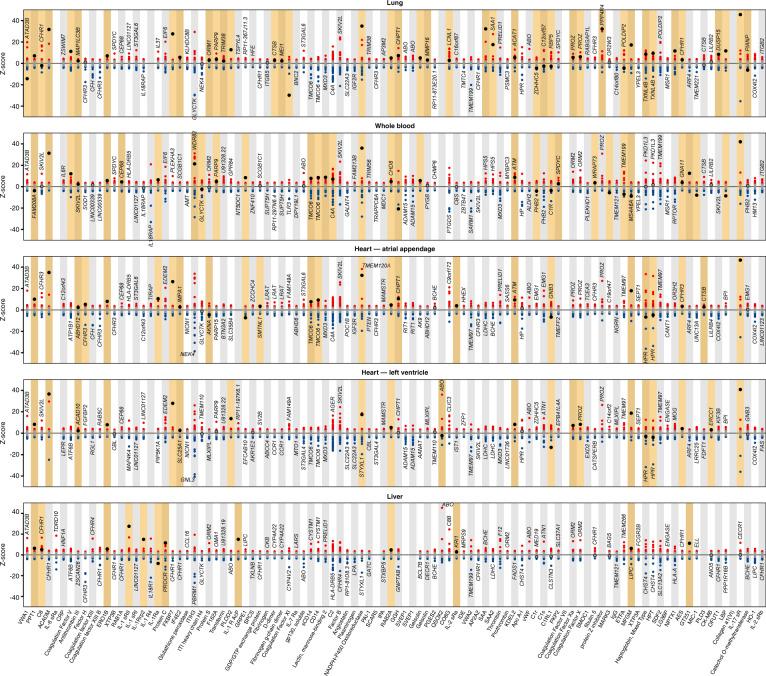
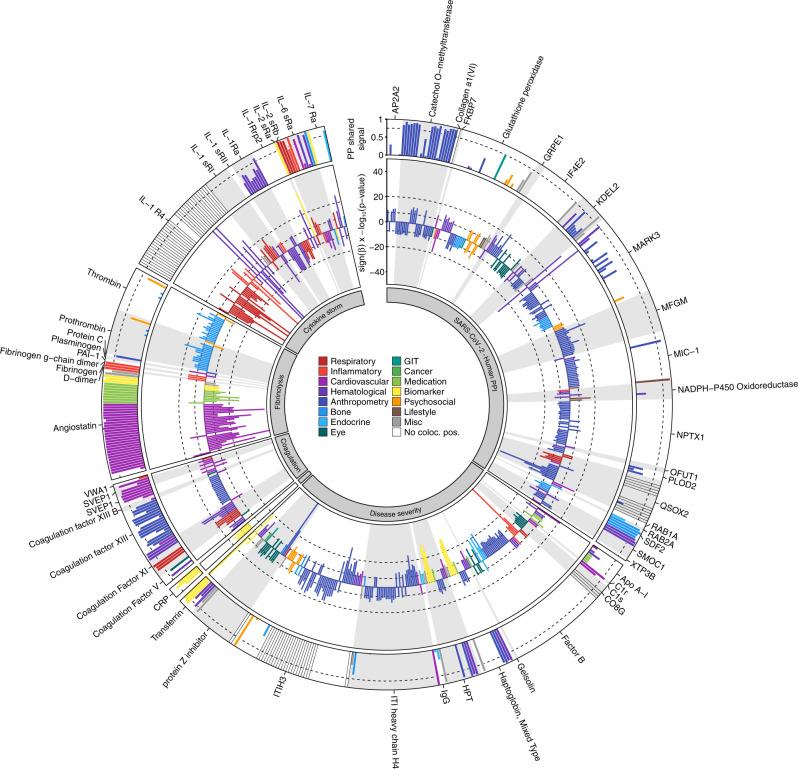
Understanding the genetic architecture of host proteins interacting with SARS-CoV-2 or mediating the maladaptive host response to COVID-19 can help to identify new or repurpose existing drugs targeting those proteins. We present a genetic discovery study of 179 such host proteins among 10,708 individuals using an aptamer-based technique. We identify 220 host DNA sequence variants acting in cis (MAF 0.01-49.9%) and explaining 0.3-70.9% of the variance of 97 of these proteins, including 45 with no previously known protein quantitative trait loci (pQTL) and 38 encoding current drug targets. Systematic characterization of pQTLs across the phenome identified protein-drug-disease links and evidence that putative viral interaction partners such as MARK3 affect immune response. Our results accelerate the evaluation and prioritization of new drug development programmes and repurposing of trials to prevent, treat or reduce adverse outcomes. Rapid sharing and detailed interrogation of results is facilitated through an interactive webserver ( https://omicscience.org/apps/covidpgwas/ ).
理解宿主蛋白与 SARS-CoV-2 相互作用或介导 COVID-19 宿主适应不良反应的遗传结构,可以帮助鉴定针对这些蛋白的新药物或重新利用现有药物。我们使用基于适体的技术,在 10708 个人中对 179 种此类宿主蛋白进行了遗传发现研究。我们鉴定了 220 个顺式作用的宿主 DNA 序列变异(MAF 0.01-49.9%),解释了其中 97 种蛋白的 0.3-70.9%的变异,其中包括 45 种以前没有已知的蛋白数量性状基因座(pQTL)和 38 种编码当前药物靶点的蛋白。对表型全基因组范围内的 pQTL 进行系统表征,确定了蛋白-药物-疾病的联系,并证明了假定的病毒相互作用伙伴(如 MARK3)会影响免疫反应。我们的研究结果加速了新药物开发计划的评估和优先级划分,并为预防、治疗或减少不良后果的临床试验提供了重新利用的机会。通过交互式网络服务器(https://omicscience.org/apps/covidpgwas/),可以快速共享和详细询问结果。
 Zotero 插件