
新型和厚朴酚洗脱聚乳酸-乙醇酸基支架可有效抑制肾癌细胞生长。
Novel Honokiol-eluting PLGA-based scaffold effectively restricts the growth of renal cancer cells.
机构信息
Department of Mechanical Engineering, Biomedical Engineering and Biotechnology Program, University of Massachusetts Dartmouth, Dartmouth, MA, United States of America.
Division of Nephrology, Boston Children's Hospital, Boston, MA, United States of America.
出版信息
PLoS One. 2020 Dec 17;15(12):e0243837. doi: 10.1371/journal.pone.0243837. eCollection 2020.
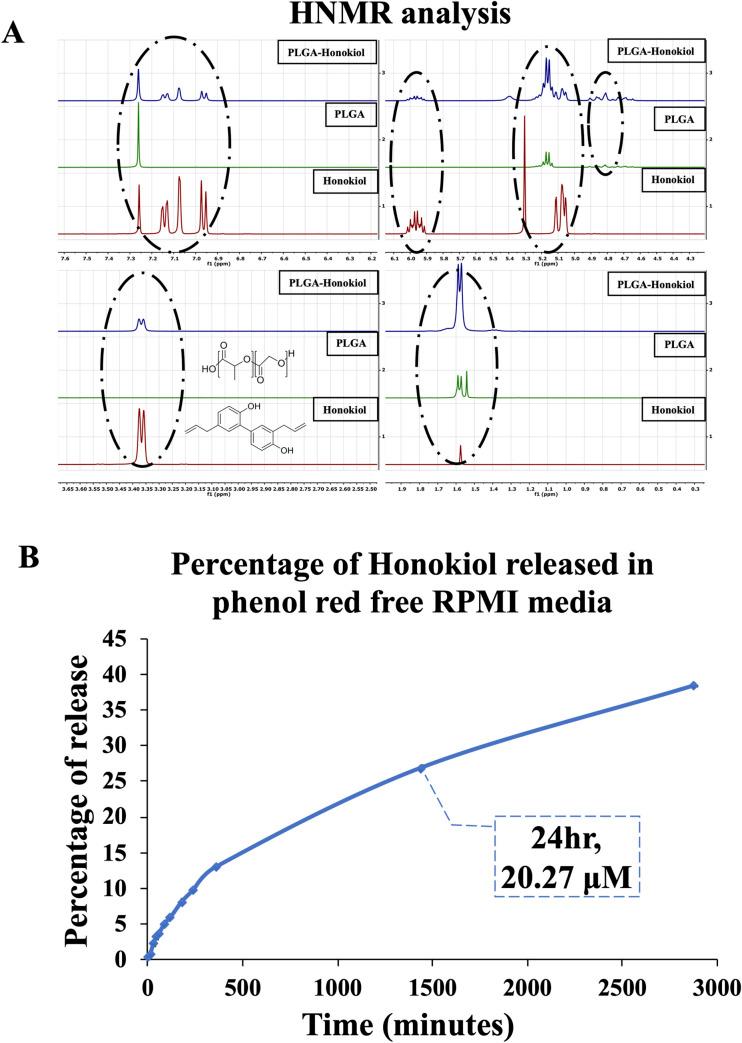
Renal Cell Carcinoma (RCC) often becomes resistant to targeted therapies, and in addition, dose-dependent toxicities limit the effectiveness of therapeutic agents. Therefore, identifying novel drug delivery approaches to achieve optimal dosing of therapeutic agents can be beneficial in managing toxicities and to attain optimal therapeutic effects. Previously, we have demonstrated that Honokiol, a natural compound with potent anti-tumorigenic and anti-inflammatory effects, can induce cancer cell apoptosis and inhibit the growth of renal tumors in vivo. In cancer treatment, implant-based drug delivery systems can be used for gradual and sustained delivery of therapeutic agents like Honokiol to minimize systemic toxicity. Electrospun polymeric fibrous scaffolds are ideal candidates to be used as drug implants due to their favorable morphological properties such as high surface to volume ratio, flexibility and ease of fabrication. In this study, we fabricated Honokiol-loaded Poly(lactide-co-glycolide) (PLGA) electrospun scaffolds; and evaluated their structural characterization and biological activity. Proton nuclear magnetic resonance data proved the existence of Honokiol in the drug loaded polymeric scaffolds. The release kinetics showed that only 24% of the loaded Honokiol were released in 24hr, suggesting that sustained delivery of Honokiol is feasible. We calculated the cumulative concentration of the Honokiol released from the scaffold in 24hr; and the extent of renal cancer cell apoptosis induced with the released Honokiol is similar to an equivalent concentration of direct application of Honokiol. Also, Honokiol-loaded scaffolds placed directly in renal cell culture inhibited renal cancer cell proliferation and migration. Together, we demonstrate that Honokiol delivered through electrospun PLGA-based scaffolds is effective in inhibiting the growth of renal cancer cells; and our data necessitates further in vivo studies to explore the potential of sustained release of therapeutic agents-loaded electrospun scaffolds in the treatment of RCC and other cancer types.
肾细胞癌(RCC)通常对靶向治疗产生耐药性,此外,剂量依赖性毒性会限制治疗剂的有效性。因此,确定新的药物输送方法以实现治疗剂的最佳剂量可以有益于管理毒性并达到最佳治疗效果。以前,我们已经证明,具有强大的抗肿瘤和抗炎作用的天然化合物厚朴酚可以诱导癌细胞凋亡并抑制体内肾肿瘤的生长。在癌症治疗中,基于植入物的药物输送系统可用于逐渐和持续输送治疗剂,如厚朴酚,以最大程度地减少全身毒性。电纺聚合物纤维支架由于其高比表面积、灵活性和易于制造等有利的形态特性,是用作药物植入物的理想候选物。在这项研究中,我们制备了载有厚朴酚的聚(乳酸-共-乙醇酸)(PLGA)电纺支架;并评估了它们的结构特征和生物活性。质子核磁共振数据证明了载药聚合物支架中存在厚朴酚。释放动力学表明,24 小时内仅释放了 24%的负载厚朴酚,表明可以实现厚朴酚的持续释放。我们计算了支架在 24 小时内释放的厚朴酚的累积浓度;以及释放的厚朴酚诱导的肾癌细胞凋亡的程度与厚朴酚直接应用的等效浓度相似。此外,直接放置在肾癌细胞培养物中的载有厚朴酚的支架抑制了肾癌细胞的增殖和迁移。总之,我们证明了通过电纺 PLGA 支架输送的厚朴酚可有效抑制肾癌细胞的生长;我们的数据需要进一步的体内研究来探索载药电纺支架的持续释放治疗剂在治疗 RCC 和其他癌症类型中的潜力。



 Zotero 插件