
N-甲基嘌呤 DNA 糖基化酶在患者来源的神经胶质瘤细胞对替莫唑胺耐药中的作用。
Involvement of N-methylpurine DNA glycosylase in resistance to temozolomide in patient-derived glioma cells.
机构信息
Research Unit, Complejo Hospitalario Universitario de Albacete, Laurel, s/n, 02008, Albacete, Spain.
Department of Neurology, Complejo Hospitalario Universitario de Albacete, Albacete, Spain.
出版信息
Sci Rep. 2020 Dec 17;10(1):22185. doi: 10.1038/s41598-020-78868-0.
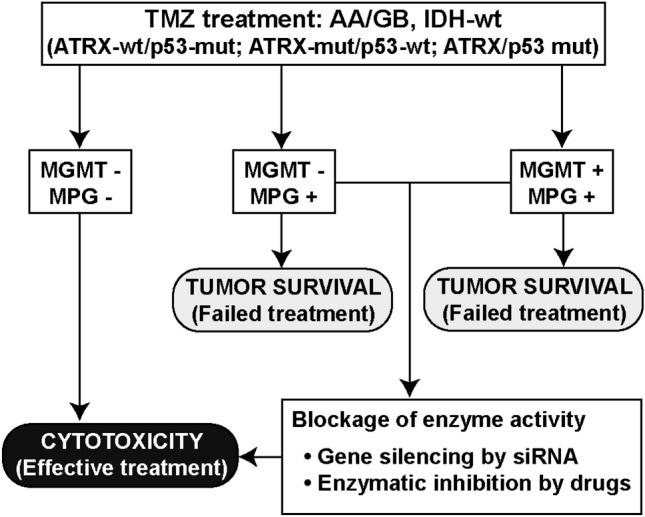
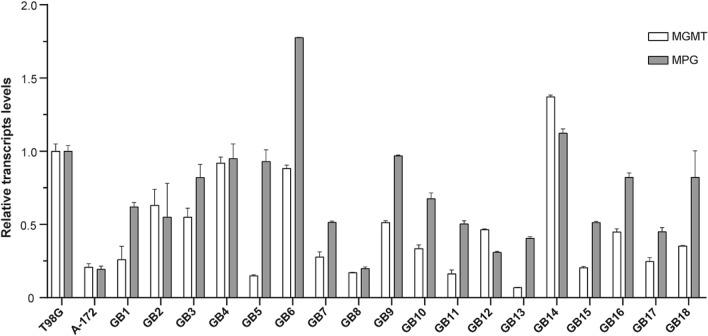
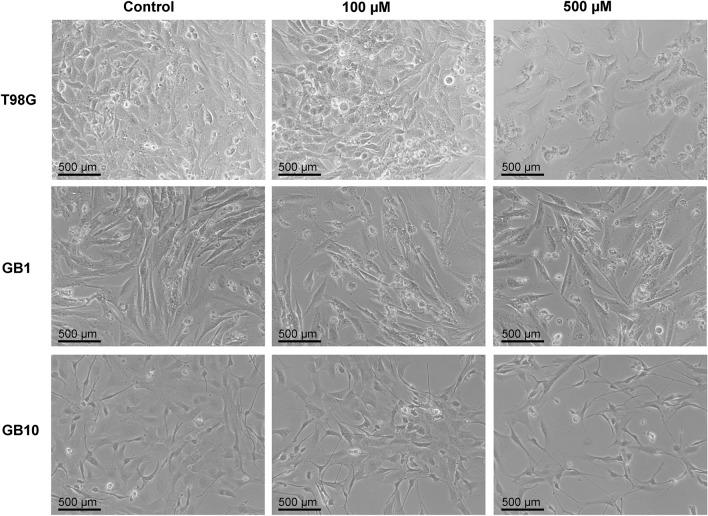
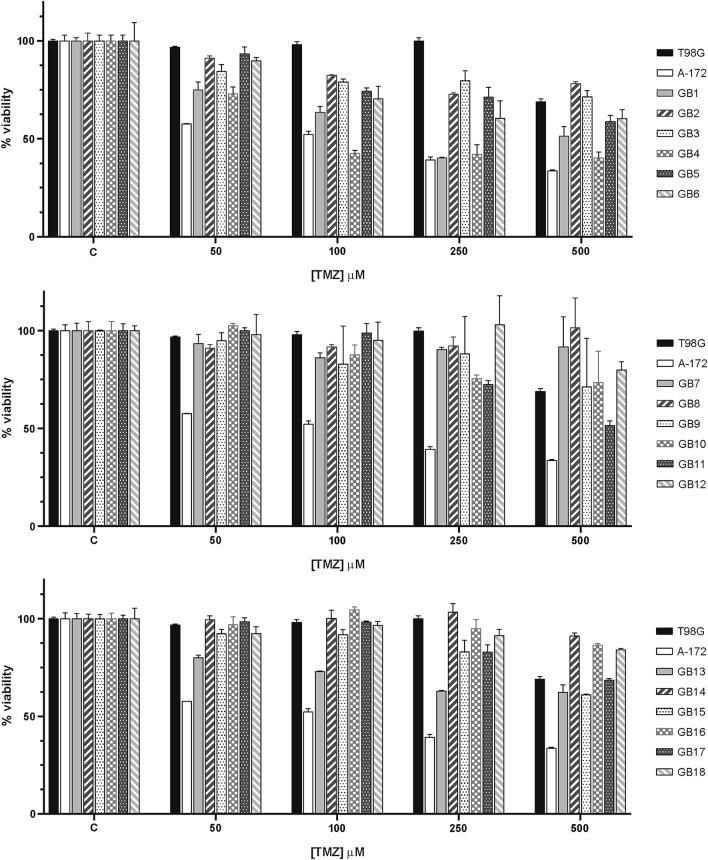
Chemotherapy for high-grade astrocytic tumors is mainly based on the use of temozolomide (TMZ), whose efficacy is limited by resistance mechanisms. Despite many investigations pointing to O6-methylguanine-DNA-methyltransferase (MGMT) as being responsible for tumor chemo-resistance, its expression does not predict an accurate response in most gliomas, suggesting that MGMT is not the only determinant of response to treatment. In this sense, several reports indicate that N-methylpurine-DNA-glycosylase (MPG) may be involved in that resistance. With that in mind, we evaluated for the first time the degree of resistance to TMZ treatment in 18 patient-derived glioma cells and its association with MGMT and MPG mRNA levels. Viability cell assays showed that TMZ treatment hardly caused growth inhibition in the patient-derived cells, even in high concentrations, indicating that all primary cultures were chemo-resistant. mRNA expression analyses showed that the TMZ-resistant phenotype displayed by cells is associated with an elevated expression of MPG to a greater extent than it is with transcript levels of MGMT. Our findings suggest that not only is MGMT implicated in resistance to TMZ but MPG, the first enzyme in base excision repair processing, is also involved, supporting its potential role as a target in anti-resistance chemotherapy for astrocytoma and glioblastoma.
用于高级别神经胶质瘤的化学疗法主要基于替莫唑胺(TMZ)的应用,其疗效受到耐药机制的限制。尽管许多研究指出 O6-甲基鸟嘌呤-DNA-甲基转移酶(MGMT)是肿瘤化疗耐药的原因,但它的表达并不能准确预测大多数神经胶质瘤的反应,这表明 MGMT 不是对治疗反应的唯一决定因素。在这方面,有几项报告表明,N-甲基嘌呤-DNA-糖基化酶(MPG)可能参与了这种耐药性。考虑到这一点,我们首次评估了 18 种患者来源的神经胶质瘤细胞对 TMZ 治疗的耐药程度及其与 MGMT 和 MPG mRNA 水平的关系。细胞活力测定表明,即使在高浓度下,TMZ 处理几乎不会引起患者来源的细胞生长抑制,表明所有原代培养物均具有化疗耐药性。mRNA 表达分析表明,与 MGMT 转录水平相比,细胞表现出的 TMZ 耐药表型与 MPG 的表达升高更相关。我们的研究结果表明,MGMT 不仅参与 TMZ 耐药,碱基切除修复过程中的第一个酶 MPG 也参与其中,支持其作为神经胶质瘤和胶质母细胞瘤抗耐药化疗的潜在靶标。
 Zotero 插件