
基于 T1 加权磁共振成像的卷积神经网络模型识别阿尔茨海默病。
Identification of Alzheimer's disease using a convolutional neural network model based on T1-weighted magnetic resonance imaging.
机构信息
Department of Neuropsychiatry, Seoul National University Bundang Hospital, Seongnam, Korea.
Department of Psychiatry, Seoul National University College of Medicine, Seoul, Korea.
出版信息
Sci Rep. 2020 Dec 17;10(1):22252. doi: 10.1038/s41598-020-79243-9.
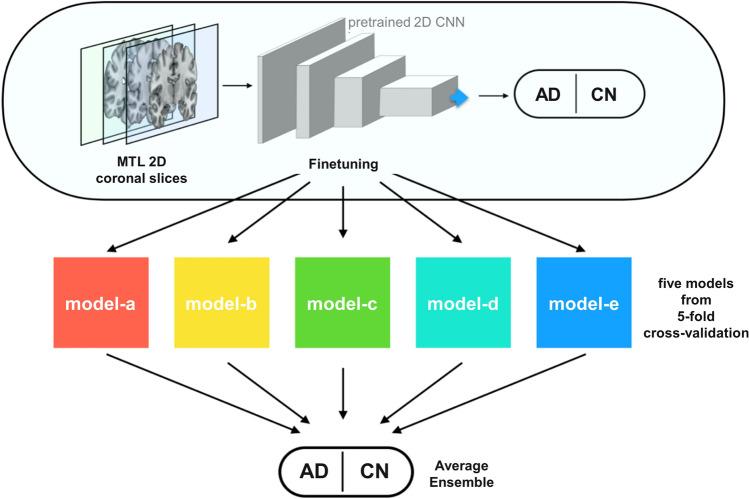
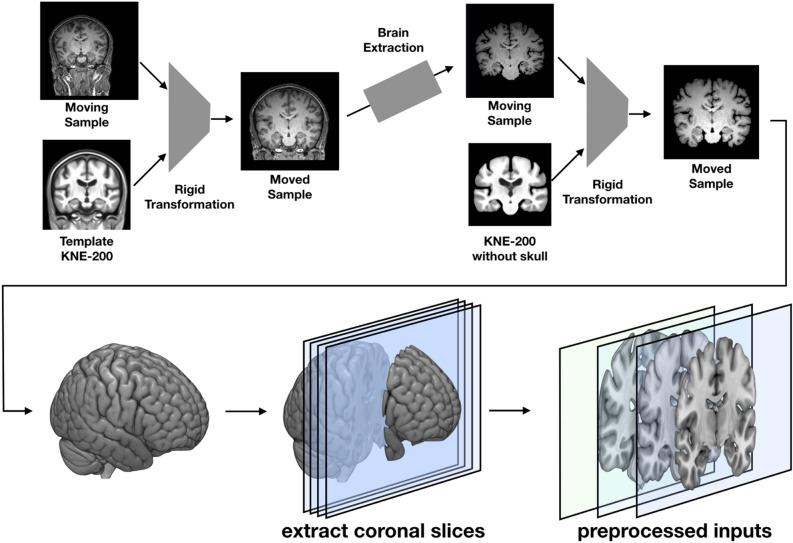
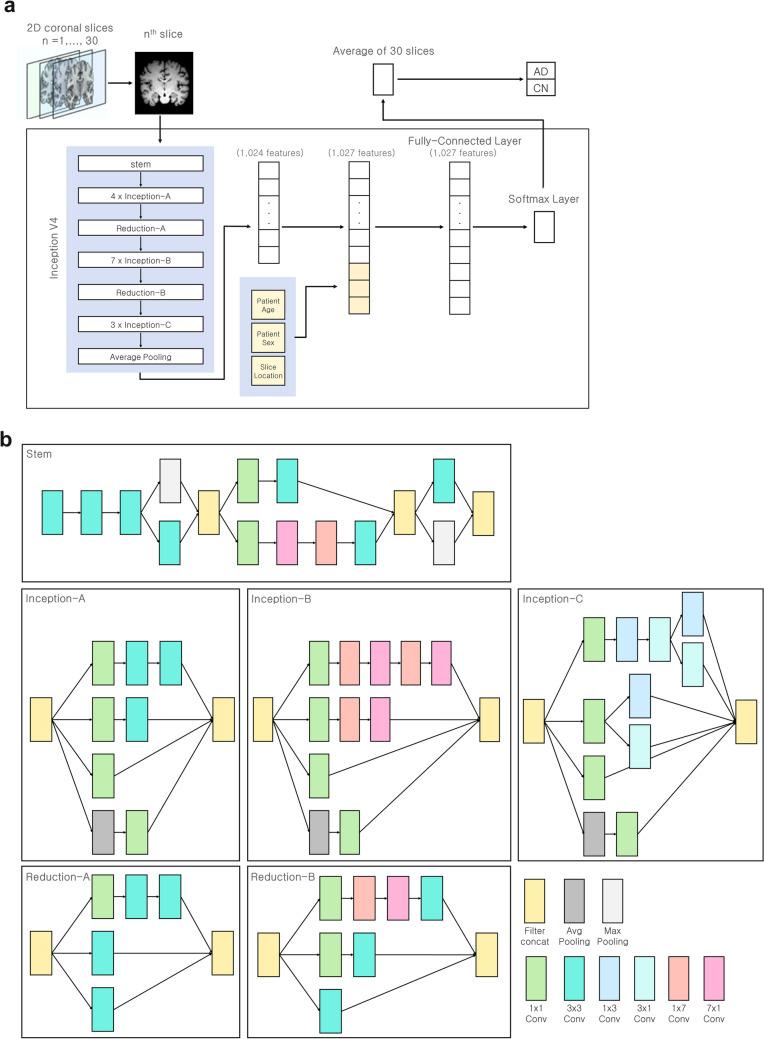
The classification of Alzheimer's disease (AD) using deep learning methods has shown promising results, but successful application in clinical settings requires a combination of high accuracy, short processing time, and generalizability to various populations. In this study, we developed a convolutional neural network (CNN)-based AD classification algorithm using magnetic resonance imaging (MRI) scans from AD patients and age/gender-matched cognitively normal controls from two populations that differ in ethnicity and education level. These populations come from the Seoul National University Bundang Hospital (SNUBH) and Alzheimer's Disease Neuroimaging Initiative (ADNI). For each population, we trained CNNs on five subsets using coronal slices of T1-weighted images that cover the medial temporal lobe. We evaluated the models on validation subsets from both the same population (within-dataset validation) and other population (between-dataset validation). Our models achieved average areas under the curves of 0.91-0.94 for within-dataset validation and 0.88-0.89 for between-dataset validation. The mean processing time per person was 23-24 s. The within-dataset and between-dataset performances were comparable between the ADNI-derived and SNUBH-derived models. These results demonstrate the generalizability of our models to different patients with different ethnicities and education levels, as well as their potential for deployment as fast and accurate diagnostic support tools for AD.
使用深度学习方法对阿尔茨海默病(AD)进行分类已经取得了有希望的结果,但要成功应用于临床环境,需要结合高精度、短处理时间和对各种人群的泛化能力。在这项研究中,我们使用来自 AD 患者和来自两个在种族和教育水平上存在差异的人群(来自首尔国立大学盆唐医院(SNUBH)和阿尔茨海默病神经影像学倡议(ADNI))的认知正常对照的磁共振成像(MRI)扫描,开发了一种基于卷积神经网络(CNN)的 AD 分类算法。对于每个人群,我们在五个子集中使用覆盖内侧颞叶的冠状 T1 加权图像的切片对 CNN 进行训练。我们在来自同一人群(内部数据集验证)和其他人群(外部数据集验证)的验证子集中评估模型。我们的模型在内部数据集验证中的平均曲线下面积为 0.91-0.94,在外部数据集验证中的平均曲线下面积为 0.88-0.89。每人的平均处理时间为 23-24 秒。ADNI 衍生模型和 SNUBH 衍生模型之间的内部数据集和外部数据集的性能相当。这些结果表明,我们的模型可以推广到具有不同种族和教育水平的不同患者,并且它们有可能成为快速准确的 AD 诊断支持工具。
 Zotero 插件